
A molecular milestone from Ryugu that reshapes the prebiotic narrative
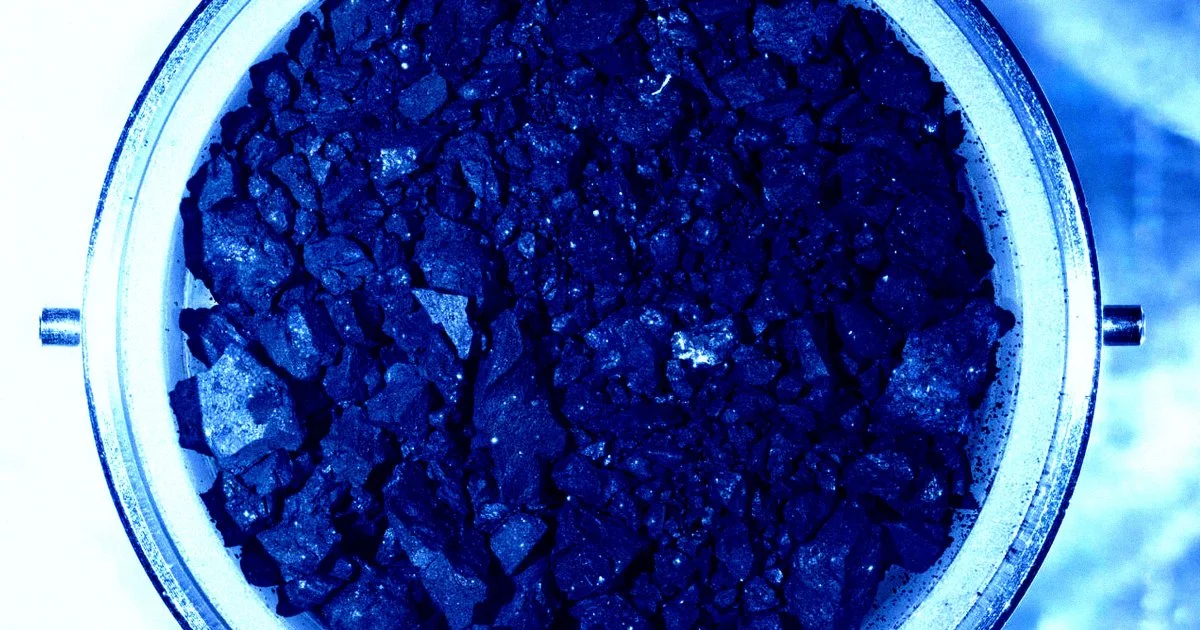
JAXA’s Hayabusa2 mission has delivered more than a triumph of engineering; it has returned a chemical ledger from the early solar system with direct relevance to biology, industry, and geopolitics. Researchers led by Hokkaido University report in *Nature Astronomy* the unambiguous detection of all five canonical nucleobases—uracil, adenine, guanine, cytosine, and thymine—inside samples from asteroid Ryugu. These are not “life” itself, nor proof of biology on Ryugu, but they are among the most consequential molecular precursors: when combined with sugars and phosphate groups, nucleobases form the informational backbone of DNA and RNA.
The analytical significance lies in both completeness and context. Meteorites have long hinted at extraterrestrial organics, but meteorite studies are persistently challenged by terrestrial contamination and atmospheric entry alteration. Sample-return missions change the evidentiary standard. Hayabusa2’s sealed, curated specimens—paired with rigorous contamination controls—allow scientists to argue with far greater confidence that these nucleobases are indigenous to the asteroid material.
The broader scientific implication is a strengthening of a panspermia-adjacent proposition: not that life arrived fully formed, but that asteroids likely delivered “starter kit” chemistry to early Earth. With parallel signals emerging from NASA’s OSIRIS-REx mission to asteroid Bennu, the story becomes less about a single anomalous rock and more about a distributed inventory of prebiotic compounds across primitive bodies in the inner solar system. For astrobiology, that widens the plausible pathways by which chemistry could progress toward biology—on Earth and potentially elsewhere—without claiming more than the data supports.
The engineering behind the chemistry: why Hayabusa2’s sampling matters to business and tech
The nucleobase discovery is inseparable from the method that made it credible. In June 2019, Hayabusa2 executed a precision touchdown roughly 185 million miles from Earth, deployed a sampling horn, and fired a small metal projectile into Ryugu’s surface to loft material for capture—collecting both surface and subsurface grains. That sequence showcases a maturing stack of deep-space capabilities with direct spillover into commercial technology.
Key technological takeaways include:
- Deep-space robotics and autonomy at operational scale
Pinpoint navigation, hazard avoidance, and autonomous sampling under extreme latency conditions demonstrate the kind of decision-making architectures that translate to Earth-bound autonomy—particularly in environments where humans cannot easily intervene (mining, offshore operations, disaster response).
- Sample-return architecture as a new industrial benchmark
The mission underscores the value of contamination-controlled handling, thermal management for volatile preservation, and end-to-end curation protocols. These are not academic niceties; they are the difference between ambiguous results and bankable data. As agencies and commercial launch providers push toward higher cadence missions, the “Ryugu standard” becomes a reference point for quality assurance in extraterrestrial materials.
- A richer training set for AI-driven chemistry and materials modeling
A verified catalog of extraterrestrial organics—now including a complete nucleobase suite—creates high-value ground truth for computational chemistry, including machine-learning models that predict reaction pathways, stability under radiation, and synthesis routes. For firms working at the intersection of AI, quantum computing, and molecular simulation, these datasets can refine models used in drug discovery and novel biomaterials.
In practical terms, the mission reframes probes as more than scientific instruments: they are distributed R&D nodes that gather rare, high-integrity data—exactly the kind of data that improves model performance, reduces experimental uncertainty, and accelerates iteration cycles in adjacent industries.
The “organic frontier” economy: from public R&D to space biotech and resource strategy
The Ryugu nucleobase result arrives amid a structural shift in how space is financed and commercialized. Global space budgets have expanded markedly over the past decade, while the private sector now accounts for a substantial share of capital expenditure. Discoveries like this help justify continued public investment—because they demonstrate that sample-return missions produce unique, non-substitutable knowledge—while also hinting at new markets that are not purely speculative.
Several economic vectors stand out:
- Public-private R&D multiplier effects
High-precision instrumentation, contamination controls, and thermal preservation technologies generate licensable IP and supplier ecosystems. The downstream beneficiaries include companies building sensors, robotics, clean-room systems, and high-throughput analytical platforms.
- Space biotech as a premium payload category
As competition intensifies for payload slots on crewed and uncrewed platforms, biotech-centric cargo—microbial consortia studies, synthetic biology experiments, closed-loop bioreactors—becomes a differentiated market. The strategic logic is straightforward: microgravity and radiation environments can reveal behaviors and pathways difficult to reproduce on Earth, creating proprietary insights for pharmaceuticals, industrial fermentation, and advanced materials.
- Resource security and supply-chain resilience—expanded to organics
The discovery that asteroids can synthesize and preserve complex organics reframes them as potential repositories of “life-ingredient” feedstocks, not just metals and volatiles. While commercial extraction remains distant, corporate strategists can already see the outlines of long-lead needs: insurance frameworks, liability regimes, and contracting models that reduce the cost of capital for exploration and eventual utilization.
This is not a near-term replacement for terrestrial supply chains, but it is a credible signal that space resources may diversify beyond traditional mining narratives, with organics joining water and metals as strategically interesting categories.
Geopolitics, dual-use capability, and the next competitive arena
As asteroidal organics move from hypothesis to measured reality, the strategic context sharpens. Control over sampling, curation, and eventual utilization rights could echo earlier eras of competition over fossil fuels and rare minerals—only this time the arena is governed by evolving frameworks such as the Artemis Accords and other bilateral or multilateral arrangements. The countries and consortia that normalize operational presence—sampling, returning, analyzing, and standardizing data—will exert outsized influence over the rules that follow.
National security implications are equally non-trivial. Technologies for in-space organic preservation and synthesis are inherently dual-use: they support long-duration life support, on-demand biomanufacturing of therapeutics, and resilient storage concepts such as DNA-encoded data. It is reasonable to expect defense and intelligence stakeholders to track—and selectively fund—capabilities that reduce logistical dependence and increase operational endurance.
Perhaps most intriguingly, Ryugu’s chemistry also feeds back into Earth-bound sustainability. Understanding how organics form and persist under anhydrous, radiation-rich conditions may inspire new approaches to polymer durability, radiation-tolerant electronics, and energy-efficient synthesis pathways—tools that matter for climate-tech, circular manufacturing, and infrastructure resilience.
Ryugu’s nucleobases are, at face value, a scientific discovery about an asteroid. In practice, they function as a strategic signal: the solar system is chemically more capable than once assumed, and the institutions that can reach, sample, and interpret that chemistry are positioning themselves to define the next era of business, technology, and power beyond Earth.

 By
By

 By
By

 By
By

 By
By
 By
By