


A data-rich breakthrough in how *Anopheles* mosquitoes commit to a human target
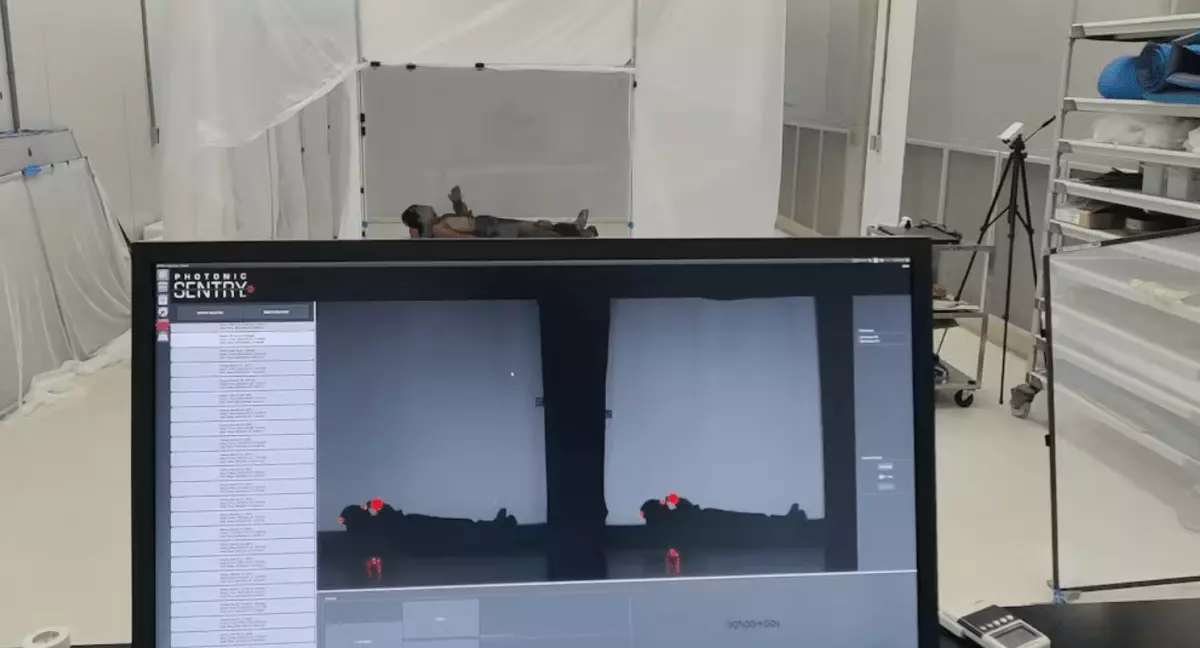
Georgia Tech’s three-year effort to decode mosquito prey selection reads less like classical field biology and more like a modern behavioral analytics program—the kind of instrumentation-heavy, repeatable experimentation typically associated with autonomous systems testing. Under Professor David Hu’s leadership, the team placed a human volunteer, Chris Zuo, into a high-speed photonic chamber and released 100 starved *Anopheles* mosquitoes at a time, capturing an extraordinary 20+ million flight paths at 100 frames per second.
The central insight is not merely that mosquitoes are attracted to humans, but that their engagement escalates non-linearly as sensory signals stack. Visual cues alone produced minimal commitment. Carbon dioxide (CO₂) increased interest, but the decisive behavioral shift occurred when visual, olfactory, and thermal stimuli converged—triggering a sustained, “frenzied orbit” consistent with a high-confidence target lock.
For public health and industry, this matters because *Anopheles* mosquitoes are the primary vectors for malaria, and malaria control has long been constrained by a blunt toolkit: insecticides, bed nets, and habitat reduction. What Georgia Tech adds is a granular, mechanistic map of pursuit behavior—the kind of dataset that can be engineered against.
Key behavioral takeaways with direct translational value include:
- Weak response to vision alone, suggesting that purely visual traps may underperform without complementary cues.
- CO₂ as a meaningful activator, consistent with mosquitoes using exhalation as a long-range “permission signal” to investigate.
- Thermal signatures as a commitment amplifier, sustaining close-range orbiting and likely increasing landing probability.
- Body “hot spots” that indicate non-uniform vulnerability across the human form—an actionable detail for targeted protection strategies.
Photonic chambers and “computational entomology” move from novelty to platform
The methodological leap here is as consequential as the biological finding. Recording flight trajectories at scale transforms mosquito behavior from anecdotal observation into quantified, model-ready data. This is the emergence of what many in the life sciences are increasingly calling computational entomology: a fusion of high-speed sensing, controlled stimulus design, and algorithmic interpretation.
Several aspects stand out for technology leaders and R&D strategists:
- High-resolution trajectory capture (100 fps) creates a behavioral dataset comparable in spirit to motion capture in sports science or perception testing in robotics—enabling reproducibility, benchmarking, and iterative optimization.
- Stimulus integration modeling implies mosquitoes operate with a kind of weighted sensory fusion—olfactory, visual, and thermal inputs combining into a decision to approach, orbit, and potentially land. For product developers, this resembles an adversarial problem: identify the weights, then disrupt the decision boundary.
- Human standardization protocols—controlling detergents, fabrics, and thermal proxies—reduce variability and make the results more transferable, similar to dose-response discipline in pharmaceutical research.
The strategic implication is that vector control can be engineered with the same rigor as other high-stakes systems: define inputs, measure outputs, build predictive models, and validate performance under controlled and then real-world conditions. That is a meaningful shift from “does it repel?” to “how does it change pursuit dynamics, and by how much?”
Market gravity: why sensory-fusion insights could reshape vector control economics
The global context is unforgiving. Mosquito-borne diseases contribute to 700,000+ deaths annually, with disproportionate impact in sub-Saharan Africa and parts of Asia. Beyond mortality, the economic drag—healthcare costs, lost productivity, disrupted schooling, and constraints on tourism and investment—accumulates into tens of billions of dollars each year.
Against that backdrop, the global mosquito control market is projected to surpass $15 billion by 2027, propelled by urbanization, climate-driven range expansion, and heightened public health mandates. Yet growth alone does not guarantee progress: chemical insecticides face resistance, ecological scrutiny, and regulatory tightening. That creates an opening for non-chemical, behaviorally informed interventions—precisely where Georgia Tech’s findings are most commercially catalytic.
The most plausible near-term commercialization pathways are those that translate sensory fusion into deployable systems:
- Next-generation traps that combine calibrated CO₂ release with thermal and visual signatures to increase capture rates.
- Wearables and smart textiles that protect the most vulnerable body zones using localized thermal modulation or micro-diffusion of attractant-decoys away from skin.
- Consumer electronics adjacencies, where companies already fluent in sensors, batteries, and miniaturization can build “behavior-aware” repellency products rather than relying solely on topical chemistry.
For funders and institutional partners—such as the Gates Foundation, WHO-aligned programs, and national public health agencies—the appeal is equally clear: a rigorous dataset that supports measurable performance claims, enabling procurement decisions based on suppression metrics rather than marketing narratives.
From lab certainty to field advantage: the strategic playbook now forming
The most important question is whether this high-fidelity chamber work can survive the messiness of real environments: wind, competing hosts, variable CO₂ plumes, and heterogeneous urban landscapes. Still, the study provides a blueprint for how to proceed—one that aligns public health urgency with product development discipline.
High-leverage next steps for industry and municipalities include:
- Field trials designed around behavioral endpoints, such as reduced orbit time, lower landing rates, and fewer indoor entries—metrics that connect directly to transmission risk.
- Regulatory engagement on performance standards, encouraging agencies like the EPA and international counterparts to evaluate next-gen tools by demonstrated behavioral suppression rather than only chemical concentration thresholds.
- AI-enabled model scaling, using machine learning to compare pursuit dynamics across species, seasons, and geographies—turning a single chamber dataset into a broader predictive engine.
- Cross-sector consortia, pairing academic labs, consumer tech firms, biotech innovators (including genetic-control approaches), and public agencies to de-risk deployment and accelerate adoption.
Perhaps the most intriguing spillover is infrastructural: if mosquitoes commit when cues align, then buildings and public spaces can be designed to break cue alignment. HVAC systems, entryway airflow design, and controlled thermal gradients could become part of a “passive defense” toolkit—especially in hospitals, hotels, and dense urban corridors where exposure risk concentrates.
Georgia Tech’s work reframes mosquito control as an engineering problem grounded in measurable pursuit behavior. In a world where climate change is expanding mosquito habitats and insecticide resistance is narrowing chemical options, the ability to quantify—and then strategically disrupt—how mosquitoes decide to target humans may become one of the most valuable levers in global health innovation.

 By
By
 By
By
 By
By

 By
By
 By
By
 By
By
 By
By







