

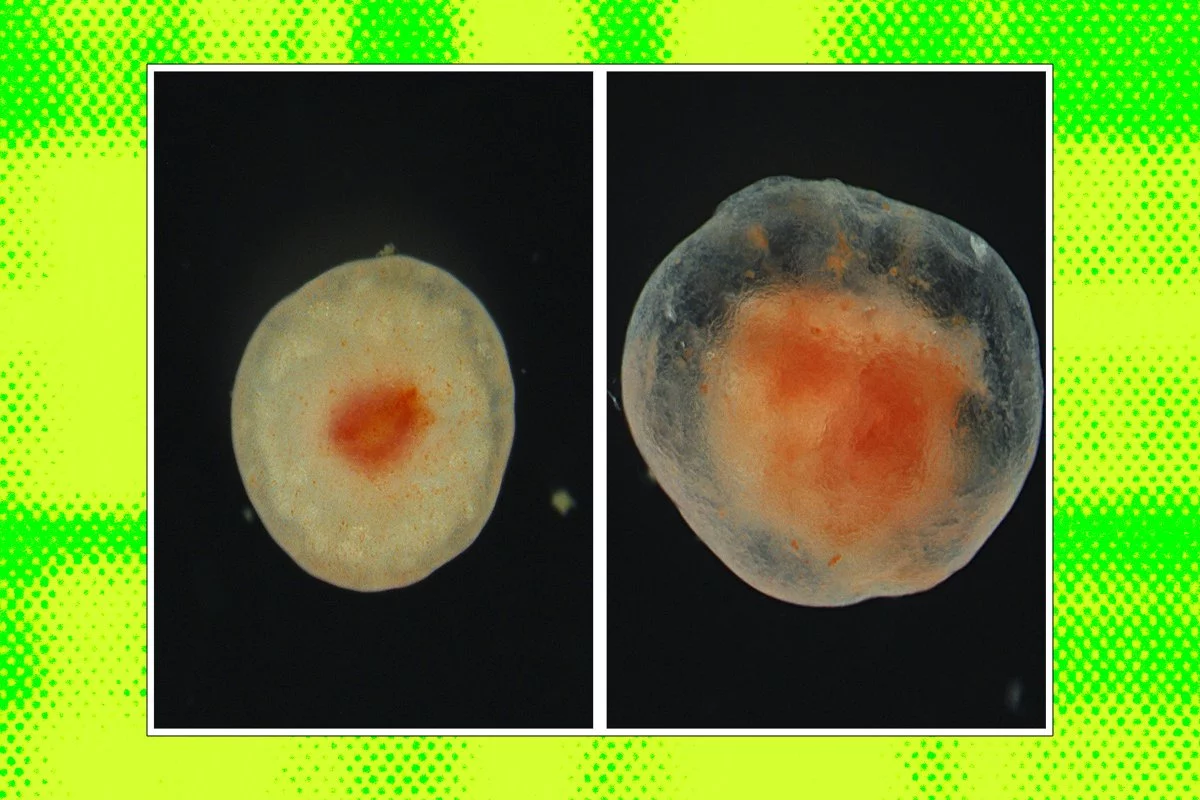

A sea cucumber’s living tissue rewrites assumptions about biological longevity
The latest findings on the Arctic sea cucumber _Psolus fabricii_, published in *Science*, land with the quiet force of a paradigm shift. Researchers report that a detached piece of body wall tissue can remain biologically active in natural, nonsterile seawater for more than three years—not merely persisting, but regenerating, resisting microbial takeover, and sustaining core functions typically thought to require an intact organism.
What makes this result so arresting is not only the duration, but the setting. In most experimental systems, long-term tissue survival depends on tightly controlled sterile conditions, nutrient media, antibiotics, and carefully managed temperature and gas exchange. Here, the tissue endured in real seawater, exposed to a complex microbiome and environmental variability. The study describes:
- Resistance to bacterial colonization without sterilization
- Active immune responses, suggesting ongoing surveillance and defense
- Cellular diversification and stem-like proliferative behavior
- Nutrient uptake and metabolic maintenance
- Partial healing and extracellular matrix remodeling
The authors’ framing—“naturally occurring tissue immortality”—is provocative but useful as a conceptual marker. The tissue has not reorganized into a complete new organism, and the work does not imply limitless regeneration. Still, it challenges a foundational assumption in regenerative biology: that complex, coordinated tissue maintenance is fragile outside the organismal context. Invertebrates have long been known for regeneration, but this is something more specific and arguably more disruptive—autonomous, long-horizon tissue viability in a microbe-rich environment.
From marine regeneration to platform science: why the methodology matters
Beyond the biological surprise lies a methodological signal to the broader biotech ecosystem. The research leverages in situ seawater culturing, effectively treating the ocean environment not as a contaminant risk to be eliminated, but as a biologically relevant testbed. That shift aligns with a growing recognition in translational science: models that better reflect real-world complexity can sometimes outperform pristine laboratory abstractions.
This is where the story intersects with digital biology and AI-enabled discovery. A tissue fragment that can sustain itself for years becomes a rare kind of experimental substrate—stable enough for longitudinal study, yet dynamic enough to reveal regulatory logic over time. The most immediate technological implications cluster around mapping and prediction:
- High-resolution imaging to track structural remodeling and wound closure dynamics
- Single-cell and spatial omics to identify which cell states persist, emerge, or disappear
- Proteomics and extracellular matrix profiling to characterize the biochemical scaffolding that supports resilience
- Machine learning models to infer regulatory networks driving immune modulation and regeneration
- Digital twin approaches to simulate tissue responses to perturbations (drugs, temperature shifts, microbiome changes)
If these pathways can be decoded, the sea cucumber tissue becomes more than a curiosity—it becomes a platform for understanding how tissues maintain integrity under stress, including microbial exposure. For human medicine, that is a central unsolved problem. Chronic wounds, implant infections, fibrosis, and inflammatory degeneration all sit at the intersection of healing, immunity, and tissue architecture.
Blue biotech’s next investable thesis: regeneration, materials, and manufacturing
The commercial implications are early-stage but increasingly legible. The discovery strengthens the investment narrative around blue biotechnology—the use of marine organisms and ecosystems as sources of biomedical innovation. Historically, marine biotech has been associated with natural products and niche biomaterials. Regeneration biology could broaden that scope into a more platform-like opportunity set.
Several industry vectors stand out.
Current regenerative medicine approaches—stem-cell therapies, engineered tissues, organoids—face persistent barriers in cost, scalability, reproducibility, and regulation. A marine-derived model that naturally integrates immune defense, remodeling, and long-term survival could inspire alternative strategies for:
- Wound healing and scar reduction
- Fibrosis modulation (where excessive matrix deposition becomes pathology)
- Organoid stabilization and long-duration culture systems
- Bioactive scaffolds that better resist infection and inflammation
The sea cucumber’s body wall is rich in structural biology—collagens, proteoglycans, and dynamic ECM components. If the “secret” of persistence is partly architectural, it could translate into synthetic or semi-synthetic biomaterials designed for durability in hostile biological environments. That has relevance for medical devices, implants, and wound dressings where infection risk and immune rejection drive failure.
If the field moves toward scalable applications, manufacturing becomes decisive. Potential pathways include:
- Onshore bioreactors optimized for marine cell lines or marine-inspired matrices
- Offshore aquaculture-linked production, raising both opportunity and governance questions
- Circular bioeconomy approaches, including upcycling marine by-products into high-value biomedical inputs
This is also where intellectual property could concentrate. Patents may not hinge on the organism itself, but on culturing methods, matrix compositions, immune-modulating factors, and computational models derived from the system. In a market that rewards platform defensibility, “regeneration IP” anchored in marine biology could become a notable asset class.
Regulation, geopolitics, and the ocean as a strategic genetic reservoir
The path from a *Science* paper to clinical impact is long, and the constraints are not only scientific. Regulatory agencies will demand clarity on safety, reproducibility, and mechanism—especially if any marine-derived components enter human therapeutic pipelines. Invertebrate research can face fewer ethical barriers than vertebrate models, potentially accelerating preclinical exploration, but it does not eliminate the need for rigorous translational standards.
Meanwhile, the macro context is hard to ignore. Aging populations and chronic disease burdens are intensifying demand for therapies that restore function rather than manage decline. Any credible route to lower-cost regenerative interventions will attract strategic capital—from pharma to medtech to health systems seeking to reduce lifetime care costs.
At the same time, the ocean is increasingly viewed as a strategic genetic reservoir. As bioprospecting expands, so do questions of:
- Biodiversity protection and ecosystem stewardship
- Access rights to marine organisms and sampling regions
- Benefit-sharing frameworks across nations and communities
- Regulatory harmonization across the EU, North America, and Asia-Pacific
The deeper message of the *Psolus fabricii* tissue is not that humans are about to borrow “immortality” from a sea cucumber. It is that nature has already solved aspects of long-term tissue resilience—in the presence of microbes, without sterile infrastructure, and with self-directed repair. For biotechnology and medicine, that is an invitation to shift from forcing biology into our lab constraints toward learning how robust systems actually operate in the wild—and then engineering with that logic in mind.

 By
By


 By
By
 By
By


 By
By







