


A credibility stress test for FEMA at a moment of escalating climate risk
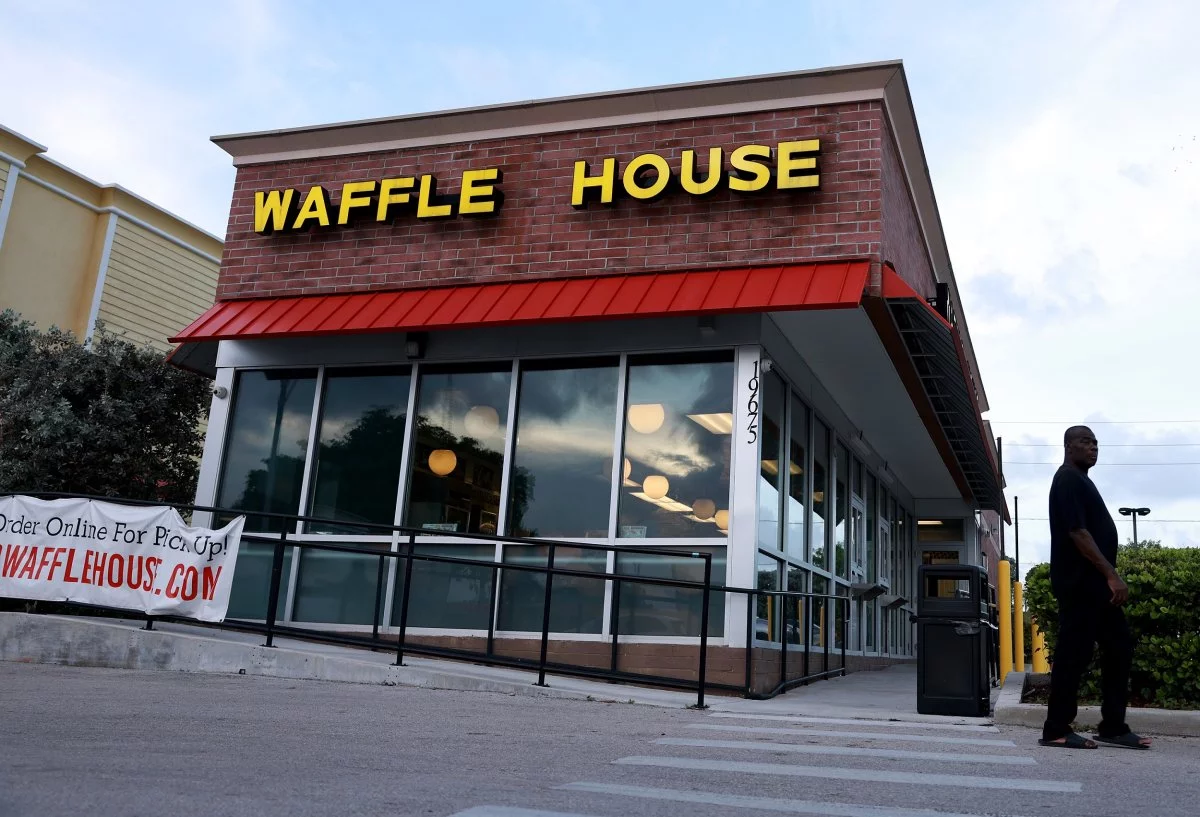
The appointment of Gregg Phillips as head of FEMA’s Office of Response and Recovery—paired with his public claims of involuntary “teleportation”—has quickly become more than a curiosity. It is a revealing governance moment for an agency whose effectiveness depends on trust, predictability, and operational discipline. According to the account circulating from a January 2025 podcast interview, Phillips described episodes in which he allegedly materialized miles from his starting point, including a roadside ditch roughly 40 miles away and, separately, a Waffle House about 50 miles from home.
For FEMA, the issue is not merely whether such stories are literally true or metaphorical, medical, or misremembered. The immediate institutional risk is that a senior crisis-response leader publicly framing events as “unexplainable forces” can erode the perception that FEMA’s command structure is grounded in evidence-based decision-making—a prerequisite for coordinating governors’ offices, state emergency managers, the National Guard, public-health agencies, utilities, and private logistics providers during catastrophic events.
This reputational exposure arrives at a time when FEMA’s mission is being reshaped by climate-driven disaster frequency and severity, from compound flooding to megafires and heat emergencies. In that environment, leadership credibility is not a soft asset; it is a core operational input that influences compliance, cooperation, and speed.
Vetting, qualifications, and the governance signal sent to partners and markets
Phillips’s background—reported as rooted more in far-right election conspiracy activism than in conventional disaster-management leadership—raises a second-order question that business and technology stakeholders watch closely: What does this appointment indicate about vetting standards for mission-critical federal roles?
In high-reliability organizations, senior appointments typically emphasize demonstrated competence in areas such as:
- Incident command and interagency coordination
- Supply-chain and logistics management under uncertainty
- Risk communication and public trust maintenance
- Budget stewardship and procurement integrity
- Data literacy, including the ability to interpret forecasts, models, and operational metrics
When an agency’s leadership profile appears misaligned with those requirements, external stakeholders—especially those who must integrate with FEMA under pressure—begin to price in additional friction. That can manifest as slower collaboration, more cautious information-sharing, and heightened political or legal defensiveness at exactly the wrong time.
For the private sector, FEMA is not just a public institution; it is also a major node in a sprawling response economy that includes debris removal contractors, satellite and geospatial vendors, temporary housing suppliers, insurers, telecom providers, and critical-infrastructure operators. Any perceived instability at the top can translate into practical concerns:
- Counterparty risk in long-term framework agreements
- Procurement delays if oversight intensifies or decision rights become contested
- Operational ambiguity during fast-moving disasters when vendors need clear authority and rapid approvals
In other words, the controversy is not confined to Washington optics. It can ripple into the execution layer where hours matter and ambiguity is costly.
Operational consequences: uncertainty is the enemy of emergency management
Emergency response is fundamentally an exercise in reducing uncertainty—through planning, rehearsals, common operating pictures, and disciplined communications. A leader whose public narrative invites questions about judgment or stability can introduce a different kind of uncertainty: not about the weather or the fireline, but about the reliability of decisions.
Even if FEMA’s day-to-day work remains driven by career professionals and established doctrine, leadership controversy can still create measurable drag:
- Morale and retention pressure among technical staff who expect professional norms
- Coordination friction with state and local counterparts who may hesitate to align messaging
- Distraction costs as internal teams manage reputational fallout alongside operational demands
This is particularly salient as FEMA and its partners pursue modernization initiatives—often framed as “digital transformation,” but operationally centered on speed, accuracy, and transparency. Programs that rely on trust and adoption—such as AI-assisted damage assessment, satellite imagery workflows, and advanced logistics platforms—can stall if stakeholders perceive leadership as unpredictable or politically volatile.
Technology adoption in emergency management is rarely blocked by tools alone; it is blocked by governance confidence: Who owns the decision? Who is accountable? Will the program survive leadership churn? A credibility crisis can quietly weaken all three.
What this episode implies for oversight, resilience, and modernization strategy
The Phillips controversy concentrates attention on a broader institutional challenge: how agencies safeguard mission performance when leadership selection becomes a proxy battlefield for ideology, loyalty, or media spectacle. For FEMA—an agency that must function credibly across partisan lines—the strategic imperative is to anchor legitimacy in transparent performance and professional standards, not personalities.
Several practical governance moves are likely to gain traction in the wake of such scrutiny:
- Stronger appointment vetting for high-stakes operational roles, including credential review and structured peer evaluation
- Clear, public performance metrics tied to response times, resource utilization, and audit-ready procurement practices
- Continuity protections for public-private partnerships, ensuring contracts and response frameworks remain stable amid leadership controversy
- Deeper investment in technical bench strength, from climate risk modeling to logistics analytics and crisis communications
For business and technology leaders watching federal resilience efforts, the signal is straightforward: the effectiveness of disaster response increasingly depends on institutional credibility as infrastructure—as essential as trucks, shelters, and supply depots. When credibility is weakened, the entire response ecosystem pays a coordination tax.
FEMA’s mandate is expanding under climate pressure, and its modernization agenda depends on trust at scale. The central question raised here is not whether an extraordinary personal story is believable; it is whether the systems that select and supervise leaders are robust enough to keep the nation’s emergency management apparatus focused on reality, readiness, and results when the next disaster arrives.

 By
By
 By
By
 By
By
 By
By
 By
By


 By
By







