


A defining handoff at Berkshire Hathaway: from capital allocator to operating architect
Greg Abel’s expected ascent to CEO of Berkshire Hathaway marks one of the most consequential leadership transitions in modern corporate history—not because it signals a break from Warren Buffett’s philosophy, but because it tests whether a conglomerate built on exceptional capital allocation can evolve into its next era with operational excellence as a more visible strategic engine.
For six decades, Buffett’s model has been both elegant and unusually centralized where it matters most: capital deployment. Berkshire’s subsidiaries have largely been allowed to run autonomously, while the parent company’s distinctive advantage came from disciplined investing, the productive use of insurance float, and a patient, opportunistic approach to acquisitions. Abel inherits that architecture, but his professional identity—long rooted in running complex businesses—suggests a subtle rebalancing: more systematized operating leverage across the portfolio, without collapsing the decentralized culture that has historically attracted strong managers.
The market’s attention is therefore less about whether Berkshire will remain “Berkshire,” and more about how Abel will define the next iteration of the Berkshire playbook—especially as macro conditions, investor expectations, and technology reshape what “best-in-class” looks like for diversified industrial and financial enterprises.
The Tim Cook parallel: continuity that still changes the company
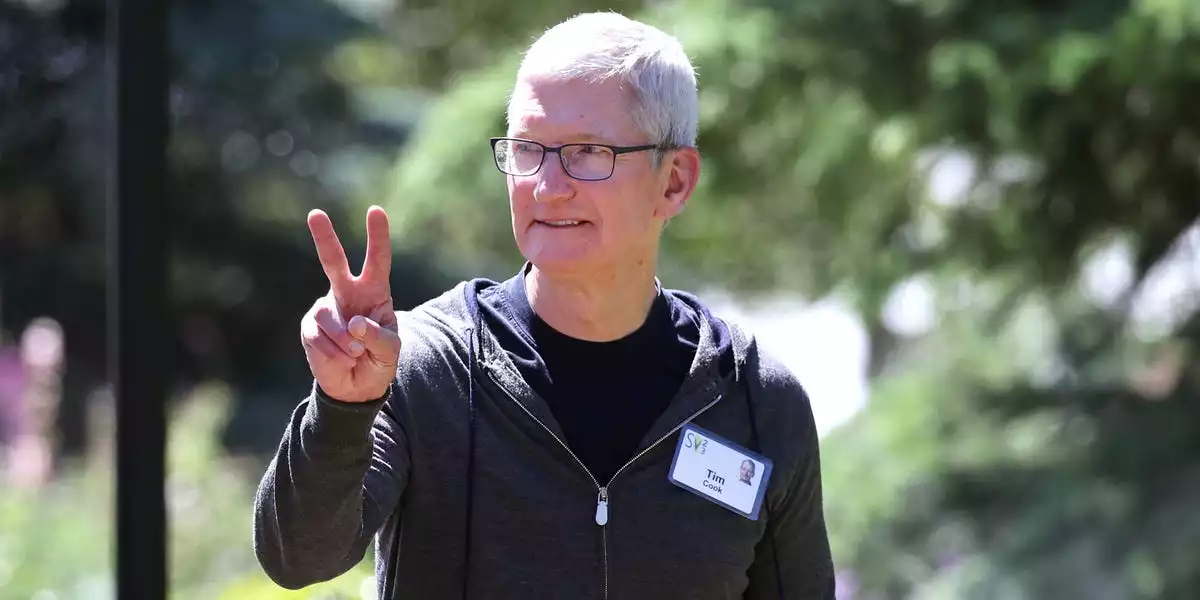
The comparison to Apple’s succession from Steve Jobs to Tim Cook is instructive precisely because it highlights a non-obvious truth: continuity can be transformative. Cook did not attempt to replicate Jobs’ product-genius persona; instead, he scaled Apple through operational discipline, supply-chain mastery, and a more distributed leadership model. The results—dramatic growth in sales and income and a market capitalization that reached the multi-trillion-dollar tier—demonstrate how a successor can expand an icon’s legacy by leaning into different strengths.
For Berkshire, the analogy is not about turning a conglomerate into a tech company. It is about the leadership mechanics that often separate stable succession from stagnation:
- Collective decision-making without bureaucratization: Cook institutionalized cross-functional coordination; Abel may need to introduce more structured forums and performance metrics across subsidiaries while preserving autonomy.
- Geographic and operational diversification as a feature, not a byproduct: Apple’s global footprint became a strategic advantage under Cook; Berkshire’s breadth—rail, utilities, manufacturing, retail, insurance—could similarly become a platform for shared capabilities.
- Values preservation with modern governance: Both companies face the same core tension: protect the cultural DNA (integrity, long-termism, quality) while adapting to new regulatory, labor, and stakeholder realities.
This is where Abel’s leadership will be most scrutinized: not for dramatic strategic pivots, but for whether he can codify a scalable operating system across a federation of businesses that historically succeeded by being left alone.
Operational excellence as Berkshire’s next compounding lever
Berkshire’s portfolio is rich with operationally intensive businesses—BNSF railway, Berkshire Hathaway Energy, manufacturing and industrial units, and a sprawling set of service and retail brands. These enterprises generate substantial cash flows, but they also contain the kinds of “hidden” value that modern operations analytics can unlock: better asset utilization, lower downtime, improved procurement economics, and more precise capital expenditure prioritization.
Abel’s operating background positions him to elevate several themes that have become standard in high-performing global enterprises:
- Advanced operations analytics and predictive maintenance: Rail and utilities are prime candidates for AI-driven forecasting, condition-based maintenance, and reliability optimization.
- Integrated procurement and shared services where it doesn’t dilute autonomy: Berkshire’s decentralized model can coexist with selective scale benefits—particularly in commodity inputs, logistics, and enterprise software procurement.
- Capital allocation informed by granular KPIs: Buffett’s genius was deploying capital with discipline; Abel can augment that by tying investment decisions more tightly to operational leading indicators—turning “good businesses” into measurably improving systems.
A key strategic nuance: operational rigor does not have to mean central control. The most effective version of this shift would resemble a platform approach—Berkshire enabling tools, benchmarks, and best-practice exchange, while subsidiaries retain decision rights and entrepreneurial accountability.
Capital returns, technology adoption, and the new expectations of conglomerate governance
The macro backdrop matters. In a world where interest rates and yield expectations can rise quickly, investors often demand clearer frameworks for returning capital. Berkshire has historically favored reinvestment and opportunistic buybacks over dividends, reflecting Buffett’s belief that retained earnings could be compounded at attractive rates. Under Abel, the conversation may broaden—not necessarily toward a high payout, but toward a more explicit capital return policy that balances flexibility with predictability.
Several forward-looking issues are likely to define early perceptions of Abel’s Berkshire:
- Dividend policy and structured repurchases: Even a modest dividend could signal maturity and responsiveness to shareholder preferences, while systematic buybacks could provide clarity without sacrificing optionality for acquisitions.
- ESG and disclosure pressure: Institutional investors increasingly expect transparent succession planning, climate strategy, and governance reporting—particularly relevant for Berkshire’s energy holdings and industrial footprint.
- Digital transformation in “traditional” sectors: The most underappreciated opportunity may be applying a tech mindset to Berkshire’s industrial base—IoT-enabled asset monitoring in rail, smart-grid analytics in utilities, telematics and data science in insurance underwriting and claims.
If Apple’s evolution under Cook illustrates anything, it is that operational leadership can be a growth strategy—not merely a cost strategy. For Berkshire, the prize is not reinvention for its own sake, but a next-generation conglomerate model: Buffett’s capital discipline fused with Abel’s operating cadence, modern analytics, and governance practices that meet contemporary investor standards.
The real test will be whether Berkshire can institutionalize these upgrades without losing the cultural advantage that made it rare in the first place: a company where exceptional businesses choose to stay exceptional—because the parent company knows when to intervene, and when to get out of the way.

 By
By
 By
By
 By
By

 By
By


 By
By







