
Google has chosen Blue Origin’s New Glenn for Project Suncatcher’s first dedicated heavy-lift launch, targeted for the first quarter of 2029. The agreement, announced Nov. 19, gives Google’s space-based AI experiment something it did not previously have: a named rocket, a mission window, and a clearer path from prototype tests to a larger orbital deployment. For anyone tracking the scramble to secure enough power and capacity for AI, that is the real significance. Suncatcher is no longer just an intriguing lab concept; it is becoming a planned piece of infrastructure research.
The question readers should be asking is straightforward: does a dedicated New Glenn mission make orbital AI compute a credible investment option, or does it mainly buy Google time to learn whether physics, networking, launch cadence, and economics can work together? Right now, the answer leans toward the second. The deal makes Suncatcher more credible as a serious infrastructure experiment, but it does not make orbital data centers a near-term business.
What this agreement actually changes
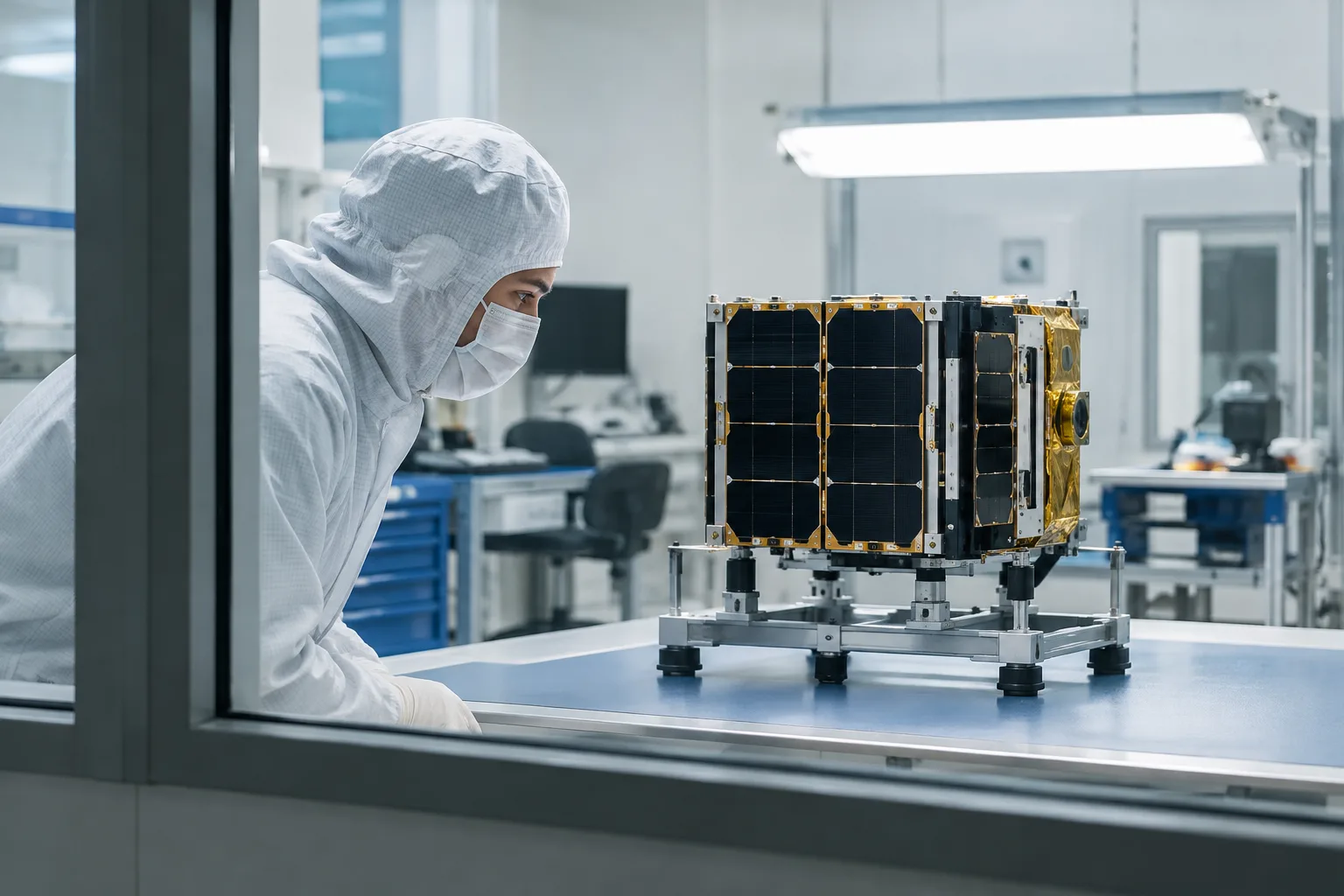
The new fact pattern is narrow but important. In its announcement, Blue Origin said Google’s first dedicated heavy-lift Suncatcher launch is targeted for Q1 2029 on New Glenn. Blue Origin also said the satellites are planned for sun-synchronous orbit and could each carry computing capacity roughly comparable to a data-center rack.
That is a meaningful step because earlier Suncatcher milestones were about proving hardware survival, not defining a launch architecture. Google introduced the project in November 2025 as a research effort built around solar-powered satellites with Tensor Processing Units and optical links. In a September 2026 update, Google said its first prototype would test launch vibration, radiation, thermal extremes, and vacuum cooling. On Oct. 1, Google said that prototype, built with Planet, launched on SpaceX’s Transporter-18 rideshare and established contact. On Oct. 30, Google reported a first AI response from a data-center-class TPU in orbit while continuing thermal and radiation tests.
Taken together, those updates show progress up the proof ladder: first get hardware into orbit, then show that it works at all, then plan for a larger mission. The Blue Origin deal is the first public marker that connects those early tests to a future heavy-lift deployment.
Just as notable is what remains undisclosed. There is no public contract value, exact launch date, satellite count, payload mass, TPU count, or statement that this will provide commercial cloud service. The companies also have not said whether the 2029 mission will carry production hardware, a demonstrator, or a cluster capable of distributed workloads. So the story is not that Google is moving its data centers to space. The story is that it has reserved a more serious testbed.
Why space appeals to AI planners — and why it is still hard
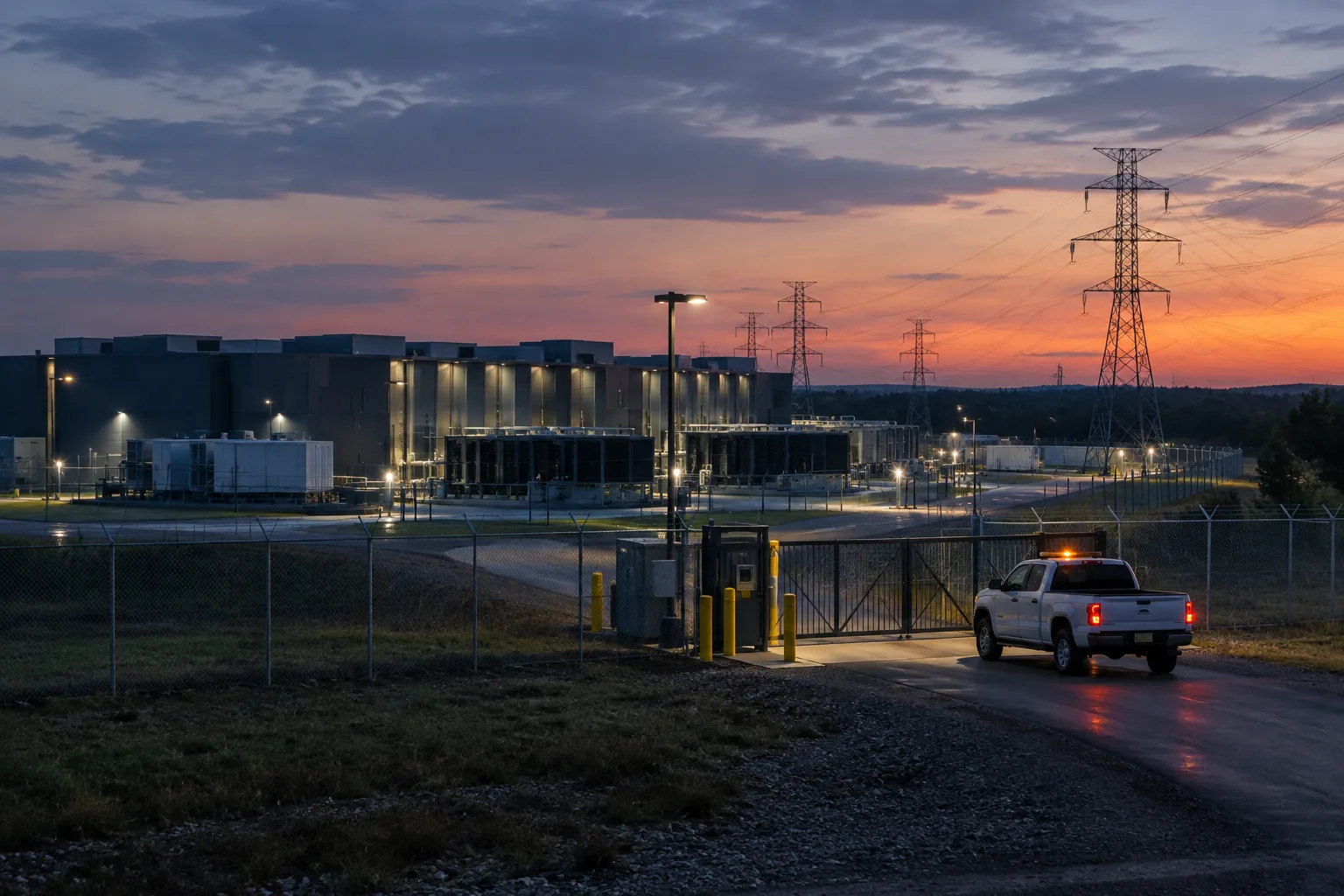
The attraction is easy to understand. Terrestrial AI campuses increasingly run into power bottlenecks, grid interconnection queues, land demands, water use, permitting fights, and local opposition. Suncatcher is, in effect, an option against those constraints. Google has argued that low-Earth-orbit satellites can receive near-constant sunlight and, in its comparison, up to eight times more solar power than on Earth.
But free sunlight does not make compute cheap. It shifts the problem set.
In orbit, a system has to survive radiation, keep high-performance chips within operating temperatures in a vacuum, and shed waste heat through radiators instead of air or water cooling. That makes thermal design central, not secondary. A rack-scale amount of computing power sounds impressive, but the harder question is how much of that power remains usable after conversion losses, cooling needs, and radiation protections are accounted for.
Then comes networking. Google’s long-term architecture depends on high-bandwidth laser links between satellites. A two-satellite interconnectivity test is planned for 2027, which means one of the core claims behind space-based compute — that multiple satellites can act as a useful connected system — remains future work. The first in-orbit AI response demonstrated that a TPU can operate in space. It did not demonstrate a fault-tolerant, economical, distributed compute fabric.
This is why the New Glenn agreement matters without settling the business case. A dedicated heavy-lift mission gives Google more room than a rideshare prototype ever could. It also gives Blue Origin a named future mission as it tries to broaden New Glenn’s business. But it does not remove the possibility that one or more parts of the architecture could prove too expensive, too fragile, or too slow to scale.
The scorecard that matters now
For investors, suppliers, and enterprise buyers, the most useful way to read this announcement is as a checklist for what must be disclosed or demonstrated next.
First is reliability under real workloads: radiation-induced error rates, thermal headroom, and how much useful compute survives once the system is power-limited and heat-limited. Second is networking: laser-link throughput, latency, and fault recovery when a connection drops or a satellite drifts out of optimal geometry. Third is operations: launch cadence, replacement cycles, orbital lifetime, debris-mitigation planning, and whether satellites can be refreshed quickly enough to keep up with terrestrial accelerator upgrades.
Then comes the hardest metric of all: cost per useful inference. That number would have to absorb launch, manufacturing, insurance, replacement, communications, and satellite operations, not just the appeal of abundant solar exposure. Neither Google nor Blue Origin has published the figures that would let outsiders compare orbital compute with a power-constrained data-center campus on Earth.
There is also execution risk around the launcher itself. Reuters noted that launch costs, engineering hurdles, and limited satellite production could keep orbital data centers years away from commercial use. Reuters also pointed to Blue Origin delays and a May 2026 launchpad explosion as reminders that a 2029 target is a roadmap date, not a guarantee.
That leaves Suncatcher in a strategically interesting middle ground. It is too early to treat orbital AI infrastructure as a new cloud region category, but it is late enough that launch providers, satellite makers, chip suppliers, infrastructure investors, and utilities should pay attention. If Google can clear the thermal, radiation, and networking hurdles, narrow use cases tied to Earth observation, communications, or scientific data could become plausible before any broad replacement of terrestrial campuses. If the economics fail, the research may still pay off in better radiation tolerance, thermal systems, and satellite networking.
For now, the New Glenn agreement looks less like proof that compute is escaping Earth and more like Google buying time — and a real mission slot — to find out whether that future can survive contact with engineering and cost.

 By
 By

 By

 By

 By