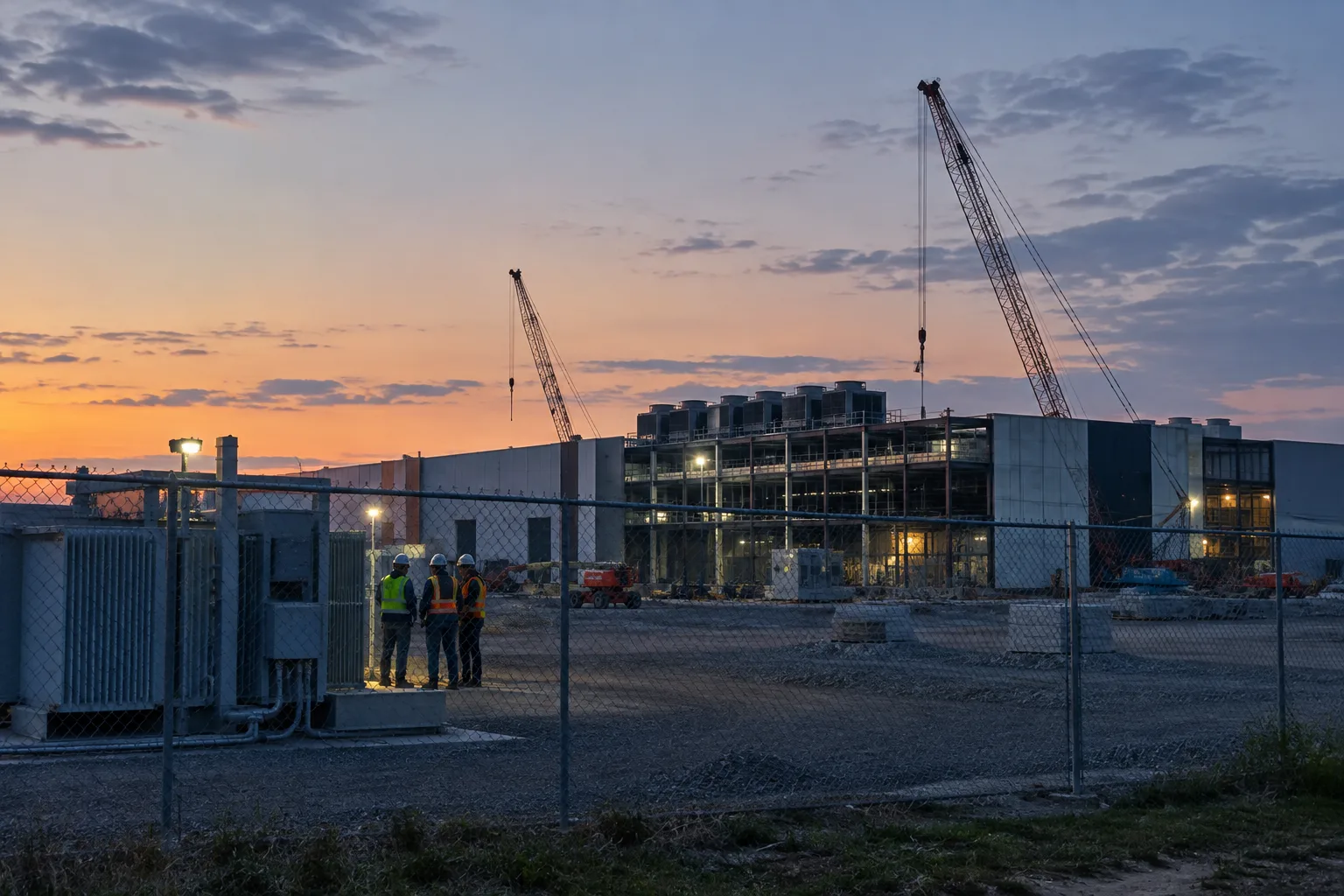

Google’s Nuclear Gambit: Redefining the Power Playbook for Data Centers
In a move that signals a tectonic shift in the intersection of technology and energy, Google has inked a landmark power-purchase agreement with the Tennessee Valley Authority (TVA) to source electricity from Kairos Power’s Hermes 2 molten-salt small modular reactor (SMR) in Oak Ridge, Tennessee. This is no mere procurement contract—it is a strategic blueprint for the future of carbon-free digital infrastructure, with implications rippling far beyond the data center walls.
The Promise and Peril of Advanced Nuclear for the Digital Age
At the heart of this agreement is the Hermes 2 reactor, a fluoride-salt-cooled, high-temperature design that marks a departure from the conventional water-cooled nuclear paradigm. By leveraging TRISO particle fuel and operating at atmospheric pressure, Hermes 2 eliminates the need for the massive containment domes that have long defined nuclear architecture. The result is a reactor that is not only safer and more flexible but also amenable to factory fabrication—potentially slashing construction timelines and costs.
This technological leap is underscored by a regulatory milestone: the Nuclear Regulatory Commission’s recent approval of the initial Hermes demonstration is the first for a non-water-cooled reactor in the U.S. in over half a century. If successful, this will serve as a precedent, streamlining the path for other advanced nuclear designs and catalyzing a new era of standardized, scalable licensing.
Yet the promise of advanced nuclear is tethered to the realities of supply chain and fuel availability. Hermes 2 will require high-assay, low-enriched uranium (HALEU), a fuel not yet produced at scale in the United States. Google’s demand, however, could provide the commercial impetus needed to jumpstart domestic enrichment projects, aligning private capital with federal incentives under the Inflation Reduction Act.
Financing Innovation: How Tech Giants Are Reshaping Utility Economics
The financial architecture of the Google-TVA deal is as innovative as the technology itself. By anchoring a long-term offtake agreement, Google delivers the revenue certainty lenders crave, lowering the cost of capital for what would otherwise be a high-risk, first-of-a-kind nuclear asset. TVA, meanwhile, retains ownership—spreading risk across its customer base and leveraging its federal borrowing capacity. This hybrid public-private model may well become the template for future high-stakes energy infrastructure.
For Google, the rationale is clear. The relentless expansion of AI-powered data centers is flattening the company’s load curve, making firm, non-intermittent power more valuable than ever. While solar, wind, and batteries have dominated the marginal cost conversation, they cannot yet match the 24/7 reliability that regulators and investors increasingly demand. Advanced nuclear, with its promise of carbon-free baseload power, offers a compelling solution.
The broader industry is watching closely. Microsoft and Amazon are already experimenting with geothermal and hydrogen power-purchase agreements, but Google’s nuclear pivot raises the competitive stakes. As hyperscale tech firms become de facto load-serving entities, their influence over the generation mix will reshape utility planning and potentially crowd the field for future SMR supply.
Policy, Workforce, and the New Industrial Geography
The Oak Ridge project is not just a technological showcase—it is a linchpin in the Biden administration’s industrial policy, reviving a historic nuclear hub and shortening energy-technology supply chains at a moment of heightened geopolitical tension. The presence of a marquee tech buyer strengthens the case for Department of Energy grants in advanced fuels and reactor components, and may accelerate the reshoring of critical infrastructure.
Policy tailwinds are substantial. The Inflation Reduction Act’s $30/MWh nuclear production tax credit stands to lower the levelized cost of electricity to parity with natural gas, even before accounting for carbon pricing. Yet, scrutiny is intensifying. As Google claims clean-energy attributes, regulators and investors are sharpening their definitions of “carbon-free,” with new SEC and EU disclosure requirements on the horizon.
Workforce development is another critical frontier. The deployment of SMRs will require a new generation of nuclear technicians, versed not only in reactor operations but also in digital twins and advanced materials. Community colleges and national labs across the Southeast are already positioning themselves to fill this labor niche, underscoring the broader socioeconomic impact of advanced nuclear deployment.
Strategic Imperatives for the Next Decade
The Google-TVA-Kairos alliance is more than a headline; it is a harbinger. As corporate-anchored nuclear PPAs proliferate, utilities would be wise to pre-identify brownfield sites ripe for redevelopment, while energy buyers should consider advanced nuclear as a hedge against both price volatility and renewable saturation risk. Securing domestic HALEU supply will be essential, and forward-thinking corporates may even take minority stakes in enrichment ventures to lock in pricing and availability.
High-temperature reactors like Hermes 2 could ultimately underpin entire low-carbon industrial clusters—enabling hydrogen production, sustainable fuels, and even desalination. For data center operators, this opens the door to monetizing excess heat or partnering in co-located industrial ventures, weaving energy infrastructure more tightly into the fabric of the digital economy.
As the lines between digital and energy infrastructure blur, those who grasp the converging trajectories of decarbonization, compute demand, and nuclear innovation will be best positioned to lead in a resilient, low-carbon industrial era.

 By
By
 By
By
 By
By

 By
By
 By
By
 By
By