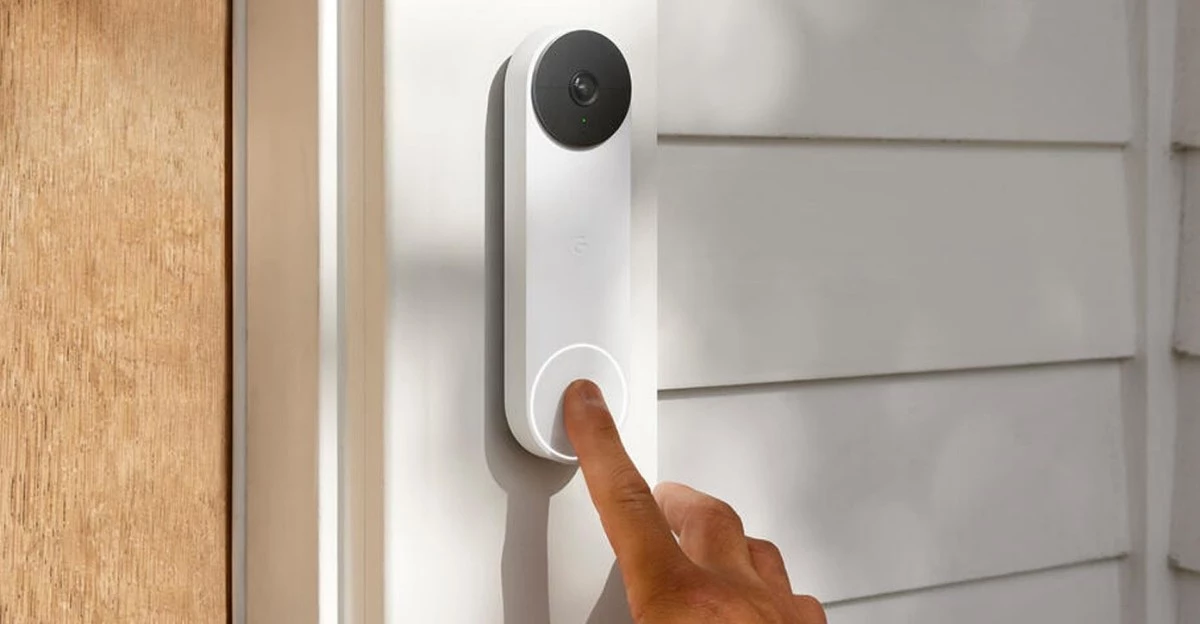

Price cuts that look like a product strategy, not a seasonal sale
Google’s Nest Doorbell lineup is being pulled into a sharper value band, with the second-generation battery Nest Doorbell discounted to $129.99 (down $50) and the third-generation wired Nest Doorbell at $139.99 (down $40). Both prices align with recent historical lows, but the more telling signal is how tightly Google has positioned the two models: a roughly $10 spread that nudges buyers to decide based on installation realities and long-term usage rather than sticker shock.
From a market perspective, this kind of synchronized discounting often serves multiple objectives at once:
- Lowering adoption friction for first-time smart doorbell buyers who are price-sensitive or uncertain about subscriptions
- Expanding the installed base ahead of future software and AI feature rollouts
- Managing channel inventory in a category where refresh cycles and competitive promotions can quickly erode average selling prices
For consumers, the timing is straightforward: sub-$150 pricing makes a smart doorbell feel less like a luxury gadget and more like a practical upgrade for last-mile delivery security, visitor verification, and household monitoring. For Google, the pricing reads as a deliberate move to widen the funnel into the Google Home and Nest ecosystem, where services—not hardware—can define lifetime value.
Two doorbells, two architectures, one ecosystem bet
Google’s split between battery-powered and wired models maps cleanly to two large segments: renters and flexible installs versus homeowners and permanence. The battery model’s appeal is obvious—no wiring, fewer constraints, faster setup. The wired model, however, is positioned as the “performance” choice, and Google has made the differentiation tangible.
Key spec and experience differences shape the decision:
- Video quality and coverage
– Wired: 2K resolution and a 166-degree field of view
– Battery: 960p, optimized for power efficiency and simpler deployment
- Preview and recording behavior
– Wired: longer continuous preview window (notably more robust for always-on households)
– Battery: more event-driven behavior to preserve battery life
- Core smart features included without a subscription
– People, package, and animal detection alerts
– Two-way audio, night vision, and full-height framing for porch-to-door visibility
- Native integration
– Smooth pairing with Google TV, Nest displays, and the Google Home app, reinforcing Google’s “single pane of glass” ambition for the connected home
This is feature stratification with a purpose. Google is effectively saying: choose your power source and installation constraints first, then decide how far you want to go into premium intelligence. The hardware becomes the entry point; the ecosystem becomes the differentiator.
AI at the doorstep: edge detection now, Gemini-assisted identity later
The most consequential layer here is not the lens or the mounting bracket—it’s the AI roadmap. Even without a subscription, buyers get meaningful on-device and cloud-assisted detection for common doorstep events. That matters because it reduces the “paywall frustration” that has become a recurring complaint in the smart security market.
Where Google draws a sharper line is in its paid tiers—Google Home Premium and Premium Advanced (starting around $10/month and $20/month). These subscriptions unlock capabilities that increasingly define modern home security products:
- Extended event history (up to 30 days), shifting the device from “live awareness” to “forensic utility”
- Gemini-powered facial recognition, signaling Google’s intent to bring its flagship AI models into consumer security workflows
- 24/7 recording (where supported), moving from clips to continuous accountability
- Faster search and lookup tools that make video archives usable rather than merely stored
This is the emerging edge-cloud synergy play: detection and responsiveness at the device level, deeper interpretation and retrieval in the cloud. For Google, the inclusion of Gemini branding is also a strategic marker—an attempt to make advanced AI feel like a practical household benefit rather than an abstract platform capability.
At the same time, the move intensifies familiar governance questions. Facial recognition and always-on recording are precisely the features that attract regulatory scrutiny and consumer hesitation. The industry’s next competitive frontier may be less about who has AI, and more about who can credibly offer:
- Clear consent controls for household members and visitors
- Transparent retention policies and user-friendly deletion workflows
- A stronger balance between local processing and cloud dependence
In other words, the doorbell category is becoming a frontline test of whether “AI-first” can also be “privacy-resilient.”
The business model beneath the bargain: subscriptions, lock-in, and competitive pressure
These discounts fit a broader pattern in consumer IoT: compress hardware margins to expand recurring revenue. Smart doorbells increasingly resemble the classic razor-and-blade dynamic—sell the device aggressively, then monetize through storage, intelligence, and convenience.
Google’s approach also lands in a crowded competitive field. Rivals such as Amazon Ring, Arlo, and Eufy compete through bundles, platform tie-ins, and differing philosophies on cloud dependence. Google’s differentiator is its tight integration with Google Home, plus an AI-forward premium tier that aims to justify subscription pricing through capability rather than content or advertising.
The battery model is particularly important in this context because it targets the renter and multi-tenant segment, where installation barriers historically limited adoption. If Google can convert renters into long-term ecosystem users—people who later buy thermostats, displays, cameras, or even migrate into wired installs—it gains a durable foothold that extends beyond a single device.
For business and technology leaders, the signal is clear: Google is treating the smart doorstep as both a security endpoint and a data-and-services gateway. The immediate story is a pair of attractive prices; the deeper story is a platform company using hardware promotions to expand its AI-enabled home footprint—one front door at a time.

 By
By
 By
By
 By
By

 By
By
 By
By
 By
By
 By
By