


GM’s post-Cruise reset: from robotaxi ambition to consumer-grade autonomy
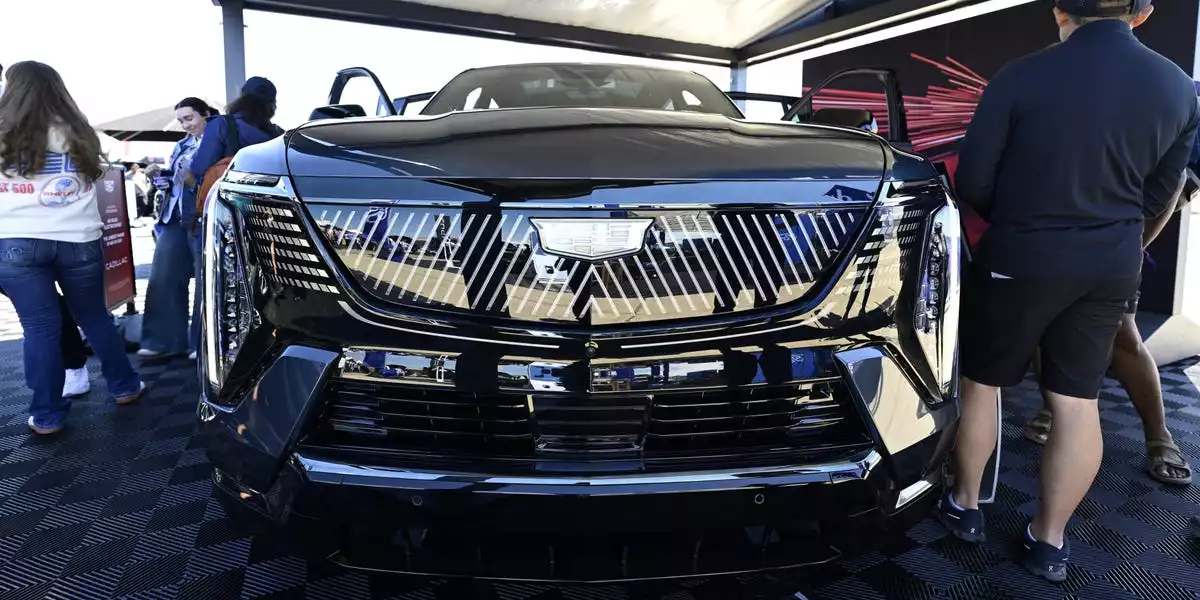
General Motors’ plan to deliver eyes-off highway driving by 2028, beginning with the Cadillac Escalade IQ, signals a deliberate recalibration of its autonomy strategy. After shuttering its Cruise robotaxi operation in 2024—following years of heavy investment, regulatory friction, and safety scrutiny—GM is returning to a domain where it can control variables more tightly: privately owned vehicles operating on highways.
This pivot is not a retreat from autonomy so much as a re-sequencing of risk. Robotaxis demand near-flawless performance in dense, adversarial environments while carrying heightened public and regulatory expectations. By contrast, highway autonomy offers a more structured operating domain: clearer lane geometry, fewer vulnerable road users, and more predictable traffic flows. For GM, the business logic is equally clear: instead of funding a bespoke fleet with uncertain unit economics, it can embed autonomy into premium consumer vehicles and monetize it through feature pricing, subscriptions, and software upgrades.
The choice of the Escalade IQ is also telling. Luxury flagships are where automakers can introduce expensive compute, sensors, and validation processes with less margin pressure—while positioning autonomy as an aspirational differentiator rather than a commodity.
A modular autonomy roadmap: why “highway first” changes the engineering equation
GM’s approach is built around segmenting the driving task—starting with long highway stretches, then expanding toward arterial roads and eventually more complex urban environments. This modular architecture matters because autonomy is not one product; it is a stack of capabilities that must be validated across an enormous range of scenarios.
Key technical implications of the “highway-first” strategy include:
- Operational design domain (ODD) discipline: Highways provide a constrained environment where perception, prediction, and planning can be tuned with fewer edge cases than city streets.
- Reusable mapping and validation assets: High-precision maps, sensor calibration routines, and safety cases developed for interstate corridors can become foundational building blocks for later expansions.
- Super Cruise as a software-defined platform: GM’s existing Super Cruise footprint—bolstered by extensive hands-free driving miles—creates a feedback loop where real-world usage informs model improvements and system design.
- Over-the-air (OTA) scalability: Eyes-off capability implies not just better autonomy, but a mature pipeline for remote updates, regression testing, and fleet-wide deployment governance—the operational backbone of any software-defined vehicle strategy.
The emphasis on platformization is crucial for AI and autonomy. A modern driver assistance system is increasingly a data business: the ability to collect, label, learn, and redeploy improvements safely often separates leaders from laggards more than any single sensor choice.
Talent, governance, and credibility: rebuilding momentum with experienced autonomy leadership
GM’s autonomy narrative now runs through a reorganized team under Sterling Anderson, previously associated with Tesla’s Autopilot program, alongside key hires such as Ronalee Mann and the return of roughly 100 former Cruise engineers. In autonomy, institutional knowledge is not a soft asset—it is a compounding advantage. Safety cases, simulation frameworks, edge-case libraries, and validation methodologies take years to mature, and losing them can set programs back more than any hardware delay.
This talent strategy also addresses a central challenge: credibility. The Cruise episode left GM needing to demonstrate that it can deliver autonomy with a safety-first posture and regulator-ready transparency. A phased rollout supports that goal by narrowing the initial risk envelope and enabling more controlled launch geographies.
From a governance perspective, eyes-off driving raises the bar across several dimensions:
- Functional safety and redundancy: Eyes-off implies the system must manage failures gracefully, including sensor degradation, unexpected road conditions, and safe fallback maneuvers.
- Cybersecurity and data protection: As autonomy systems ingest richer telemetry, GM will face intensifying scrutiny around privacy compliance, secure OTA pipelines, and adversarial threats.
- Human factors and driver monitoring: “Eyes-off” is as much a behavioral challenge as a technical one—requiring clear boundaries, robust monitoring, and unambiguous handoff protocols to prevent misuse.
The strategic bet is that disciplined execution on highways can rebuild consumer trust and regulatory confidence—two currencies that robotaxi programs burn through quickly when incidents occur.
The business model beneath the technology: premium autonomy now, robotaxi optionality later
Economically, GM’s shift is a study in capital efficiency. Embedding autonomy into retail vehicles turns each sale into both revenue and a rolling data node, while avoiding the balance-sheet intensity of operating a dedicated robotaxi fleet. It also opens the door to recurring software revenue, where autonomy features can be packaged as:
- Premium trims and option bundles
- Monthly or annual subscriptions
- Feature unlocks tied to geography (geofenced capability tiers)
- Insurance-linked offerings, where safer automated driving could translate into pricing advantages in exchange for usage data
Strategically, GM is preserving optionality. The company argues its highway autonomy platform can evolve into robotaxi capability if market conditions improve—an important hedge as competitors and startups continue to pursue full ride-hailing autonomy. This “build the stack in consumer vehicles first” posture also strengthens GM’s leverage with suppliers by scaling demand for compute and sensors through retail volumes, potentially improving pricing power and supply assurance.
The broader industry context reinforces why GM is choosing a measured path. Autonomous vehicle regulation remains fragmented, with jurisdictions diverging on testing, liability, and reporting requirements. A geofenced, phased deployment allows GM to target favorable “green zones,” iterate faster, and avoid becoming a political symbol in hostile markets.
GM’s 2028 eyes-off highway target will ultimately be judged on execution: safety performance, clarity of operating limits, and the company’s ability to translate autonomy into a durable software business. If it succeeds, the Escalade IQ won’t just be a luxury EV with advanced driver assistance—it will be GM’s proof point that autonomy can be productized responsibly, monetized repeatedly, and scaled without the existential volatility that has defined the robotaxi race.

 By
By
 By
By

 By
By
 By
By
 By
By
 By
By
 By
By







