
Hormuz as a single point of failure—and the speed at which shock becomes scarcity
The blockade of the Strait of Hormuz amid escalating conflict involving Iran is once again exposing a structural reality of the modern economy: a geographically narrow corridor can transmit disruption across energy, shipping, agriculture, and household welfare with remarkable speed. With a sharp and sustained rise in global oil and gas prices, the immediate market response has been both predictable and destabilizing—panic buying, localized shortages, and emergency state intervention.
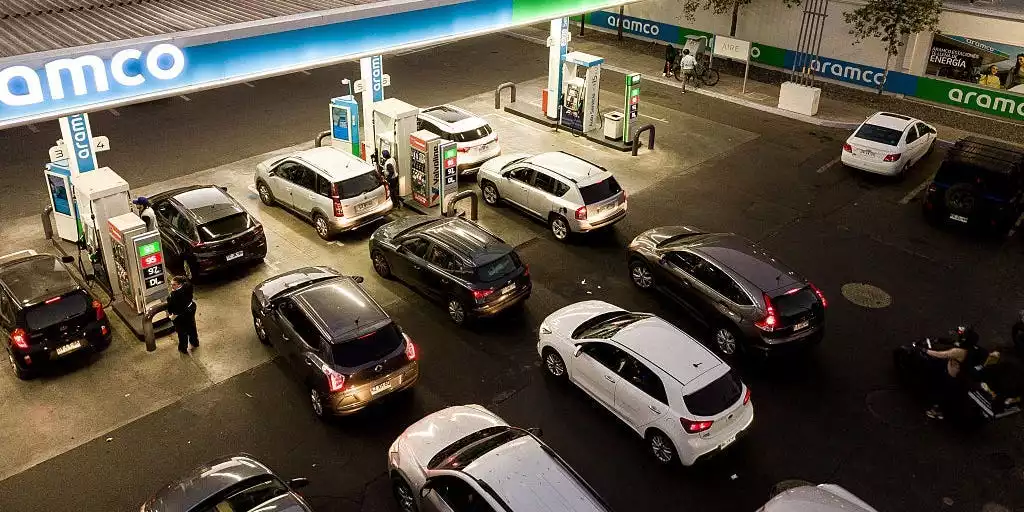
What stands out in this episode is not merely the price spike itself, but how quickly it has translated into physical constraints in downstream markets. Thailand’s reports of station outages, the Philippines’ declaration of a “national energy emergency,” and India’s LPG shortfalls forcing street vendors back to coal and wood are not abstract indicators. They are real-time evidence that energy security is not only a macroeconomic variable; it is a day-to-day operational dependency for transport fleets, small businesses, and public services.
Across regions, policy responses are converging on a familiar playbook—price adjustments, subsidies, and rationing-by-friction—yet the distributional consequences differ sharply by income level and import dependence. Chile’s 54% fuel-price hike signals the political difficulty of shielding consumers when import costs surge. China’s moderated diesel adjustments reflect a different calculus: smoothing volatility to protect industrial continuity while avoiding runaway inflation expectations. Each approach is a reminder that energy shocks are ultimately governance stress tests—of fiscal capacity, administrative execution, and social tolerance.
Inflation transmission: from fuel pumps to freight rates to food security
Energy is a foundational input, and the inflation pathway is well mapped: higher crude and refined product prices raise transportation costs, which lift freight rates, which then feed into consumer prices across goods categories. The risk now is that the shock persists long enough to harden into a broader inflation regime—particularly in emerging markets where real incomes are already strained and monetary policy has limited room to maneuver.
UNCTAD’s warning adds a critical second-order dimension: the Strait of Hormuz is not only an energy chokepoint; it is also a conduit for agricultural inputs, notably fertilizer shipments. With roughly one-third of global fertilizer flows transiting the corridor, disruption can cascade into constrained supply, higher input costs for farmers, and ultimately food-price inflation. That combination—energy inflation plus food inflation—has historically been among the most socially sensitive and politically destabilizing mixes, especially in import-dependent economies.
Key macroeconomic implications are crystallizing:
- Inflationary acceleration: manufacturing, logistics, and services absorb higher energy costs, then pass them through unevenly, widening inequality between firms with pricing power and those without.
- Central bank dilemmas: tightening policy to curb inflation can suppress growth; staying loose can unanchor expectations—an especially acute trade-off for emerging markets.
- Commodity volatility beyond oil: fertilizer constraints can lift prices for staples, amplifying the risk of a cost-of-living crisis reminiscent of the COVID-era supply shock and the Ukraine-war food and energy surge.
The political economy is equally stark. When energy costs rise abruptly, governments often intervene to prevent unrest. But intervention is not free: it shifts the burden from consumers to the state balance sheet, and from today’s voters to tomorrow’s taxpayers.
Subsidies, fiscal credibility, and the new politics of energy affordability
The Philippines’ PHP 2.5 billion fuel subsidy package for public utilities illustrates how quickly emergency relief becomes fiscal exposure. Subsidies can be effective as short-term shock absorbers—particularly when targeted to essential services such as public transport and logistics corridors—but they also create contingent liabilities that can accumulate across months of elevated prices.
For finance ministries and sovereign credit analysts, the question is not whether support is justified, but whether it is:
- Targeted (protecting essential mobility and food distribution rather than broad consumption)
- Time-bound (with explicit sunset clauses)
- Transparent (minimizing leakage and black-market arbitrage)
- Compatible with debt sustainability (avoiding a spiral of borrowing to fund consumption)
Chile’s steep price adjustment highlights the alternative: letting prices clear can preserve fiscal space but risks social backlash and second-round inflation. China’s moderated adjustments underscore a third path: managed pricing to protect industrial stability, though it can shift pressure into state-owned enterprises or downstream inventories.
India’s reversion to coal and wood at the street level is perhaps the most telling signal of affordability stress. It reveals how quickly households and microenterprises substitute toward cheaper, higher-emission fuels when modern energy becomes scarce or unaffordable—an outcome that collides with public health goals and climate commitments. Energy transition narratives often focus on technology and capital expenditure; this moment underscores that energy transition is also a resilience and affordability project.
Technology, logistics, and strategic playbooks for a world of recurring chokepoint shocks
For business and technology leaders, the Hormuz disruption is a case study in why “just-in-time” supply chains struggle under geopolitical volatility. Rerouting around chokepoints—via longer maritime paths such as the Cape of Good Hope or alternative pipeline and terminal configurations—adds time, cost, and uncertainty. The competitive advantage increasingly belongs to firms that can see disruption early, model it accurately, and execute alternatives quickly.
Practical resilience is becoming more digital, more predictive, and more multi-modal:
- End-to-end visibility using real-time tracking, supplier telemetry, and AI-driven exception management
- Digital twins and scenario planning to stress-test procurement, inventory buffers, and transport capacity under price and route shocks
- Predictive analytics to anticipate demand spikes and prevent panic-driven stockouts
- Contract flexibility in chartering and freight—treating logistics as a strategic capability, not a back-office function
At the same time, the crisis is accelerating a strategic reassessment of energy sourcing. Distributed renewables, microgrids, storage, and alternative fuels are no longer framed solely as decarbonization tools; they are increasingly viewed as hedges against geopolitical price spikes. Early movers investing in advanced biofuels, hydrogen blending pilots, and modular low-carbon generation may find that resilience and ESG objectives align more tightly than they did in calmer markets.
The broader lesson is uncomfortable but clarifying: as long as critical commodities flow through narrow corridors, energy security will remain a defining variable of economic stability. The winners in this cycle will be those who treat volatility not as an anomaly, but as a design constraint—engineering supply chains, fiscal policies, and energy systems to function when the world does not.


 By
By

 By
By
 By
By

 By
By
 By
By