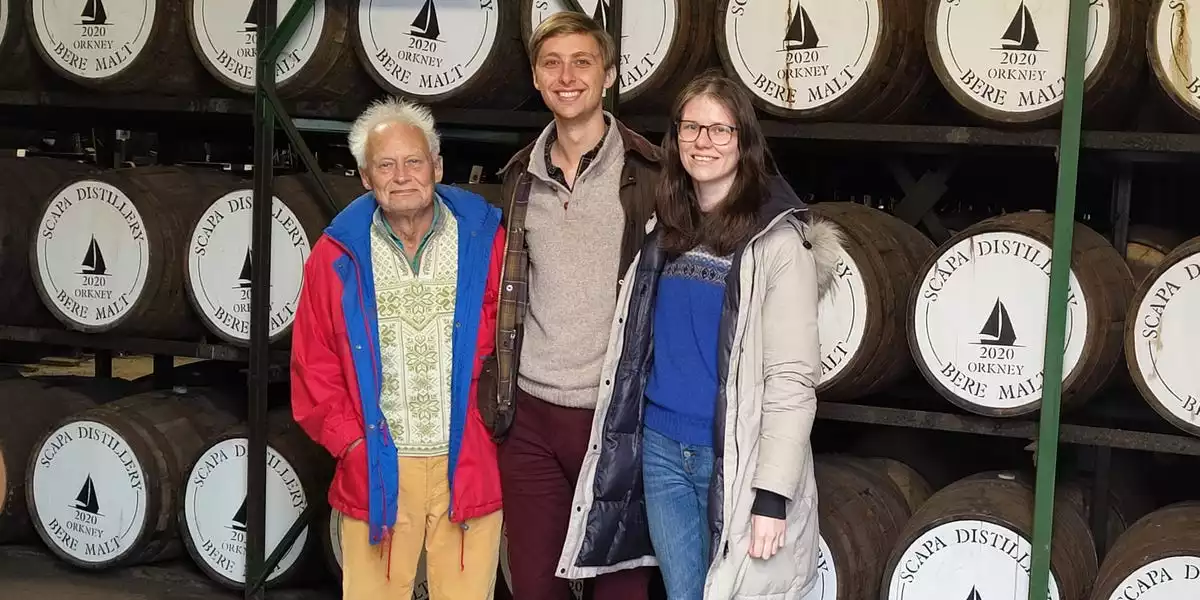

A family’s final itinerary as a signal of the emerging “silver experience economy”
Finn’s last nine months—six carefully curated trips undertaken after a peritoneal cancer diagnosis—read at first like an intimate family story: Seville’s street life, the wind-scoured Orkney Islands, and a final return to Scotland that made his declining strength unmistakable. Yet for business and technology leaders, the narrative functions as a market signal. It illustrates how aging demographics are reshaping tourism from a volume-driven industry into a high-touch, high-trust “silver experience economy.”
By 2030, more than one-fifth of citizens in many major economies will be over 65. That cohort is not simply “older travelers”; it is a segment with distinct purchase drivers:
- Personalization over standardization (pace, comfort, meaning, familiarity)
- Risk-managed spontaneity (freedom within medically safe boundaries)
- Longer stays and higher lifetime value (LTV) when trust is earned
- Decision-making by a “care circle” (family members, clinicians, caregivers), not only the traveler
Finn’s trips demonstrate the operational reality behind those drivers. The magic was often small—mime-ordering tea in Seville, lingering breakfasts, short walks that still felt like discovery—while the planning burden was substantial. For travel operators, this is the commercial opportunity: designing experiences that preserve dignity and delight without outsourcing the complexity to families. Brands that can productize that balance stand to capture a premium segment that is growing structurally, not cyclically.
Hospitality meets healthcare: toward “Hospitality 2.0” and care-integrated travel stacks
Finn’s journey also highlights a fast-forming convergence: healthcare and hospitality are becoming interoperable services, especially for travelers managing chronic illness, mobility limitations, or palliative timelines. In practice, this means the next generation of hotels, tour operators, and travel platforms will compete not only on location and service—but on care readiness.
A care-integrated travel model can include:
- Remote patient monitoring (RPM) via wearables and IoT vitals trackers
- Medication adherence support with real-time alerts and caregiver visibility
- Telemedicine access embedded into accommodations (private consult rooms, secure video links)
- Local clinical networks pre-vetted for urgent needs, with language and records support
- Mobility-first design (accessible transport, reduced walking routes, rest points, adaptive equipment)
The economic logic is straightforward. When healthcare capabilities are bundled into travel, providers can move from one-off bookings to membership or subscription-style “concierge health travel”—a model that can smooth demand, increase retention, and create recurring revenue. It also creates a data layer: with consent and strong privacy controls, aggregated insights can improve itinerary design, staffing, and risk management.
For technology vendors, this is a platform moment. The industry is primed for well-travel APIs that allow secure exchange of relevant health data between the traveler’s care team, the travel operator, and local providers—turning episodic trips into continuous care pathways. The winners will be those who can make interoperability feel invisible to the traveler while remaining auditable to regulators and insurers.
Purpose-driven travel as earned media: how authentic narratives become brand equity
After the trips, Finn reportedly became an informal “brand ambassador,” recounting the experiences from his hospital bed. That detail matters. It underscores a non-obvious marketing dynamic: purpose-driven travel generates unusually credible storytelling, and credibility is increasingly scarce in a crowded leisure market.
Unlike traditional influencer campaigns, these narratives are:
- High-trust (rooted in lived experience rather than sponsorship cues)
- Emotionally resonant (meaningful milestones, family connection, legacy)
- Memorable and repeatable (stories retold within communities and care networks)
- Aligned with brand differentiation (safety, empathy, adaptability, dignity)
For executives, the strategic question becomes how to enable storytelling without exploiting it. The answer lies in consent-led narrative infrastructure: opt-in platforms for user-generated content, privacy-preserving testimonial capture, and loyalty programs that reward sharing in ways that respect vulnerability. Some brands are already exploring VR/AR “memory capsules”—immersive recreations of meaningful moments that can serve multiple functions: customer retention, staff training, and differentiated marketing content.
Handled responsibly, this turns a single itinerary into scalable brand equity. Mishandled, it risks reputational harm. The competitive edge will come from governance: clear ethics, transparent permissions, and a tone that prioritizes the traveler’s agency over the company’s message.
Building resilient, modular travel operations for a volatility-first world
Finn’s family navigated travel in the post-COVID era—an environment defined by shifting border controls, fluctuating air capacity, and heightened scrutiny of health-sensitive itineraries. Their approach—micro-itineraries, flexible pacing, and adaptive logistics—mirrors what the industry increasingly needs at scale: modular operating models that can flex under disruption.
A resilience-oriented blueprint typically includes:
- Refundable micro-services (transport segments, guided blocks, medical add-ons) rather than rigid packages
- Dynamic risk and pricing hedges tied to geopolitical and public health signals
- Last-mile medical logistics (oxygen access, pharmacy coordination, equipment rental)
- Two-tier architecture: a standardized core offering plus specialized “spokes” for health-centric modules
This is where AI-driven personalization becomes more than a recommendation engine. For silver travelers, machine learning can optimize itineraries across competing constraints—mobility, fatigue thresholds, medication schedules, climate sensitivity, and emotional goals—while also improving operational efficiency. The most defensible advantage will come from integrating AI with real-world service delivery: trained staff, vetted partners, and clear escalation paths when conditions change.
Finn’s final odyssey ultimately reframes what “premium travel” can mean in the next decade: not maximal intensity, but maximal care, meaning, and adaptability. For the travel, hospitality, and health-tech sectors, the opportunity is to build ecosystems where safety and spontaneity coexist—where the industry doesn’t merely accommodate aging, but designs for it with the same ambition it once reserved for luxury alone.

 By
By
 By
By
 By
By
 By
By

 By
By
 By
By