

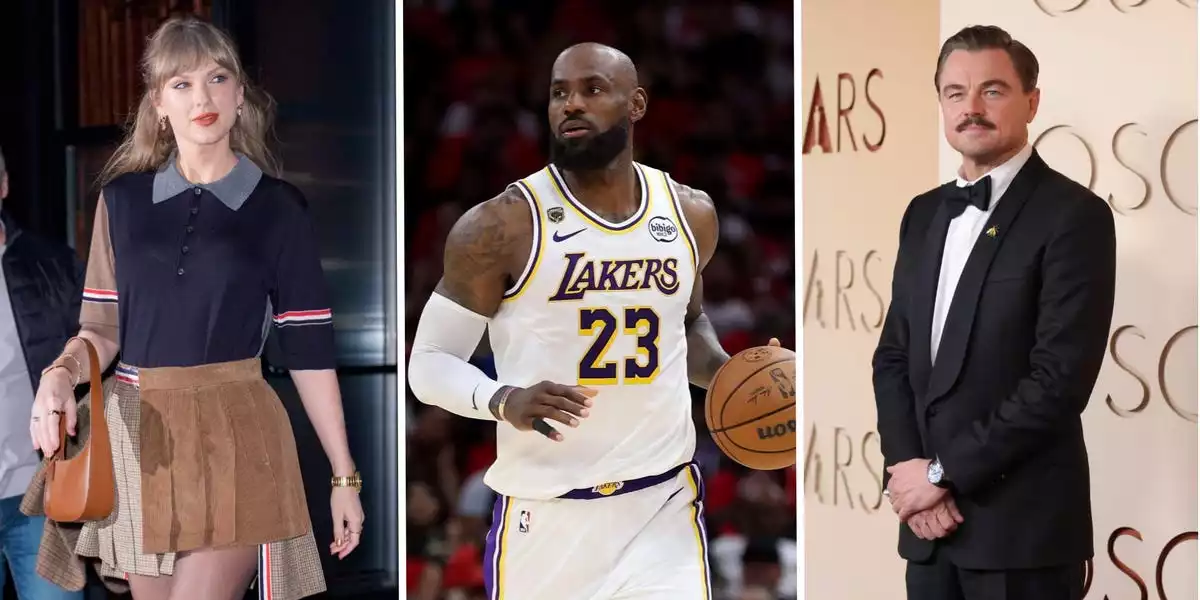

Place-of-origin storytelling becomes a scalable brand asset in modern celebrity economics
A state-by-state catalog of American celebrity origin stories—spanning figures such as Oprah Winfrey (Mississippi), Bruce Springsteen (New Jersey), Beyoncé (Texas), Leonardo DiCaprio (California), and Emma Stone (Arizona)—reads at first like cultural trivia. Look closer, and it functions as a map of how geography operates as brand infrastructure in the attention economy. Birthplace and upbringing are no longer incidental biographical details; they are durable narrative primitives that media companies, marketers, and platforms can repeatedly repackage across formats.
In a fragmented media landscape where audiences are segmented by identity, community, and algorithmic taste clusters, regional specificity cuts through. “From Mississippi” or “from Houston” is a shorthand for values, aesthetics, and social context—often more legible than genre labels or even filmographies. These stories create a portable authenticity that travels globally while still feeling local, enabling celebrities to serve as de-facto cultural ambassadors for their states and cities.
From a business standpoint, the strategic value is clear:
- Differentiation at scale: In a crowded creator economy, origin stories provide a distinctive hook that is easy to summarize, search, and remember.
- Emotional resonance: Place-based narratives activate nostalgia, pride, and belonging—powerful drivers of fan loyalty and repeat engagement.
- Commercial versatility: The same “roots” storyline can support interviews, documentaries, brand campaigns, tourism initiatives, and philanthropic positioning without feeling like a reinvention.
The “American Dream” narrative still converts—because it’s optimized for attention and trust
A recurring motif across these profiles is social mobility: modest beginnings, early setbacks, and a climb toward cultural prominence. Whether it’s Oprah Winfrey’s childhood poverty or Billy Bob Thornton’s early life in a cabin, the structure is familiar because it performs reliably in media. It is not just inspirational; it is a high-converting narrative format that strengthens parasocial bonds and increases perceived authenticity—two factors that directly influence monetization.
This matters because celebrity today is not merely fame; it is a multi-channel enterprise. The origin story becomes a trust accelerant that supports everything downstream: ticket sales, streaming minutes, product launches, endorsements, and even political or civic influence. In practical terms, these narratives reduce “brand friction.” Audiences may not share the celebrity’s lifestyle, but they can recognize the starting point, the struggle, or the community context.
For marketers and entertainment executives, the implication is that “humble beginnings” is not a cliché—it’s a repeatable asset class:
- It improves brand safety by grounding public personas in relatable values.
- It increases earned media potential, because press coverage naturally gravitates toward transformation arcs.
- It strengthens fan identity formation, particularly when tied to a recognizable place (a neighborhood, a school, a state).
In an era of synthetic content and AI-generated personas, the premium on “real” is rising. Geographic and early-life specificity—verifiable, nameable, locatable—acts as a counterweight to digital sameness.
Philanthropy, ESG signaling, and the rise of the hometown as a legitimacy engine
The article’s emphasis on celebrity philanthropy—such as LeBron James and Dolly Parton leveraging home-state credibility for high-visibility initiatives—highlights a second-order effect: regional roots are increasingly used to establish civic legitimacy. When philanthropic work is anchored to a hometown, it reads less like reputation management and more like continuity of identity.
That distinction matters for corporate partners navigating ESG expectations and stakeholder scrutiny. Aligning with celebrity-led initiatives can be reputationally risky if the effort appears opportunistic. But when a project is clearly tied to a celebrity’s place-based narrative—schools, libraries, local health programs, disaster relief—the partnership often gains a layer of authenticity that is difficult to manufacture through conventional CSR.
For businesses evaluating partnerships, the most durable collaborations tend to share three characteristics:
- Local specificity: Programs tied to a city or state create measurable community outcomes and clearer accountability.
- Narrative coherence: The initiative fits the celebrity’s established story, reducing skepticism and backlash risk.
- Institutional continuity: Long-term commitments (endowments, recurring grants, permanent facilities) outlast news cycles and strengthen stakeholder trust.
In this sense, the hometown is not just sentimental—it is a governance and credibility framework that can stabilize public perception for both celebrities and brands.
AI personalization, metadata-rich provenance, and the next wave of geo-targeted fan experiences
The most forward-looking business signal embedded in these state-by-state narratives is how well they translate into data structures. A celebrity’s origin—state, city, region, formative institutions—functions as high-utility metadata for platforms optimizing discovery and retention. Streaming services and social networks increasingly rely on machine learning systems that cluster users by affinities; geographic identity is a powerful feature because it correlates with language, culture, sports allegiance, music preferences, and travel behavior.
As AI-driven personalization matures, expect more geo-segmented packaging of entertainment:
- Region-centric content bundles (playlists, film collections, “local legends” rows)
- Targeted campaign creative that references state pride and local milestones
- Community-based recommendation layers that fuse fandom with place identity
The commercialization frontier is also shifting toward immersive, location-aware experiences. Augmented reality walking tours, virtual hometown concerts, and interactive documentary formats can monetize fandom while reinforcing local branding. Tourism boards, hospitality groups, and experiential entertainment firms are likely to treat celebrity provenance as a cornerstone of product design—especially as AR glasses, spatial computing, and real-time AI narration become mainstream.
What emerges from these origin stories is a modern strategic lesson: in a global media system optimized for scale, roots are not a constraint—they’re a multiplier. Geography supplies the authenticity, segmentation, and narrative continuity that digital platforms and brand ecosystems increasingly depend on, turning “where it started” into a renewable resource for growth.

 By
By
 By
By
 By
By
 By
By



 By
By







