
The Modern American ADU: Promise Meets the Quagmire of Local Governance
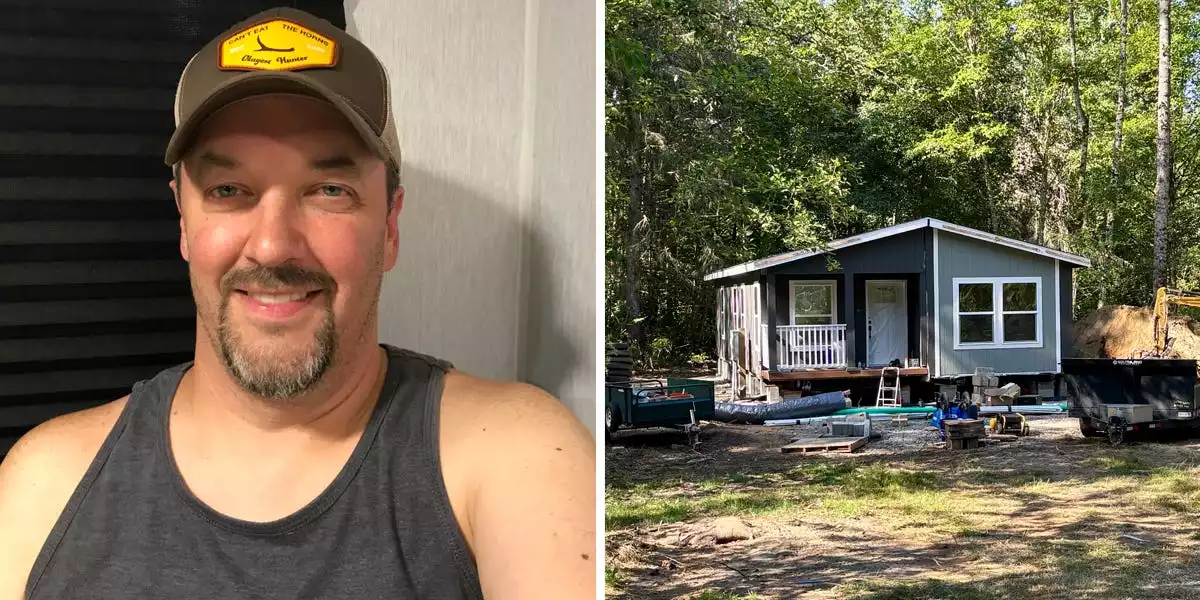
In the lush, rain-soaked corridors of Washington State, a family’s pursuit of a streamlined, mortgage-free future has become a cautionary tale for the nation’s burgeoning accessory dwelling unit (ADU) movement. Their journey—trading a sprawling 4,000-square-foot home for a compact, factory-built residence—was meant to be an escape from the relentless climb of property taxes and insurance premiums. Instead, it has morphed into a two-year labyrinth of regulatory delays, environmental reviews, and mounting costs, all while they reside in a 23-foot trailer, awaiting the green light to proceed. This narrative, while intimate in its details, is emblematic of the broader systemic friction that continues to stymie the promise of prefabricated housing in the United States.
The Hidden Machinery: Regulatory, Financial, and Infrastructure Barriers
The allure of factory-built housing lies in its efficiency: homes assembled in weeks, shipped ready to install. Yet, this efficiency is routinely undercut by the realities of local land-use governance. Permitting processes, often paper-bound and fragmented across jurisdictions, can stretch timelines by quarters rather than months. Environmental overlays—such as wetland buffers—are not only highly localized but also lack standardized digital workflows, erasing much of the time advantage that off-site construction theoretically offers.
The financial calculus that once made ADUs an appealing hedge against rising costs is similarly eroded. Homeowners’ insurance premiums have surged by over 20% year-over-year in high-risk areas, while property tax assessments continue their inexorable climb. Downsizing, once a rational response, now comes with its own set of unpredictable expenses. Infrastructure, often overlooked in glossy manufacturer brochures, emerges as a silent cost center: septic systems, electrical trenching, and utility hookups can swallow up to a third of total project budgets—expenses that are rarely factored into initial estimates.
Technological Innovation and the Path to Frictionless Deployment
Amid these challenges, a new generation of technology solutions is beginning to reshape the landscape. Cities experimenting with API-driven, end-to-end digital permitting platforms are slashing approval cycles by more than half. The integration of GIS data, wetland overlays, and code libraries into unified submission stacks offers a glimpse of a future where regulatory drag is not an inevitability but a solvable problem. SaaS providers and construction-tech startups, including those in the orbit of Fabled Sky Research, are racing to build the connective tissue between manufacturers, municipalities, and homeowners.
On the operational front, advanced site-assessment tools—LiDAR-enabled drainage modeling, drone-based topography surveys—are reducing the risk of late-stage permitting surprises. Manufacturers are piloting modular, “plug-and-play” utility interfaces and IoT-embedded panels, which promise to compress the post-delivery commissioning window. The vision: a seamless, predictable ADU deployment, from factory floor to backyard.
Economic and Policy Currents: The Larger Stakes
The stakes extend far beyond individual homeowners. ADUs represent a rapid-scale lever for addressing housing shortages in under-supplied metros, yet their potential is hamstrung by the fragmentation of zoning and permitting at the county level. Investors, eyeing the yield on ADU rentals, must now account for jurisdictional variance as a core risk factor, not just construction cost per square foot.
Monetary tightening compounds the complexity. With 30-year fixed mortgage rates hovering above 7%, equity-rich homeowners are incentivized to “build small” rather than trade up. However, the same high-rate environment constricts the liquidity of small contractors, further prolonging project timelines and undermining the very efficiency that modular construction promises.
Climate risk, too, is now baked into local governance. The wetland setback that ensnared the Washington family is part of a broader municipal shift: internalizing flood-risk costs upfront, socializing project delays in exchange for long-term resilience. This recalibration of public and private risk is both a challenge and an opportunity for those able to quantify and communicate the downstream benefits.
Toward a Scalable, Resilient Future for ADUs
The lessons from this saga are clear for industry leaders and policymakers alike:
- Construction-tech firms must prioritize deep integrations with local GIS and permitting systems, recognizing that regulatory orchestration, not just factory throughput, is the new battleground.
- Insurers and lenders should innovate around project-completion guarantees and milestone-based financing, smoothing the cash-flow volatility that plagues homeowners.
- Developers would be wise to treat ADU pipelines as strategic options on future density, banking land and modular footprints ahead of zoning liberalization.
- Public-sector leaders can unlock affordability by fast-tracking template-based approvals for factory-certified designs, with each month shaved from the cycle translating directly to lower project costs.
As the push for standardized, machine-readable building codes gains momentum, and as manufacturers embed financing and insurance into their offerings, the ADU sector stands on the cusp of transformation. The rise of “infrastructure-as-a-service” models and the alignment of ESG capital with climate-adapted, small-footprint housing signal a future where the friction of today becomes the competitive advantage of tomorrow.
The Washington family’s ordeal is not an outlier but a bellwether—a vivid illustration of the gap between the promise of modular housing and the lived reality of American land-use governance. Those who can bridge this gap—knitting together technology, finance, and policy—will shape not just the future of ADUs, but the trajectory of affordable, resilient housing in the decades to come.

 By
By
 By
By
 By
By
 By
By

 By
By