
From crypto hashpower to AI megawatts: a rapid corporate reinvention with real infrastructure gravity
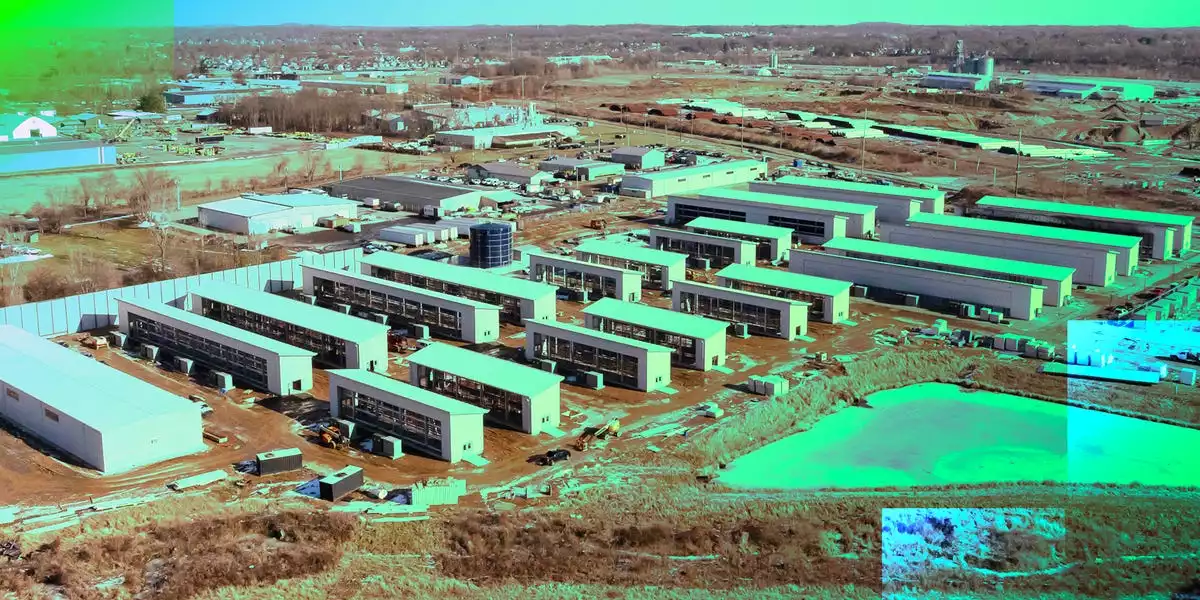
A striking cohort of former cryptocurrency miners—TeraWulf, Applied Digital, Iren, Core Scientific, and Cipher Digital—is executing one of the most consequential pivots in modern digital infrastructure: transforming from ASIC-driven mining operators into AI-focused data-center platforms. The market’s response has been emphatic. Collectively, these companies have expanded from roughly $2.1 billion in combined market capitalization in late 2022 to about $48.5 billion today, a repricing that signals investors now view them less as cyclical crypto proxies and more as potential beneficiaries of the AI compute scarcity premium.
The strategic logic is straightforward: these firms already possess what AI infrastructure increasingly treats as the scarcest input—power access. Long-term utility contracts and power purchase agreements (PPAs), originally negotiated to run mining fleets, can be repurposed into a competitive wedge for AI data centers, where grid interconnection queues, permitting, and transmission constraints have become binding bottlenecks.
Yet the pivot is not merely a change in customer set; it is a shift into a domain where execution risk is structural. AI data centers are less forgiving than crypto mining facilities, and hyperscaler-grade contracts can embed stringent delivery and performance obligations. The result is a high-upside infrastructure arbitrage—one that can compound quickly when it works, and unravel expensively when it doesn’t.
The engineering leap: why AI data centers are not “mining sheds with GPUs”
Crypto mining operations were optimized for throughput and cost efficiency, often with comparatively simple thermal and networking requirements. AI workloads invert that simplicity. Modern GPU clusters demand high power density, sophisticated cooling, and tightly engineered network fabrics to avoid performance bottlenecks that can render expensive compute underutilized.
Key technical fault lines in this transition include:
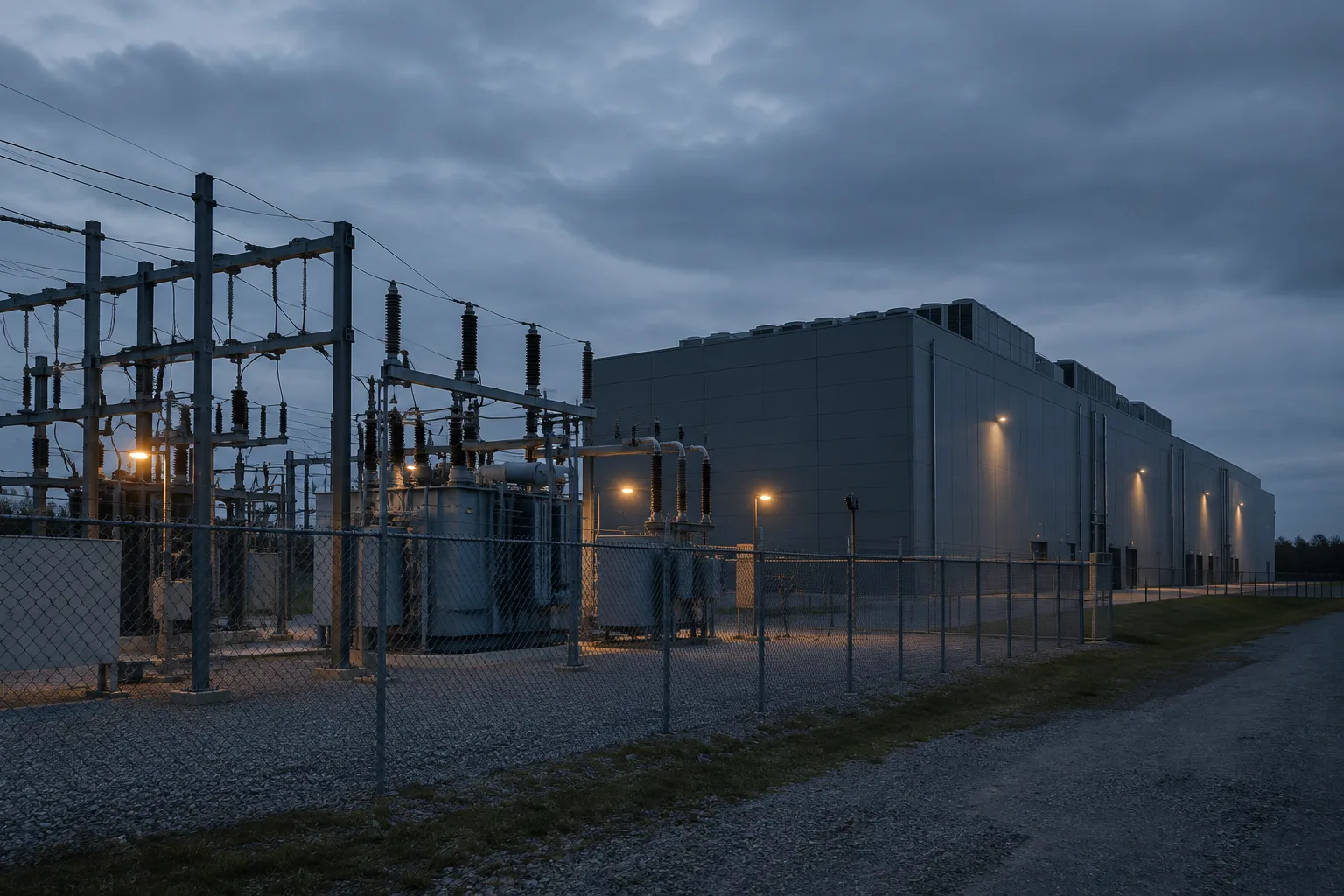
- Power density and retrofits: AI racks can require dramatically higher per-rack power than ASIC mining. That forces upgrades across electrical distribution, transformers, switchgear, and sometimes the upstream grid connection itself.
- Cooling complexity: High-performance GPU deployments increasingly rely on liquid cooling or highly optimized air cooling. Missteps can reduce performance, increase failure rates, and jeopardize service-level commitments.
- Network fabric requirements: AI training and inference at scale depend on low-latency, high-bandwidth interconnects—often involving technologies such as NVIDIA NVLink and InfiniBand-class networking. Underbuilding the fabric can create “GPU starvation,” where compute sits idle waiting on data movement.
- Reliability and ramp dynamics: AI facilities must meet stricter uptime expectations and handle rapid load changes. Sudden ramp-ups can stress local grids, elevating the importance of energy storage systems (ESS) and demand-response coordination with utilities.
This is where the pivot becomes more than capital expenditure—it becomes a test of systems engineering, supply-chain discipline, and construction management. The companies that succeed will look less like opportunistic repurposers and more like industrial-scale operators capable of delivering predictable, repeatable builds.
Contract economics and financing: investor optimism meets hyperscaler-grade accountability
The financial markets are currently underwriting this transformation with notable confidence. Despite the capital intensity and long lead times, external financing remains accessible: Cipher Digital’s $1.4 billion financing at 7.1% for a Texas site and Applied Digital’s $2.15 billion at 6.8% tied to Oracle underscore lender appetite for AI infrastructure exposure. These rates also reflect a broader dynamic: in a market hungry for yield and durable demand, AI data centers are being treated as a quasi-infrastructure asset class—provided contracts and counterparties are credible.
Still, the economic model contains sharp edges:
- Cash burn precedes revenue recognition: Large-scale AI builds require substantial upfront investment in land, electrical gear, cooling systems, and networking—often well before meaningful revenue begins.
- Delivery covenants and penalties: Capacity agreements can include volume-and-on-time delivery clauses, with liquidated damages or clawbacks that can become material—potentially even multibillion-dollar exposures in extreme cases.
- Execution transparency varies: Market reactions have shown sensitivity to construction risk. CoreWeave’s construction holdups weighed on its share price, while TeraWulf has explicitly warned that major setbacks could jeopardize its Google contract—an unusually direct articulation of downside risk.
A critical nuance is that AI compute remains scarce enough that customers may tolerate some delays—up to a point. Analysts argue that the shortage of high-density GPU capacity could soften hyperscaler impatience, but that tolerance is unlikely to be unlimited, especially as alternative capacity comes online or as procurement strategies diversify.
Competitive positioning: power, partners, and the coming consolidation cycle
Strategically, these former miners are navigating a delicate balance between partnering with hyperscalers and building independent leverage. Aligning with Google, Oracle, or other large buyers can provide revenue visibility and lower go-to-market friction, but it can also create customer concentration risk—a single counterparty may dominate utilization, pricing power, and expansion cadence.
Several competitive themes are emerging as differentiators:
- Power strategy as a moat: Firms that integrate renewables, storage, and demand-response capabilities can improve resilience, reduce peak charges, and strengthen ESG positioning. Vertical integration—controlling both energy inputs and compute operations—can insulate margins from energy volatility.
- Modular build discipline: Operators that standardize designs, pre-qualify EPC partners, and adopt modular deployment can reduce schedule risk and improve repeatability—an advantage when customers prioritize speed-to-capacity.
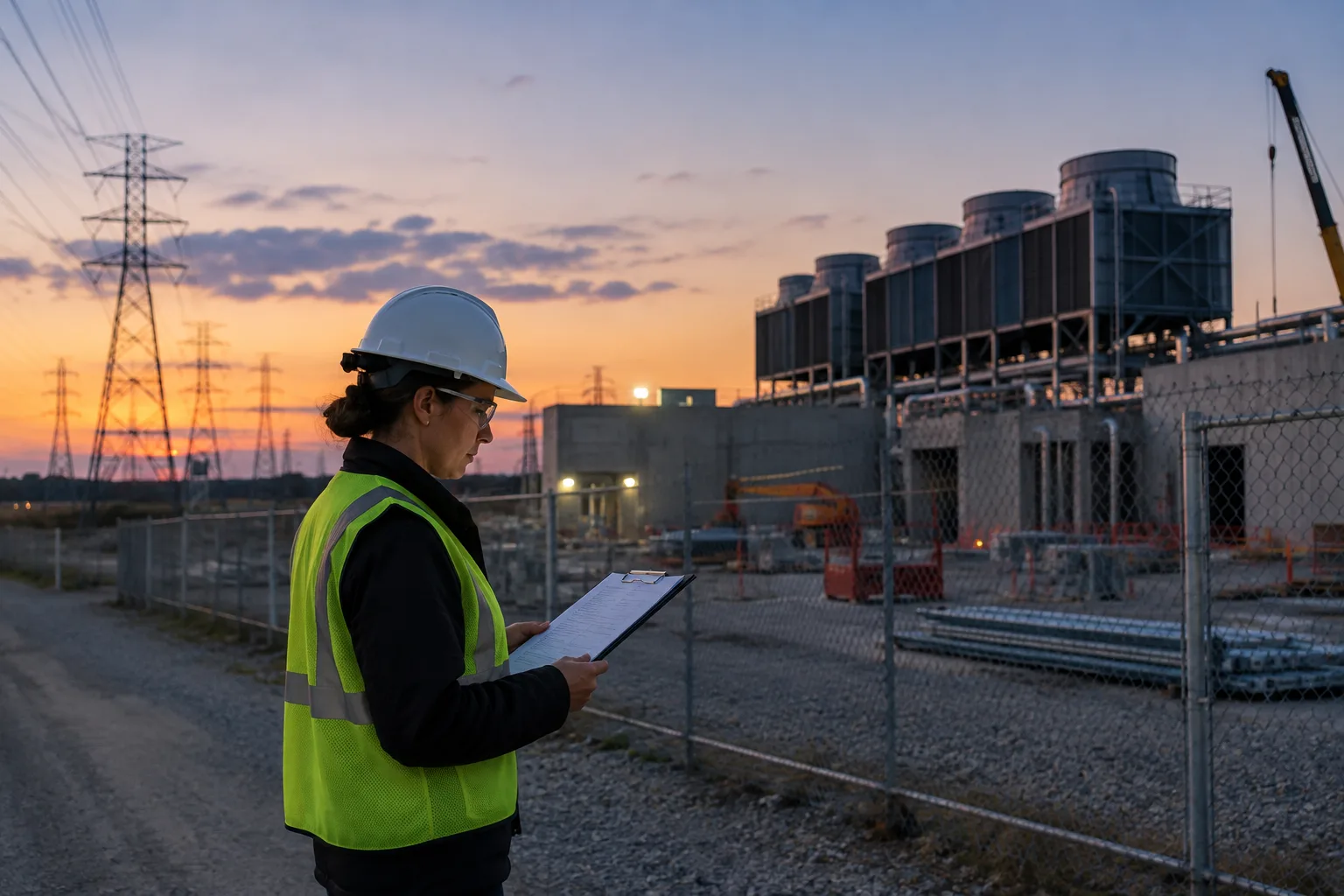
- Regulatory and community engagement: As data-center demand begins to resemble the load profile of major cities, permitting backlogs, grid constraints, and local opposition will increasingly shape timelines. Transparent ESG reporting and early stakeholder engagement are shifting from “nice to have” to operational necessity.
- M&A as an accelerant: The field remains fragmented, and consolidation appears likely—particularly where PPAs, geographies, and technical capabilities are complementary. Scale can also improve procurement leverage for scarce components and specialized construction talent.
The market’s re-rating of these companies reflects a belief that power-constrained AI infrastructure is one of the defining bottlenecks of the current technology cycle. Whether that belief translates into durable profitability will hinge less on narrative momentum and more on the unglamorous fundamentals—build quality, delivery timelines, grid reliability, and contract craftsmanship—the disciplines that ultimately determine who becomes a long-term AI infrastructure leader and who remains a volatile transitional story.

 By
By
 By
By
 By
By

 By
By
 By
By
 By
By
 By
By