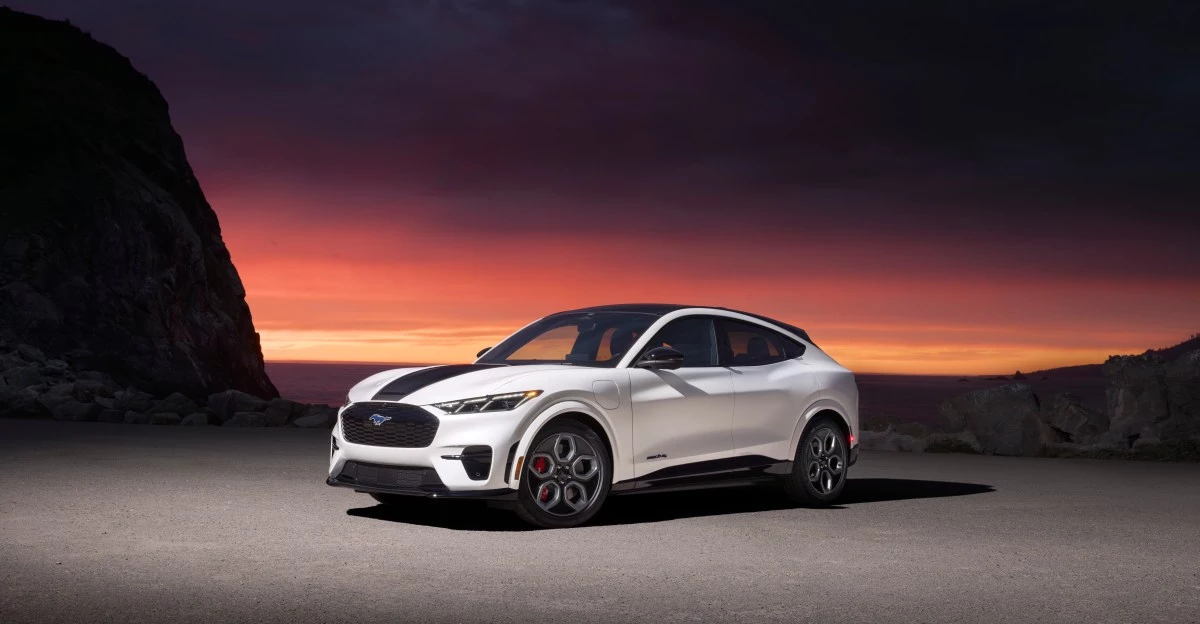

Mustang Mach-E GT “California Special”: Nostalgia Meets the New Electric Frontier
In a landscape where electric vehicle (EV) sales growth is showing signs of fatigue, Ford’s latest announcement—the Mustang Mach-E GT “California Special”—reads as both a strategic provocation and a love letter to the brand’s storied past. Priced at $55,890 and slated for first deliveries in early 2026, this limited-run trim is less about radical innovation than it is about the alchemy of heritage, design, and shrewd market timing. With order books opening in October, Ford is not merely selling a car—it’s selling a story, and in doing so, rewriting the rules of EV differentiation.
The Allure of Performance in a Plateauing Market
The U.S. EV market, particularly in the mass-market crossover segment, has begun to plateau, a reality that has left automakers searching for pockets of resilient demand. Ford’s answer is to double down on the enthusiast, a consumer segment that has proven remarkably inelastic even as mainstream buyers hesitate. The Mach-E GT “California Special” keeps the proven GT powertrain—480 horsepower, 700 lb-ft of torque, and a 280-mile EPA range—while layering on bespoke design cues that evoke the sun-drenched nostalgia of 1960s California.
This is a calculated move. By leveraging the Mustang’s iconic status, Ford sidesteps the price wars and margin erosion plaguing the broader EV market. Instead, it commands a $2,495 premium over the standard GT without altering the underlying drivetrain—a testament to the enduring value of brand equity. The “California Special” moniker, steeped in muscle-car lore, becomes a conversion tool, transforming sentimental value into pricing power. In an era where software and battery chemistry often dominate the conversation, Ford’s approach is refreshingly analog: sell the dream, not just the drivetrain.
Manufacturing, Policy, and the Art of the Long Game
The Mach-E’s assembly in Cuautitlán, Mexico, is more than a cost-saving maneuver—it is a masterclass in regulatory arbitrage and supply chain foresight. By anchoring production in North America, Ford secures compliance with the Inflation Reduction Act’s evolving rules, buys time to localize battery supply chains, and hedges against potential trade tensions and tariffs. The Mexican footprint also insulates Ford from euro-denominated cost pressures and provides a buffer against U.S. labor-cost inflation.
But the real genius lies in the timing. Announcing a 2026 delivery date for a 2024 order converts consumer enthusiasm into refundable deposits—effectively turning the order book into a working-capital tool. This not only provides Ford with real-time demand signals for battery procurement contracts but also stretches the product-news cycle, blunting the impact of forthcoming launches from GM and Stellantis. In this sense, the California Special is as much a financial instrument as it is a vehicle.
Digital Upgrades and the Rise of the “Micro-Platform”
While the California Special is a design-led variant, its true innovation may lie in the digital domain. Limited editions like this offer Ford a captive audience for over-the-air (OTA) upgrades—performance boosts, bespoke user interface themes, and even “heritage-skin” digital clusters that can be sold post-delivery. This is the new frontier of automotive revenue: treating each trim as a micro-platform for testing subscription uptake and digital accessory economics.
Such experimentation is not merely ancillary. As cobalt and lithium prices moderate but consumer financing costs remain high, high-content trims like the California Special allow Ford to protect margins without triggering negative elasticities in its core models. The ability to monetize software and digital experiences post-sale is rapidly becoming a defining feature of the modern automotive business model.
The Broader Strategic Canvas
Ford’s playbook with the Mach-E GT “California Special” is instructive for the entire industry. By monetizing heritage and design, the company bridges the gap between current technology costs and the promise of next-generation EV architectures, expected to arrive with lower-cost LFP batteries and new charging standards around 2026–27. The move also signals to suppliers and ecosystem partners—from Tier-1s to charging networks—that performance-branded EV trims will be a durable, margin-accretive niche in the coming cycle.
For other legacy automakers, the lesson is clear: the path to EV profitability may not run solely through battery breakthroughs or price wars, but through the careful cultivation of brand equity, the strategic use of manufacturing geography, and the deft deployment of digital revenue streams. As Ford demonstrates, sometimes the most forward-looking strategy is to look back—and bring the best of the past roaring into the electric future.

 By
By
 By
By

 By
By
 By
By

 By
By
 By
By