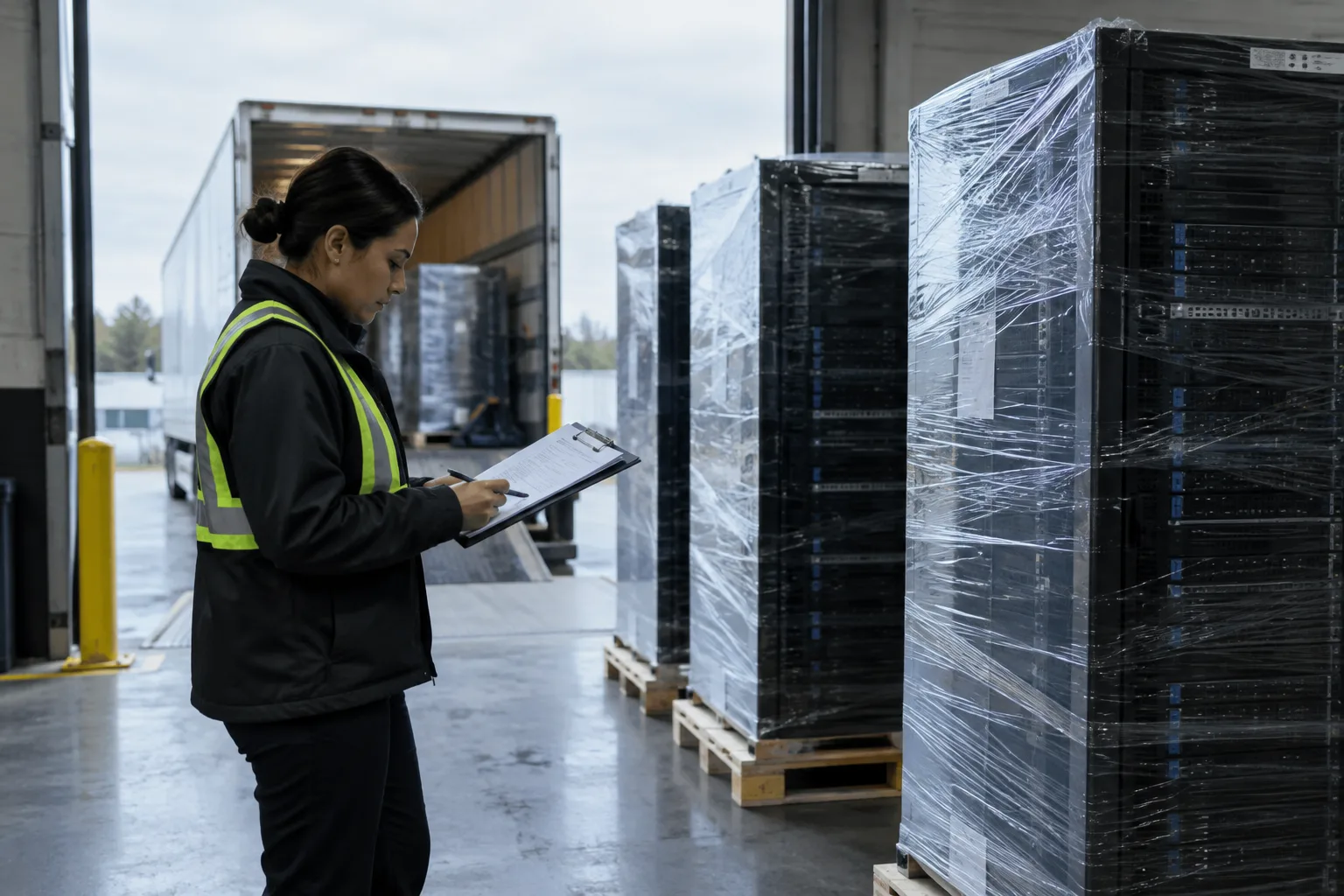

U.S. chip curbs are starting to hit Asia’s AI infrastructure before a single new rack is switched on. On Nov. 26, Reuters reported that Fitch Ratings expects Asia-Pacific data-center investment to slow and become more selective after Washington’s new controls on advanced semiconductors and remote-compute access took effect on Nov. 19. The significance goes beyond trade policy: for some projects, the question is no longer simply whether a site has power, land and demand, but whether it can lawfully install the intended chips, serve the intended tenants and prove both well enough to get financed.
The reader’s real question is straightforward: can Asia’s AI data-center boom keep attracting capital when customer eligibility and chip-upgrade rights can change after a facility is built? Fitch’s answer, as relayed by Reuters, is not that the boom stops. It is that money gets pickier, and that change could sort the market by compliance quality as much as by geography.
Why a finished building may not be usable capacity
The new Federal Register rule does two things that go straight to data-center economics. First, it imposes a destination-based license requirement for advanced semiconductors shipped to Indonesia, Malaysia, Singapore, Thailand and Brazil. Second, it adds an end-use control aimed at overseas data centers that provide significant computing power to companies headquartered in Country Group D:5 or Macau, part of the Commerce Department’s effort to stop advanced American chips from being rented through third-country facilities.
That matters because a data center does not become productive capacity when the concrete is poured or the cooling plant is commissioned. It becomes productive when the operator can acquire accelerators, put them into service, sell compute to eligible customers and keep utilization high enough to cover leases, power bills and debt service. The new regime adds more gates to that chain: who the customer really is, including indirect ownership or control; what workloads are being run; whether the chips are covered; whether linked facilities push a project over the rule’s 12,000,000 aggregate-total-processing-performance threshold; and whether the operator can satisfy reporting obligations.
That is why Fitch’s warning lands with lenders as much as with cloud operators. A nearly completed facility can still be delayed if the servers do not arrive, if a major tenant turns out to be ineligible, or if a credit committee decides those risks are too hard to price. In that scenario, the stranded asset is not the building itself. It is the gap between physical completion and revenue-producing compute.
The projects most exposed
Reuters said Fitch sees the greatest pressure on neocloud operators — companies that rent AI compute rather than owning a broad, diversified cloud stack. Their business model depends heavily on expensive GPUs staying busy. If they cannot refresh hardware on time, or if a meaningful share of demand comes from Chinese customers or other restricted relationships, the financial consequences are immediate: lower utilization, discounting to fill capacity, or a shift to less-advanced compute that may support weaker pricing.
That does not mean every data-center project in Southeast Asia suddenly looks impaired. The rule includes an exception for semiconductors destined for U.S.-headquartered companies, or ultimate U.S.-parent companies, when specified reporting requirements are met. In practice, that may leave some hyperscaler-style projects in a different lane from local operators that aggregate many smaller customers. AI demand also remains strong. Capital can still flow to projects with secure chip channels and customer bases that are easier to verify.
But the rule changes incentives. Southeast Asia has attracted data-center investment on familiar terms: land, power development, connectivity, tax treatment and regional demand. Washington’s controls add a compliance layer that host governments cannot fully remove. A site in Singapore or Malaysia may still look attractive on traditional infrastructure metrics, yet its financing case now turns partly on matters outside the host country’s direct control: U.S. export licensing, customer lineage and the legal status of remote-compute arrangements.
Reuters also cited a Financial Times report that Nvidia told manufacturing partners to stop server shipments to four Southeast Asian countries while compliance was assessed. That remains attributed reporting, not a public Nvidia compliance notice, but it illustrates the kind of operational pause Fitch is describing. Even temporary shipment delays matter when projects are financed against tight commissioning timelines.
What lenders, operators and buyers will now ask
The practical shift is that export-control diligence is moving upstream into project finance, leasing and procurement. Lenders and landlords are likely to ask questions that used to sit deeper in the supply chain: Can this operator document the origin and license status of planned chips? Who are the ultimate beneficiaries of the compute, not just the direct contractual tenants? Do linked sites change the aggregate-performance calculation? What happens if a refresh cycle is delayed, or if a customer later becomes restricted?
Those questions are not academic for debt markets. If utilization assumptions become less reliable, loan covenants and lease terms can tighten. Operators may need more equity, more working capital and more contractual protection around sanctions, delayed upgrades and regulatory change. Buyers of capacity, especially enterprises that want AI infrastructure outside the U.S., may also prefer providers that can show a clean customer book, durable reporting processes and contingency plans if chip deliveries slip.
This is where the market could split. On one side are projects that can demonstrate compliant chip access, diversified workloads and customer records robust enough for bank diligence. On the other are highly leveraged builds that depend on a narrow set of China-linked tenants or on uninterrupted access to top-end American accelerators. The first group may become more financeable, and therefore more valuable, even if the sites are not the cheapest options. The second may face higher funding costs and slower revenue recognition before any server is physically removed.
There are also limits to what can be concluded now. Fitch, as cited by Reuters, did not quantify how much investment will be delayed, identify the most exposed facilities or estimate the added cost of capital. Public information does not yet show how quickly U.S. authorities will issue licenses, how every ownership structure will be tested, or how existing hardware and service agreements will be treated in practice. Chinese alternatives such as Huawei Ascend may ease some pressure over time, but Fitch does not expect them to quickly replace Nvidia hardware in overseas facilities, and the public record does not settle how comparable those alternatives are in performance, software support or supply.
For now, the clearest answer is yes — Asia’s AI data-center buildout can still attract capital, but on more conditional terms. The new U.S. regime does not ban all AI chips in Southeast Asia, and it does not end cloud access for all Chinese companies. What it does is turn customer eligibility, chip-upgrade rights and compliance evidence into core underwriting variables. In the next phase of the boom, the most valuable projects may be the ones that can prove not just where their data centers are, but who they serve, what they run and how cleanly they can document both.

 By

 By

 By
 By

 By