
A 20-hour detour that doubles as a product audit for U.S. long-distance rail
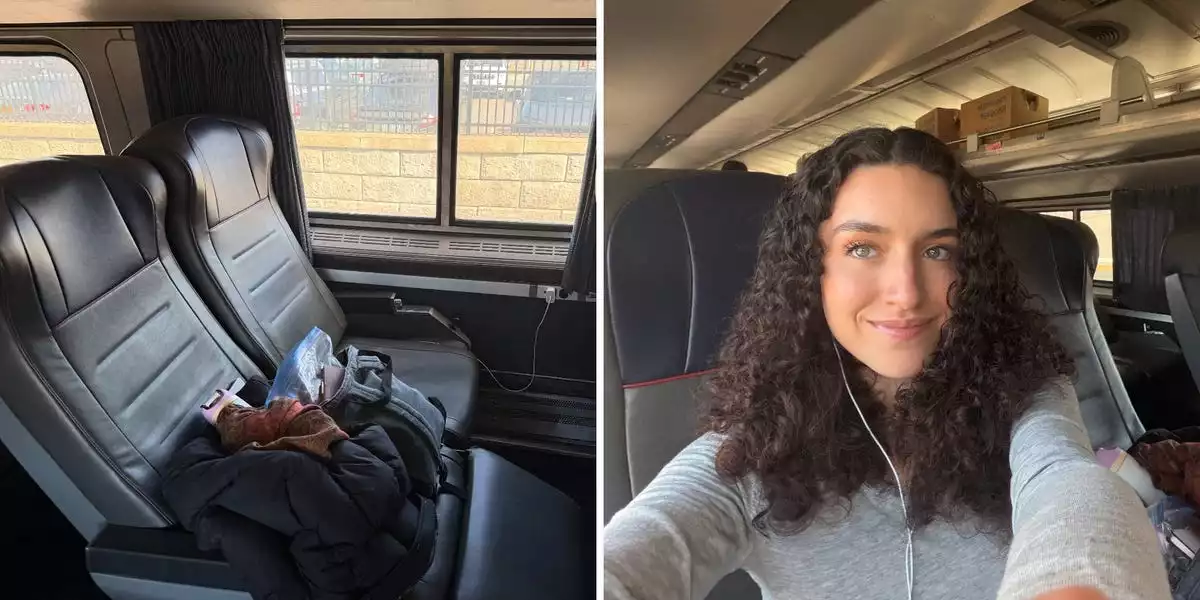
Kristine Villarroel’s spontaneous decision to swap a two-hour flight for a roughly 20-hour ride on Amtrak’s Lake Shore Limited from Chicago to New York reads like a personal travelogue—yet it also functions as an unusually clear diagnostic of where U.S. passenger rail is winning hearts and where it is quietly losing repeat customers.
The allure is easy to understand. When airports are strained by delays, security lines, and gate churn, long-distance rail can feel like a calmer, more human-scale alternative: fewer chokepoints, more physical space, and a journey that invites reflection rather than endurance. Villarroel’s experience reinforces that the core promise of rail—comfort, scenery, and simplicity—still resonates.
But her “rookie mistakes” and on-board friction points also expose a deeper issue: the modern traveler’s baseline expectations have been shaped by premium aviation cabins, boutique hotels, and app-mediated convenience. Against that benchmark, long-haul rail in the U.S. can appear operationally capable yet product-light, with gaps that are small individually but cumulative in their impact on satisfaction, productivity, and brand trust.
—
Comfort, ergonomics, and the widening gap between “transport” and “experience”
Villarroel’s observations—limited sleep amenities, awkward water access, inconsistent café-car availability, and even seat orientation that can undermine scenic value—highlight a central challenge for Amtrak and similar operators: the seat is no longer the product; the journey is.
Notably, she found the reclining economy seats more comfortable than most airplanes, which is a meaningful competitive advantage. Yet the absence of integrated sleep-and-comfort systems (even modest ones) underscores how little differentiation exists between “basic transportation” and “experience-led travel” on many U.S. long-distance routes.
From a passenger-centric design perspective, the pain points are tangible and fixable:
- Sleep readiness is under-supported: without reliable pillows/blankets or curated “sleep kits,” overnight comfort becomes improvisational.
- Hydration access feels like an afterthought: water-filling stations that are hard to use create friction disproportionate to their cost to solve.
- Food availability uncertainty erodes confidence: when café-car operations are unpredictable, passengers stockpile, worry, or go without.
- Scenic value is not operationalized: if travelers can’t easily choose the “view side,” rail forfeits one of its most marketable assets.
Even the footwear detail—ill-chosen shoes for a long ride—matters because it points to a broader truth: long-distance rail is a distinct travel mode with distinct needs, and operators can either help passengers succeed or leave them to learn the hard way.
—
Digital rail infrastructure: where real-time information becomes a service, not a feature
Several of the shortcomings described are not purely physical; they are information failures. The friction around water stations, café-car timing, and train operations (including car splits on certain routes) signals a broader opportunity to treat digital infrastructure as part of the onboard service layer.
A modern long-distance rail experience increasingly depends on real-time, context-aware guidance, similar to what travelers now take for granted in aviation and hospitality. The strategic implication is clear: Amtrak’s value proposition is not only about track and rolling stock—it is also about software, sensors, and service orchestration.
High-impact digital enhancements could include:
- An integrated passenger app that surfaces real-time updates on:
– café-car hours, menu availability, and payment options
– water station locations and usage guidance
– train composition changes (including car splits) and where to board
– platform amenities and station navigation
- IoT-enabled status alerts for operational consistency—turning “maybe it’s open” into “it’s open until 9:00 pm in Car X.”
- Preference profiles and personalization, allowing travelers to select:
– seat side for scenery
– dietary preferences and restocking signals
– comfort add-ons (sleep kit, earplugs, blanket) at booking or pre-boarding
This is not merely convenience. It is a way to reduce anxiety, prevent avoidable dissatisfaction, and convert first-time riders into repeat customers—especially those comparing rail against the predictability of air travel.
—
The business case: pricing, productivity, sustainability, and the ROI of “small” upgrades
Economically, a 20-hour train ride can compare favorably on price per mile versus regional airfares, particularly when travelers factor in baggage fees, ground transfers, and the hidden time costs of airport processes. Yet Villarroel’s experience illustrates the counterweight: discomfort and uncertainty impose their own costs, especially for business travelers who measure journeys in productivity and readiness upon arrival.
This is where rail’s strategic positioning becomes nuanced. Long-distance routes like the Lake Shore Limited sit at the intersection of:
- Leisure travel, where scenery and pace are features
- budget-conscious travel, where total trip cost matters
- ESG-driven travel, where emissions reductions influence procurement
- select business travel, where reliability and onboard usability determine viability
Rail’s lower carbon footprint aligns with corporate net-zero commitments and public-sector sustainability goals. That creates potential tailwinds: corporate travel programs, ESG-linked incentives, and brand equity gains for operators that can credibly market rail as a practical alternative—not just a romantic one.
The investment question, then, is not only about megaprojects and high-speed corridors. It is also about whether incremental improvements—modular sleep bundles, better water stations, consistent café operations, clearer signage, and real-time digital guidance—can deliver outsized returns by improving satisfaction, increasing ancillary revenue, and strengthening repeat ridership.
Partnerships could accelerate this shift, including collaborations with sleep-product brands, digital payments providers, and last-mile mobility services to transform a ticket into an end-to-end journey offering. The strategic prize is consistency: when long-distance rail becomes reliably comfortable and digitally legible, it stops being a gamble and starts being a choice.
Villarroel’s detour ultimately underscores a pivotal point for U.S. passenger rail: the market is not only asking trains to run—it is asking them to compete as experiences, where operational basics and modern service design determine whether the next spontaneous rider becomes a loyal one.

 By
By
 By
By
 By
By


 By
By
 By
By
 By
By