


A Federal Reserve on pause as geopolitics reprice inflation risk
Markets are broadly positioned for the Federal Reserve to hold its policy rate steady at the March FOMC meeting, but the apparent calm of an “unchanged” decision masks a rapidly shifting macro backdrop. The central tension is straightforward: headline inflation pressures are being re-ignited by geopolitics at the same time the U.S. labor market is flashing signs of cooling. That combination complicates the Fed’s dual mandate calculus and raises the cost of any communication misstep.
The immediate catalyst is the Middle East. Iran’s threats to close the Strait of Hormuz—a corridor tied to roughly one-fifth of global seaborne oil flows—have pushed crude prices above $100 per barrel. For monetary policy, this is not merely a commodity story; it is a story about inflation expectations, corporate pricing behavior, and confidence in the Fed’s reaction function.
February’s 2.4% year-over-year CPI reading, while relatively contained, is now dated in market terms because it predates the latest surge in energy and fertilizer costs. If energy remains elevated long enough to pass through to transportation, manufacturing inputs, and food, the Fed could face a familiar dilemma: tolerate a temporary overshoot in headline inflation or tighten into a weakening labor market. Either choice carries reputational risk, particularly when uncertainty is high and narratives can move faster than data.
Oil, fertilizer, and the second-order inflation that boards can’t ignore
Energy shocks rarely stay neatly confined to the gas pump. The more consequential channel for businesses is second-order inflation—the cascading effect of higher fuel and feedstock costs across supply chains. The current setup is especially sensitive because energy is intertwined with fertilizer production and agricultural economics, making food prices a plausible next pressure point.
Key transmission mechanisms executives and investors are watching include:
- Direct CPI impact: gasoline, utilities, and heating costs lift headline inflation quickly.
- Industrial pass-through: chemicals, plastics, logistics, and aviation face margin pressure that often translates into higher end prices.
- Fertilizer and food inflation: higher natural gas and oil inputs can raise fertilizer costs, tightening farm economics and amplifying food-price volatility.
- Global risk premia: shipping insurance, rerouting, and inventory buffering can raise costs even without physical supply loss.
For the Fed, this matters because core inflation may remain near the 2% target, yet headline inflation could re-accelerate—and headline prints are what shape public sentiment and, ultimately, wage and price-setting behavior. Central banks can “look through” temporary shocks only if households and firms believe they will. That belief is fragile when energy prices spike abruptly and geopolitical headlines dominate.
A labor-market stumble changes the policy symmetry
The other half of the equation is growth. February’s labor report—a loss of 92,000 jobs and unemployment rising to 4.4%—marks a sharp reversal from January’s strength and interrupts a multi-year run of robust job creation. One month does not make a trend, but it does change the risk symmetry around policy.
If labor demand is genuinely cooling, several implications follow:
- Wage growth may decelerate, easing underlying inflation over time.
- Service-sector momentum could soften, reducing pricing power in labor-intensive categories.
- Financial conditions could tighten endogenously if markets begin to price recession risk, even without Fed action.
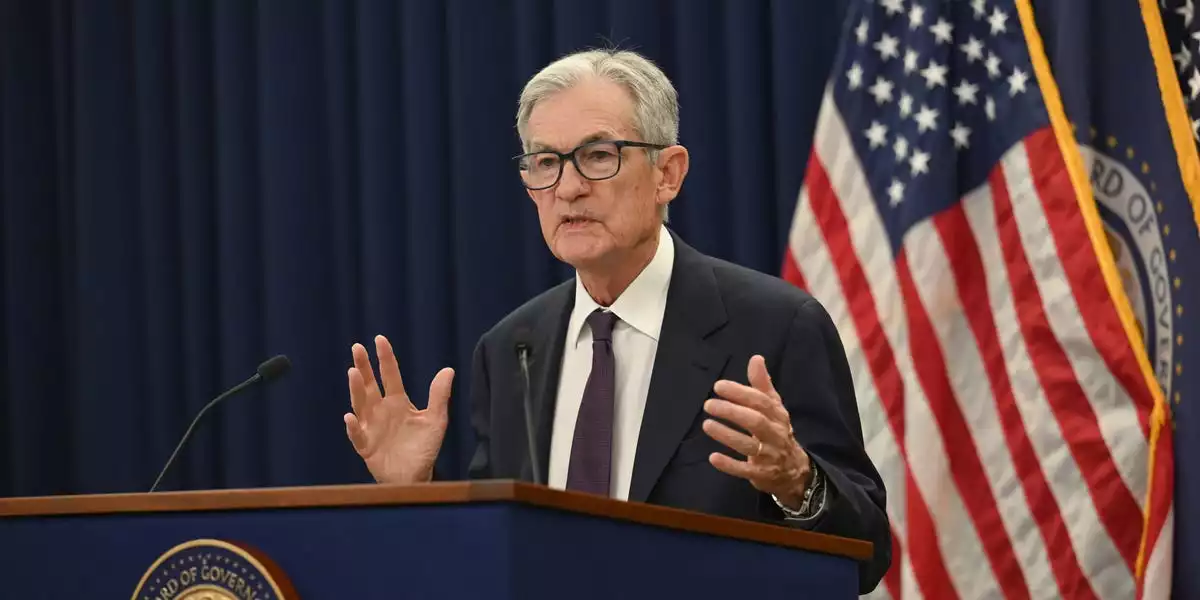
This is why the Fed’s expected decision to hold rates can be read less as indecision and more as optionality. In an environment where energy-driven inflation could rise while employment weakens, a premature pivot—either toward cuts or hikes—risks being overtaken by events. Chair Jerome Powell’s “meeting-by-meeting” approach is essentially an admission that conventional forecasting struggles when geopolitical risk premia are moving the macro goalposts in real time.
Leadership transition, Fed independence, and the corporate strategy ripple effects
Overlaying the macro crosscurrents is an institutional one: Powell’s meeting is framed as his penultimate before a likely transition to Kevin Warsh, pending Senate confirmation. Leadership changes always matter at the margin, but this one is particularly market-sensitive because it intersects with renewed debate over Federal Reserve independence.
Warsh is viewed by some participants as potentially more open to earlier rate cuts, which can influence forward curves and risk appetite well before any policy change occurs. Yet the larger issue is not a single individual’s preferences; it is whether the confirmation process and surrounding political scrutiny create a perception that the Fed’s mandate could be pressured by partisanship. In modern markets, perception can be catalytic: doubts about institutional insulation can raise term premia, complicate Treasury issuance dynamics, and increase volatility across rate-sensitive assets.
For corporate leaders, this moment is less about predicting the next 25 basis points and more about building resilience across scenarios. The most pragmatic playbooks now emphasize:
- Commodity and energy hedging sophistication: greater use of options, swaps, and layered hedges to protect margins against oil and gas spikes.
- Supply-chain redesign: supplier diversification, near-shoring, and inventory strategies calibrated to geopolitical disruption risk.
- Energy transition acceleration: renewables, efficiency, and storage projects look more compelling when fossil volatility becomes a recurring feature, not a tail risk.
- Digital operations as a cost lever: AI-driven demand forecasting, IoT-enabled energy management, and digital twins to reduce waste and improve planning under uncertainty.
- Liquidity and cross-border plumbing: exploration of blockchain-based trade finance and preparedness for the medium-term interplay between CBDCs and corporate treasury operations.
The Fed may well hold rates in March, but the decision will land in an economy where oil is repricing inflation risk, labor data is challenging growth confidence, and a leadership transition is injecting institutional uncertainty into the policy outlook. For markets and management teams alike, the premium is shifting from precision forecasting to credible scenario planning—and to the operational agility required when geopolitics, inflation, and monetary policy start moving as one.

 By
By
 By
By

 By
By
 By
By
 By
By

 By
By







