
Mortality as Media: Netflix’s Calculated Foray into the “Thanatos Economy”
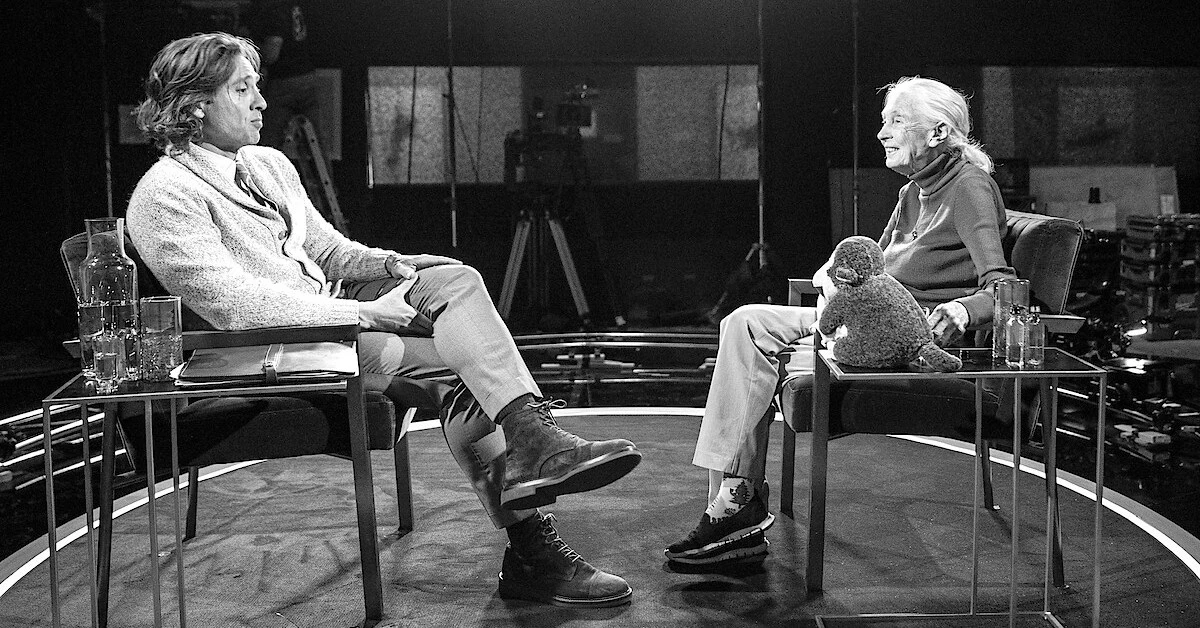
In a landscape saturated by true-crime exposés, celebrity confessionals, and algorithmically engineered nostalgia, Netflix’s latest commission, “Famous Last Words,” marks a radical recalibration of the streaming playbook. Adapted from Denmark’s “Det Sidste Ord,” the series invites public figures to participate in long-form interviews—recorded in the past tense, on an empty soundstage, and released only after their death. The premiere, featuring Dr. Jane Goodall and helmed by Brad Falchuk, is as much a meditation on legacy as it is a shrewd experiment in scarcity-driven engagement.
What emerges is not just a new documentary format, but the crystallization of a “thanatos economy”—a media ecosystem in which mortality itself becomes a programmable asset, leveraged for emotional impact, competitive differentiation, and future-proofed content rights.
—
Scarcity, Authenticity, and the Algorithmic Allure of Final Testimony
The genius of “Famous Last Words” lies in its inversion of the typical content lifecycle. By design, episodes are embargoed until the subject’s passing, transforming death into a release trigger—a scarcity event that algorithms can amplify into viral moments. This built-in rarity is algorithmic gold: when a beloved figure dies, the ensuing “in-memoriam” surge ensures that the content arrives at the precise intersection of public attention and emotional vulnerability.
Key differentiators of this model include:
- Emotional Authenticity Premium: The past-tense interview format liberates subjects from reputational risk, often prompting candor unattainable in conventional settings. The result is a cache of emotionally charged, unvarnished testimony—content that resists commoditization in an era of oversupplied celebrity formats.
- Archival Hedging: By banking unreleased interviews, Netflix accrues intellectual property without incurring immediate distribution costs. This not only smooths future programming gaps but also strengthens negotiating leverage with talent estates and heirs.
- Scarcity as Asset: The one-time-only release, tied to the subject’s mortality, creates a temporal exclusivity that is nearly impossible to pirate or replicate—an elegant counter to the commodification pressures of free ad-supported streaming (FAST) rivals.
—
Minimalist Production, Maximal Impact: Technology and Ethics at the Forefront
The stripped-down production model—remote, uncrewed filming on an empty stage—serves both aesthetic and operational imperatives. It reduces costs, minimizes health-safety risks, and enables global scalability: a single roving unit can capture episodes across continents, cultures, and languages. Yet, this minimalism belies a sophisticated backend, where metadata tagging, secure vaulting, and estate-permission workflows become paramount.
Anticipate Netflix to deploy:
- Blockchain-anchored smart contracts for automating release conditions, ensuring that episodes surface only when legally and ethically permissible.
- Advanced DRM and custodial controls to prevent leaks over potentially decades-long holding periods.
- Ethical guardrails that distance the show from the rapidly evolving world of AI-generated “deep nostalgia” content, setting standards for authenticity before synthetic resurrection becomes mainstream.
The proximity to synthetic media raises urgent questions: How will the industry demarcate the line between authentic legacy and algorithmic resurrection? The early stake in this territory allows Netflix—and by extension, the broader streaming sector—to shape the ethical norms before the technology outpaces regulation.
—
Strategic Stakes: Competitive Moats and the Future of Legacy Storytelling
“Famous Last Words” is more than a content innovation; it is a strategic signal in the streaming wars. By moving beyond binge-drop cycles to “appointment moments” tethered to real-world events, Netflix hybridizes the ritual of linear television with the convenience of on-demand viewing. The temporal exclusivity of posthumous releases erects a defensive moat that FAST competitors cannot easily breach.
The economic calculus is equally compelling:
- High Impact, Low Cost: Compared to scripted drama, the format is capital-light but PR-rich. A single controversial revelation can drive subscription spikes rivaling those of premium sports events, at a fraction of the spend.
- Rights Elasticity: The intellectual property accrued can be windowed across documentary, educational, and even immersive VR experiences—imagine future “holographic conversations” with departed icons.
- Globalization of Format: By importing and refining non-US IP, Netflix reinforces its R&D flywheel: test in niche markets, globalize, and iterate based on data-driven insights.
Yet, the risks are nontrivial. Ethical blowback over the commodification of death, legal wrangling with estates, and geopolitical sensitivities—especially when candid political commentary is involved—could complicate the path forward. The operational challenge of securing archives for decades only heightens the stakes.
—
As the boundaries of legacy media are redrawn, “Famous Last Words” stands as a harbinger of the programmable, emotionally resonant content future. For media executives, technologists, and policymakers alike, the series is a case study in how mortality, memory, and media can converge—not as morbid spectacle, but as a new frontier for engagement, ethics, and economic leverage. The next wave of immersive, legacy-oriented formats is already cresting; those who understand the power of time-locked storytelling will shape the contours of media’s most intimate frontier.

 By
By
 By
By
 By
By
 By
By

 By
By

 By
By