

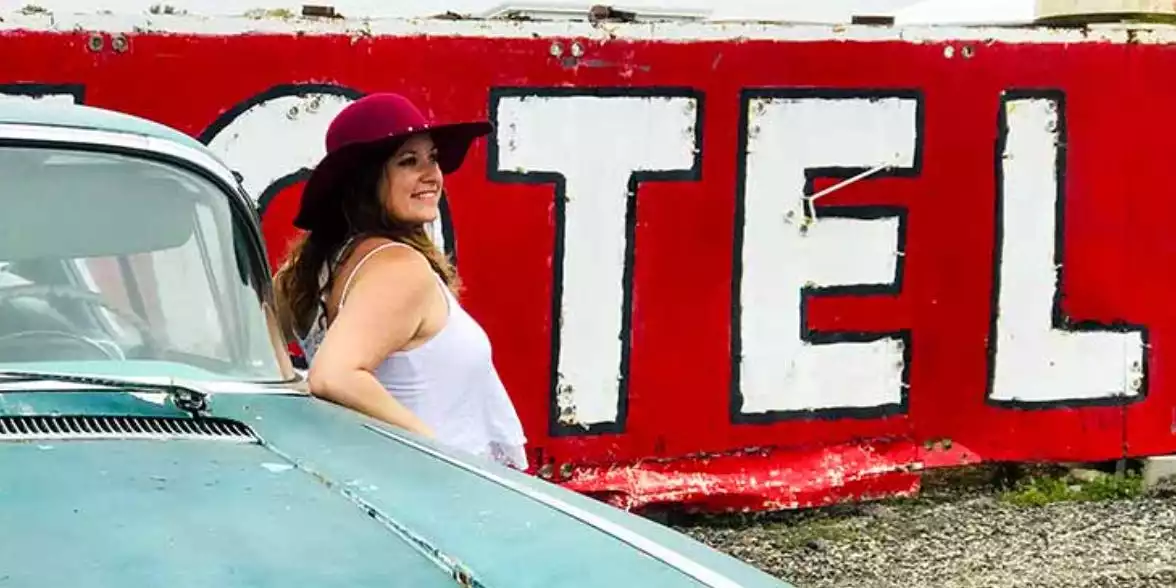

A centennial spotlight on the “Mother Road” as a living economic corridor
Route 66’s 100th anniversary is more than a nostalgic marker for America’s most mythologized highway—it is a timely case study in how heritage tourism, experiential travel, and place-based economic development intersect. Stretching 2,448 miles from Chicago to Santa Monica, the route’s enduring appeal lies in its ability to turn local stories into national memory: neon signage, roadside art, diners, museums, and the kind of small-town specificity that modern travelers increasingly seek.
Several destinations illustrate how the corridor is being re-read for a new era—one that values immersion as much as movement:
- Pontiac, Illinois: A concentrated “Route 66 micro-hub,” where the Bob Waldmire Experience, the Route 66 Hall of Fame & Museum, and public art like the Shield Mural convert nostalgia into walkable, spendable time. Even retail—such as the Pink Elephant Antique Mall—functions as curated Americana, with retro dining nearby at Twistee Treat.
- Cahokia Mounds, Illinois: A UNESCO World Heritage site that expands the Route 66 narrative beyond 20th-century car culture, anchoring the journey in pre-Columbian urban planning and Indigenous history.
- Amarillo, Texas: A high-throughput stop where spectacle becomes an economic engine—The Big Texan Steak Ranch (including its 72-ounce steak challenge and live entertainment) and the Cadillac Ranch installation deliver the kind of “must-see” content that drives both visitation and social sharing.
- Oatman, Arizona: A Wild West–styled ghost town where free-roaming burros and staged shootouts turn Main Street into participatory theater—an analog experience designed for modern attention spans.
- Williams, Arizona: A gateway that converts the road trip into a multi-modal experience via the Grand Canyon Railway, using period-themed excursions to sell not just transport, but narrative.
Taken together, these stops show Route 66 functioning as a distributed attraction system—not one destination, but a chain of local economies linked by a shared brand and a century of cultural resonance.
Heritage tourism and the business mechanics of authenticity
The centennial arrives at a moment when many rural and secondary-market communities are searching for durable growth models that do not depend on large-scale industrial recruitment. Route 66 demonstrates a different playbook: revitalization through identity, where the asset is not a factory site but a story—made tangible through museums, murals, restored storefronts, and programming.
This approach works when it converts cultural capital into measurable economic activity:
- Longer dwell time through clustered attractions (museums + murals + dining + retail)
- Higher per-visitor spend via limited-edition merchandise, local food, and ticketed experiences
- Lodging and ancillary lift as travelers break long drives into multi-stop itineraries
- Community reinvestment when tourism revenue supports preservation, streetscapes, and events
The key variable is credibility. Travelers can detect when “heritage” is merely themed retail. The strongest Route 66 nodes tend to emphasize local specificity—the real archive, the real mural, the real oddity—rather than interchangeable attractions. That authenticity, paradoxically, is what makes the corridor scalable: each town competes not by copying, but by becoming more itself.
From analog romance to digital infrastructure: the next competitive layer
Route 66’s charm is famously analog, but its next growth phase will be shaped by digital systems that reduce friction and increase engagement. The opportunity is not to “tech-wash” the experience, but to use technology to amplify interpretation, accessibility, and economic capture.
Several high-impact pathways stand out:
- Augmented Reality (AR) and interpretive overlays: AR wayfinding and historic reconstructions could deepen engagement at sites like Cahokia Mounds or add layered storytelling in places like Oatman, encouraging visitors to stay longer and explore more.
- Digital heritage preservation: 3D scanning, immersive archives, and virtual tours can protect fragile cultural assets (such as collections tied to the Bob Waldmire legacy) while expanding global reach beyond physical visitation.
- Location-based analytics and demand shaping: Anonymized mobility insights can help communities time events, manage congestion, and coordinate promotions—turning sporadic peaks into steadier year-round flows.
- Seamless travel operations: Modern travelers expect digital booking, contactless payments, and real-time notifications, even when the setting is retro. The experience can remain vintage while the logistics become modern.
This is where Route 66 becomes a technology story as much as a travel story: the corridor can evolve into a data-informed tourism network without losing its soul—if the tools remain in service of place, not a substitute for it.
Policy, mobility, and the centennial as an inflection point for future road trips
The broader macro context matters. Post-pandemic travel patterns have favored domestic road trips and “experience-first” spending, but inflationary pressures on fuel, food, and lodging raise the bar: travelers increasingly demand value-rich, memorable experiences that justify discretionary spend. Route 66’s advantage is that it can offer high emotional return—if communities keep the product fresh and the infrastructure reliable.
Policy and infrastructure will shape which towns win the next decade of Route 66 traffic. The Infrastructure Investment and Jobs Act and related initiatives—especially around EV charging networks, broadband expansion, and transportation upgrades—position the corridor as a practical testbed for the future of mobility. Communities that secure funding and partnerships will be better placed to capture emerging segments:
- EV travelers who plan routes around charging availability and amenities
- International visitors drawn by American cultural mythology, but expecting digital convenience
- Remote workers and “slow travelers” who need connectivity, not just scenery
Strategically, the most compelling next step is coordination: a unified, corridor-wide approach that treats Route 66 as a shared platform rather than a set of isolated stops. A single integrated digital layer—combining AR tours, event calendars, lodging inventory, EV charging locators, and loyalty incentives—could create network effects that lift every community along the route, not just the best-known ones.
At 100 years, Route 66 is proving that the future of travel may still belong to the road—so long as the road is supported by the infrastructure, storytelling, and smart partnerships that turn motion into meaning and nostalgia into durable local prosperity.

 By
By
 By
By
 By
By
 By
By

 By
By
 By
By







