

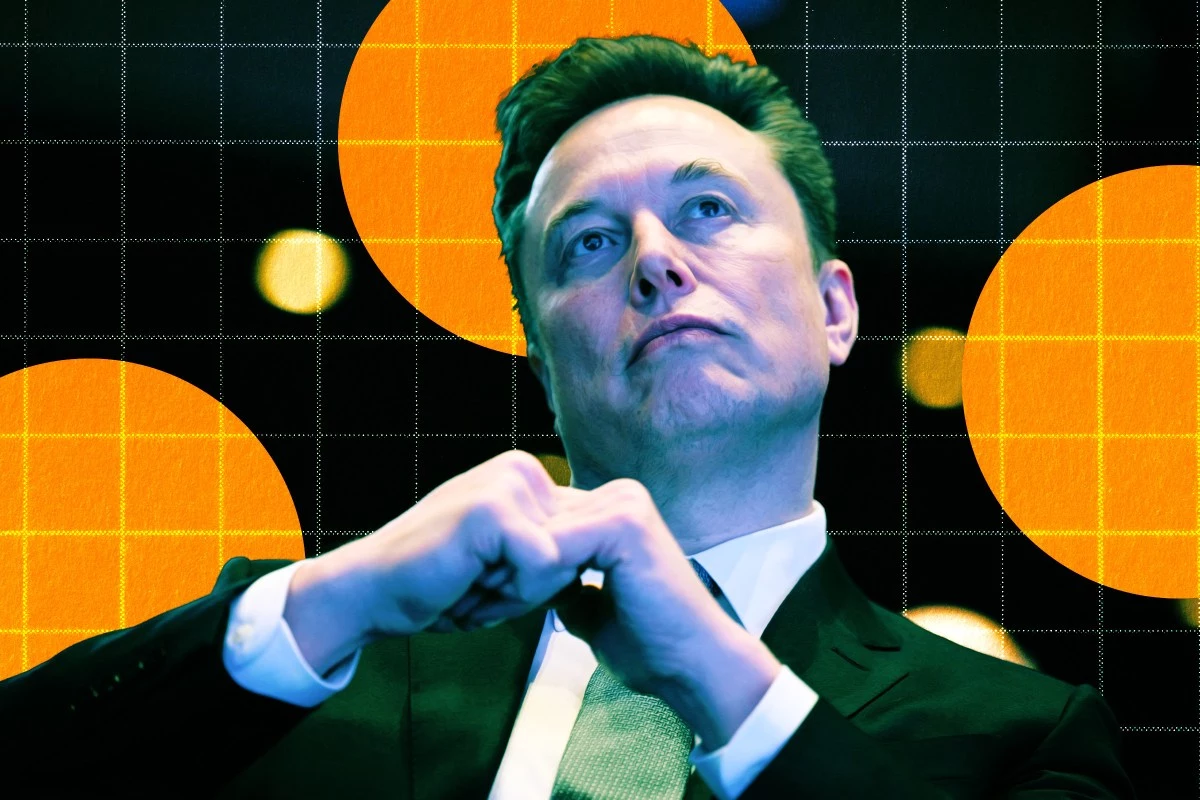

A Musk-Scale Bet on Semiconductor Autonomy—and the Price of Control
Elon Musk’s proposed “Terafab”—an integrated semiconductor fabrication facility pitched at $20–25 billion—lands at the intersection of industrial ambition and strategic anxiety. Anchored by the needs of Tesla, SpaceX, and xAI, the project is framed as a necessity rather than an option: a bid to secure chip supply, compress development cycles, and reduce exposure to geopolitical and capacity shocks that have repeatedly rippled through global electronics and automotive markets.
Yet the immediate tension in the story is financial credibility. Independent estimates, including analysis attributed to Morgan Stanley, place likely total costs closer to $35–45 billion, reflecting the reality that modern leading-edge fabs are not simply factories—they are precision ecosystems of clean-room infrastructure, ultra-complex tooling, and process control that must be tuned over years to achieve competitive yields. The gap between Musk’s headline number and analyst projections is more than a budgeting dispute; it signals the central question: can a Musk-led greenfield fab reach world-class manufacturing performance fast enough to justify its capital intensity?
For investors, policymakers, and competitors, Terafab reads as a high-stakes attempt to convert Musk’s signature vertical integration playbook into the most unforgiving domain of all: advanced semiconductor manufacturing, where execution risk is measured in nanometers, defect densities, and multi-billion-dollar tool chains.
Why Terafab Matters: From Chip Shortages to AI Compute Sovereignty
Terafab’s strategic logic is easy to understand in today’s environment. Semiconductor supply chains have become a proxy for national resilience and corporate competitiveness, and the AI boom has turned high-performance compute into a scarce strategic input. A Musk-controlled fab would aim to deliver something many companies want but few can credibly pursue: end-to-end control over critical silicon.
Key strategic motivations embedded in the Terafab narrative include:
- Semiconductor sovereignty for Musk’s portfolio: Tesla’s autonomy roadmap, SpaceX’s space-grade electronics needs, and xAI’s compute appetite all face constraints shaped by foundry allocation, export controls, and packaging bottlenecks. A captive fab could reduce dependence on external schedules and priorities.
- R&D convergence across companies: Combining Tesla’s chip IP, SpaceX’s radiation-hardened requirements, and xAI’s algorithmic design tooling could, in theory, create a differentiated pipeline—from model requirements to silicon implementation—optimized for specific workloads rather than generic markets.
- Acceleration of iteration cycles: If design, process learning, and packaging are co-located and tightly integrated, the feedback loop from prototype to volume could tighten—an advantage in AI and autonomy where performance-per-watt and latency are competitive battlegrounds.
Still, the semiconductor industry’s history is littered with well-funded entrants that underestimated the operational discipline required to compete with incumbents like TSMC and Samsung. The hard part is not only building the facility; it is achieving repeatable high yield, qualifying processes across nodes, and sustaining uptime and defect control at scale.
The Real Cost Curve: Capital Intensity, Yield Risk, and the Hidden Bill of Materials
The analyst pushback on Musk’s cost estimate reflects a broader truth: semiconductor fabs are capital-intensive in ways that compound. At advanced nodes, the bill is driven not just by land and buildings, but by:
- Lithography and process equipment pricing (including EUV-related tool ecosystems)
- Clean-room complexity and contamination control
- Automation and metrology systems required for high throughput and yield learning
- Advanced packaging and test capabilities increasingly essential for AI chips
- Ramp costs, where early production can be expensive and low-yield before stabilization
This is where the $35–45 billion estimate becomes plausible: it implicitly prices in the realities of tool qualification, process tuning, and the common pattern of 20–30% overruns in mega-projects—especially first-of-a-kind builds without an established manufacturing playbook.
Financing is the next unresolved variable. Musk has not specified whether Terafab would be funded via debt, equity, internal cash flow, or a dedicated vehicle. That ambiguity matters because semiconductor fabs have long return horizons, and the market’s tolerance for multi-year payback periods varies sharply across Tesla shareholders, private SpaceX stakeholders, and any future xAI capital plans. If Terafab draws heavily from existing corporate balance sheets, it could collide with other capital priorities—vehicle platforms, robotics, launch cadence, data centers—each already expensive in its own right.
Competitive Reality: Vertical Integration vs. Foundry Ecosystems
Terafab also challenges the prevailing industry equilibrium. Most OEMs have moved toward fab-light models, outsourcing to specialized foundries that benefit from scale, process maturity, and deep supplier ecosystems. Musk’s approach would reverse that logic, trading near-term efficiency for long-term control.
The competitive implications hinge on whether Terafab can offer more than capacity:
- Ecosystem gravity: Leading-edge manufacturing depends on tight alignment with EDA tooling (Cadence, Synopsys), IP libraries, packaging partners, and equipment suppliers such as ASML and Applied Materials. A fab without ecosystem pull risks becoming a costly island.
- Utilization economics: Fabs are most efficient when highly utilized. Captive demand from Tesla and SpaceX may provide a baseline, but the scale implied by “Terafab” suggests the need for off-take agreements, third-party customers, or joint ventures to amortize fixed costs.
- Node strategy and phased deployment: A modular approach—starting with mature nodes to build yield discipline and operational muscle before pushing to bleeding-edge geometries—could reduce risk, but it may also dilute the headline promise of competing at the frontier.
Overlaying all of this is geopolitics. Terafab could align with U.S. industrial policy and potentially benefit from CHIPS and Science Act incentives, but it would also face heightened scrutiny around export compliance, technology transfer, and supply-chain provenance—especially if the fab touches AI accelerators or advanced packaging pathways.
Terafab, as pitched, is not merely a factory proposal; it is a referendum on whether Silicon Valley-style velocity can be transplanted into the slow, exacting physics of semiconductor yield. If Musk can translate brand gravity and systems engineering into manufacturing excellence, the project could reshape how automotive AI, space electronics, and frontier model training secure their silicon. If not, it risks becoming a monument to the industry’s oldest lesson: in chipmaking, ambition is common—repeatable precision is rare.

 By
By
 By
By

 By
By
 By
By

 By
By
 By
By







