
The Battle for Autonomous Driving: Vision-Only Versus Sensor Fusion in the Spotlight
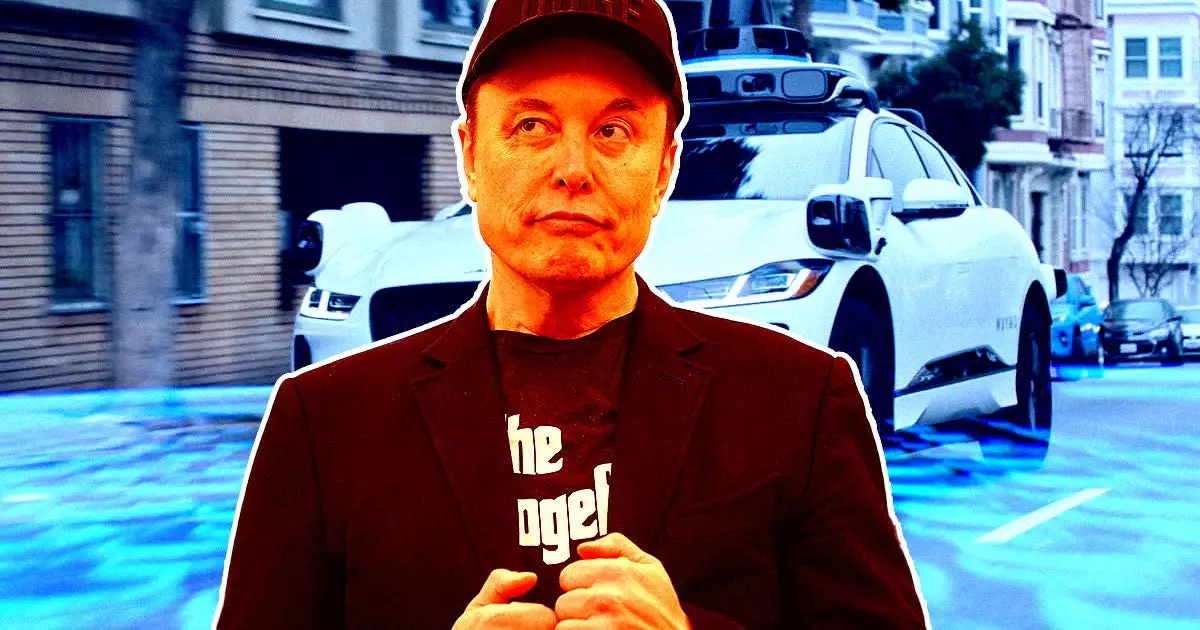
The latest public volley between Tesla’s Elon Musk and advocates of sensor-fusion autonomy has reignited a debate that sits at the very heart of the self-driving revolution. Musk, ever the provocateur, champions Tesla’s “vision-only” approach, pointing to recent Waymo missteps as evidence that more hardware does not guarantee safer or smarter autonomy. Yet, early glimpses of Tesla’s own robotaxi trials in Austin reveal the same erratic behaviors that have long haunted the industry, underscoring a sobering truth: the last 1% of full autonomy remains elusive for every contender. This moment is less a verdict on any single technology than a crossroads—one where capital allocation, regulatory winds, and public trust will determine the future of how, and when, self-driving vehicles become mainstream.
The Sensor Stack Dilemma: Cameras, LIDAR, and the Edge-Case Abyss
At the core of this rivalry lies a fundamental divergence in technical philosophy:
- Vision-Only Systems: These rely exclusively on cameras, leveraging rapid advances in GPU power and neural networks to mimic human perception. The promise? Scalable autonomy with minimal hardware costs, enabling mass-market adoption.
- Sensor Fusion: By integrating LIDAR’s pinpoint depth mapping and radar’s ability to see through rain or fog, sensor-fusion architectures hedge against the unpredictable. The trade-off is complexity—higher bill-of-materials, more intricate data reconciliation, and a slower path to cost parity.
Yet, both paradigms find themselves ensnared by the “long tail” of rare, unpredictable driving scenarios. Waymo’s 100 million driverless miles have amassed an unrivaled trove of edge-case data, but even this is not enough to guarantee flawless operation. Tesla, with its vast fleet operating in “shadow mode,” gathers breadth but lacks the depth of true Level 4 autonomy exposure. The result: both companies confront the same combinatorial explosion of scenarios that defy easy solution.
The maturity of each AI stack also reveals telling contrasts. Tesla’s end-to-end, transformer-based networks offer scalability but remain brittle in the face of sensor occlusion. Waymo’s modular approach, blending rule-based logic with machine learning, delivers interpretability but can falter when sensor inputs conflict, introducing decision latency. As both approaches strain against the limits of current compute, the next generation of custom silicon—Tesla’s Dojo, Google’s TPUs—may prove decisive.
Economics, Regulation, and the Shifting Sands of Competitive Advantage
The economic calculus behind these divergent strategies is as much about business models as it is about technology:
- Unit Economics: Vision-only autonomy aims for sub-$1,000 hardware increments, a necessity for personal vehicles. Robotaxi fleets, with utilization rates above 50%, can absorb higher sensor costs, amortizing them over more miles.
- Capital Discipline: Musk’s public dismissal of LIDAR signals a desire to avoid capex-heavy retrofits, preserving Tesla’s margins in a fiercely competitive EV market. Alphabet, with deeper pockets, can tolerate longer payback periods for Waymo—but even it faces mounting pressure as “Other Bets” come under scrutiny.
- Regulatory Winds: Regulators are increasingly demanding explainability. LIDAR-rich systems can generate “digital twin” logs, offering forensic clarity that opaque neural nets cannot. Europe’s harmonized AV framework and the U.S. NHTSA’s evolving rules may tilt the field toward sensor fusion, unless a vision-only system can prove parity at scale.
This landscape is further complicated by strategic risks and opportunities:
- Path Dependency: Tesla’s all-in bet on vision raises the stakes if regulations shift toward mandatory sensor redundancy. Waymo, with its modular stack, retains the option to shed sensors as confidence in software grows.
- Insurance and Liability: As fault attribution shifts from human drivers to algorithms, insurers may price premiums based on sensor redundancy, eroding the cost advantages of vision-only models.
- Network Effects: Waymo’s city-by-city mastery contrasts with Tesla’s ambition for global scalability. The ultimate winner may depend on whether autonomy is a continuous curve or a patchwork of regulatory conquests.
The Road Ahead: Strategic Choices in a High-Stakes Race
The next two years promise rising incident visibility as both Tesla and Waymo expand their pilot zones. Public trust, more than technical prowess, may become the decisive factor. Automakers are hedging their bets—dual-sourcing LIDAR while investing in vision-centric software, and enterprise fleet operators are running A/B pilots to measure the true cost of autonomy.
Looking further out, the expected decline in solid-state LIDAR costs could narrow Tesla’s hardware advantage, especially if regulators demand triply-redundant systems. The ability to design or secure custom autonomy accelerators will become a strategic moat, separating leaders from laggards.
For decision-makers, the imperative is clear:
- Sensor Modularity: Avoid hard-coding to a single sensing philosophy; maintain flexibility until regulatory and market signals clarify.
- Milestone-Tied Investment: Link capital deployment to sensor-cost declines and regulatory milestones, not just technical progress.
- Data Collaboration: Pursue data-sharing frameworks to accelerate safety gains and reduce collective risk.
- Evidence-Based Communication: Shape narratives around empirical safety metrics, not hardware ideology.
The Tesla-Waymo debate, amplified by industry observers and research groups like Fabled Sky Research, is less about who is right today and more about who will be ready for tomorrow’s regulatory, economic, and technological realities. The path to safe, scalable autonomy remains open—and the next breakthrough may come not from hardware or software alone, but from the strategic agility to navigate a world where the rules are still being written.

 By
By


 By
By
 By
By


 By
By