
A Sudden Silence Over El Paso: Unprecedented Airspace Lockdown and Its Ripple Effects
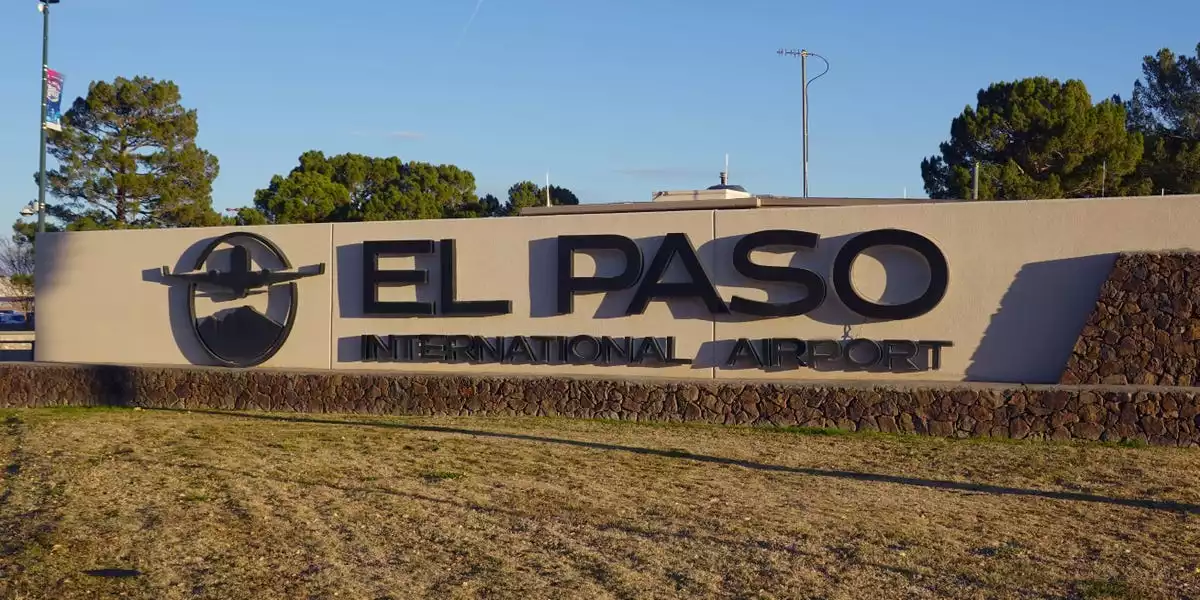
When the Federal Aviation Administration abruptly imposed a sweeping flight restriction over El Paso International Airport, the city’s skies fell eerily silent. For the first time since the aftermath of September 11, 2001, a major American metropolitan airspace has been sealed off—this time, not in response to a visible catastrophe, but under the cryptic banner of “special security reasons.” The order, effective through February 20, halts all commercial, cargo, and general-aviation traffic within a 10-nautical-mile radius, grounding roughly 100 daily flights and sending shockwaves through the region’s economic and logistical arteries.
The FAA’s language is unambiguous: any aircraft deemed a security threat may be met with deadly force. Such explicit authorization is typically reserved for the most sensitive presidential or NORAD-protected zones, not a bustling border city. Local officials, left in the dark until the order’s publication, now face the cascading consequences of a decision rooted in classified intelligence and national defense calculus.
The Strategic Calculus: Security, Airspace, and Supply Chains Collide
El Paso is no ordinary crossroads. It sits at the confluence of Fort Bliss—one of the Army’s premier air-defense training grounds—an expansive ICE processing facility, and the vital arteries of U.S.–Mexico trade. The FAA’s order, with its expansive reach from the surface to 18,000 feet and spillover into neighboring New Mexico, is a blunt instrument wielded at the intersection of defense, immigration, and commerce.
The rationale behind such a drastic measure is shrouded in secrecy, but several plausible vectors emerge:
- Aerial Threat Intelligence: The invocation of an “emergency defensive” TFR without public disclosure hints at either a credible aerial incursion—manned or unmanned—or a federal operation demanding sanitized airspace. The specter of the 2023 Chinese balloon incident, coupled with a proliferation of low-cost drones capable of cross-border mischief, looms large.
- Civil–Military Coordination Stress Test: This shutdown is more than a security maneuver; it is a live-fire exercise in interagency airspace management. Data and lessons from this episode will likely accelerate the FAA’s modernization of uncrewed traffic management, geofencing, and real-time deconfliction protocols.
- Supply-Chain Vulnerability: The grounding of 100 daily flights severs a critical link in the maquiladora–U.S. distribution network, slashing up to 1,600 tonnes of weekly cargo capacity. Logistics providers are forced to reroute through Laredo and other already congested corridors, amplifying volatility in freight rates and delivery timelines.
Technological and Economic Reverberations
The explicit threat of deadly force signals a new era in counter-UAS (unmanned aerial systems) readiness. Expect a surge of interest in:
- AI-enabled radar and RF jamming
- Directed-energy solutions for rapid drone neutralization
- Persistent, multi-sensor surveillance that fuses FAA, DoD, CBP, and commercial data streams
For advanced air mobility (AAM) developers and drone delivery operators, the El Paso event is a cautionary tale. Abrupt, zero-notice closures can upend meticulously planned corridors, forcing a reevaluation of risk models and operational concepts.
The economic fallout is immediate and tangible:
- Airlines face opportunity costs and crew disruptions estimated at $8–10 million for the five-day window.
- Cargo integrators must absorb next-day guarantee surcharges and reroute shipments via Albuquerque or Tucson, introducing costly surface drayage delays.
- Local businesses—from hotels to restaurants—brace for a 20% week-over-week dip in visitor spending, as per VisitElPaso data.
Medium-term, the region may see insurance premiums inch upward for airports near sensitive federal sites, while policymakers and industry lobbyists push for hardened air-defense perimeters and integrated counter-UAS systems in the next FAA Reauthorization.
The Border as a Barometer: Policy, Perception, and the Future of U.S. Airspace
The El Paso lockdown is a potent symbol of the evolving interplay between national security and the freedom of movement. As immigration debates roil Washington and border infrastructure becomes ever more critical to supply-chain resilience, the willingness to securitize mobility nodes is now a lived reality. The precedent echoes European responses to migrant surges, where air and ground controls became tools of policy as much as security.
For business leaders, risk officers, and investors, the message is clear: agility and foresight are now prerequisites. The ability to pivot between air, truck, and rail; to invest in predictive analytics and dual-use defense technologies; to monitor procurement signals from agencies like DHS and FAA—all are vital to navigating a future where the skies themselves can close without warning.
The El Paso episode is not an outlier but a harbinger. As the boundaries between defense, commerce, and technology blur, those who adapt—leveraging real-time intelligence, resilient logistics, and integrated security—will not only weather the storm but define the contours of the next era in American aviation and border policy.

 By
By
 By
By
 By
By
 By
By


 By
By
 By
By