
Ecovacs’ Big Spring Sale pricing signals a new phase of robot vacuum competition
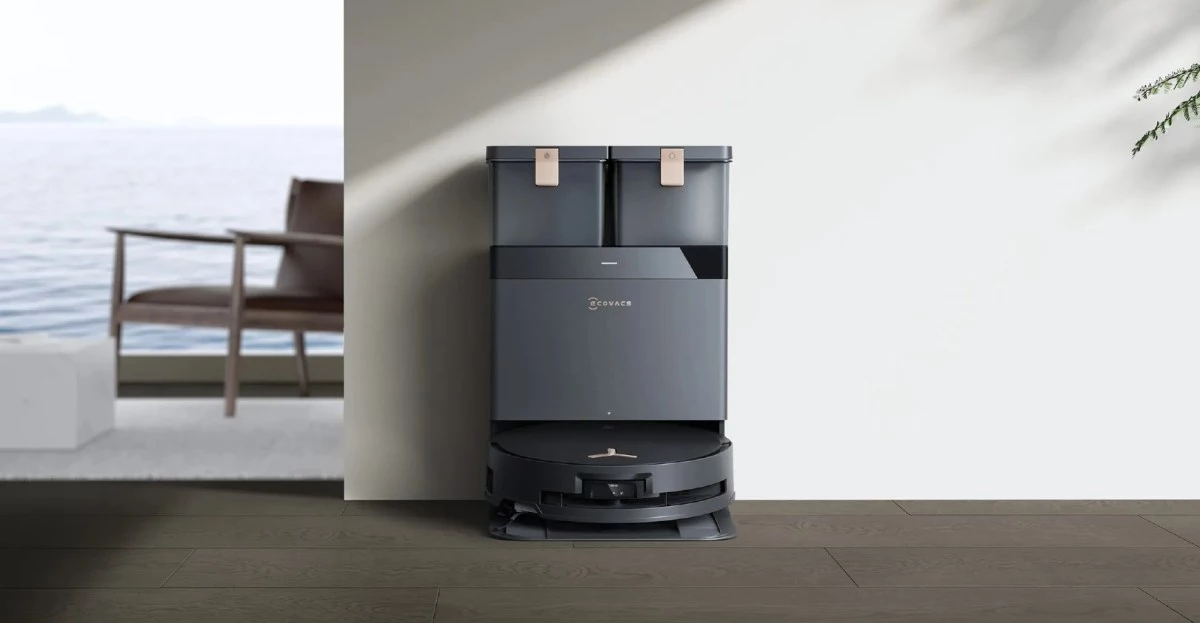
Ecovacs’ decision to sharply cut prices on the Deebot X8 Pro Omni and Deebot X9 Pro Omni ahead of Amazon’s Big Spring Sale is more than a seasonal promotion—it’s a clear indicator of how the robot vacuum and mop market is evolving. With the X8 Pro Omni at $599 (down $501) and the X9 Pro Omni at $679 (down $621), Ecovacs is effectively repositioning two premium-feature devices into a “mass-market plus” tier, compressing the distance between midrange affordability and flagship capability.
This pricing move lands at a moment when the category is crowded with credible alternatives from Roborock, Dreame, and others, while legacy brands recalibrate strategy and product roadmaps. In that environment, deep discounting becomes a lever not only for unit volume, but also for platform visibility—especially on Amazon, where ranking, conversion velocity, and promotional participation can materially shape demand.
Key commercial signals embedded in the pricing:
- Margin pressure is becoming structural, not episodic, as brands compete on both features and storefront prominence.
- Inventory and channel management likely play a role: aggressive discounts can clear older stock without explicitly labeling it as last-generation.
- Value stratification is intentional: the newer X11 OmniCyclone at $899 anchors the premium tier while X8/X9 absorb price-sensitive buyers who still want high-end automation.
Feature parity, incremental differentiation, and the “spec ceiling” problem
On paper, the X8 Pro Omni and X9 Pro Omni share a substantial core: lidar + 3D-camera navigation, app control, Matter-enabled voice control, self-cleaning roller mops, and multifunction docks that automate water handling and waste disposal. They also tout up to 4,000 Pa mop pressure, a figure that signals a continued industry push toward “hands-off” wet cleaning that approaches the consistency of manual mopping.
Yet the differentiation between the two models illustrates a broader market reality: as robotics hardware matures, manufacturers increasingly rely on incremental spec distinctions to justify tiering.
Notable spec contrasts and what they likely mean in real-world use:
- Suction power:
– X8 Pro Omni: 18,000 Pa
– X9 Pro Omni: 16,600 Pa
The X8 leads on raw suction, which can translate into better pickup in certain edge cases (deep carpet, heavier debris).
- Airflow optimization (X9’s “boosted large-airflow” positioning):
This suggests Ecovacs is emphasizing the difference between peak suction and sustained debris transport—important for larger particles, pet hair, and maintaining performance as bins and filters load up.
The strategic subtext is that the market is approaching a spec ceiling: once suction, mop pressure, and dock automation reach “good enough” levels for most households, differentiation shifts toward:
- Navigation reliability (fewer stuck events, better obstacle avoidance)
- Software quality (mapping accuracy, room recognition, scheduling logic)
- Maintenance experience (dock cleaning, consumables, odor control)
- Support and firmware cadence (bug fixes, feature updates, longevity)
In that light, the X11 OmniCyclone’s positioning—19,500 Pa, upgraded mop system, and a bagless auto-empty dock—reads as a premium bet on convenience and ownership cost reduction. But the steep discounts on X8/X9 raise a pointed question: will consumers pay the flagship premium when the practical experience is already close to automated?
Matter interoperability turns robot vacuums into smart-home infrastructure
One of the most strategically important details is Matter support, which signals that robot vacuums are increasingly treated less like standalone appliances and more like nodes in a broader smart-home operating system. Matter’s promise—cross-platform interoperability—reduces friction for consumers and reduces risk for manufacturers betting on any single ecosystem.
For business and technology leaders, Matter support in devices like the Deebot X8 Pro Omni and X9 Pro Omni suggests several implications:
- Platform lock-in weakens, shifting competitive advantage toward product quality, service, and data-driven features rather than ecosystem exclusivity.
- Voice and automation become baseline expectations, not premium differentiators, accelerating commoditization of “smart” as a label.
- Integration breadth becomes a procurement factor, especially for multi-device households and property managers standardizing across units.
This also opens the door to a less discussed dimension: data exhaust. Robot vacuums generate high-value operational data—cleaning frequency, room usage patterns, obstacle density, and spatial layouts derived from mapping. Even when anonymized, these signals can underpin:
- predictive maintenance and proactive support
- consumables replenishment programs
- usage-based feature bundles
- long-term customer retention via software improvements
The privacy and governance dimension will matter here. As mapping and perception systems improve, the industry will face rising expectations for transparent data handling, local processing options, and clear retention controls.
The next battleground: services, supply chains, and durable differentiation
Ecovacs’ pricing strategy underscores a market that is simultaneously innovating and compressing. Advanced sensors—lidar and 3D cameras—are no longer exotic, but they remain supply-chain sensitive, relying on specialized components and global manufacturing stability. Volatility in sensor pricing, semiconductor availability, and geopolitics can quickly reshape product margins, particularly when discounts become the norm rather than the exception.
Looking forward, several trajectories appear increasingly plausible:
- Robot-as-a-service consumer models: subscriptions that bundle consumables, wear-part replacement, and performance guarantees
- Experience-first differentiation: fewer “headline specs,” more emphasis on reliability, UX, and support
- Regional SKU bifurcation: premium Matter-enabled models in developed markets, simplified cost-optimized variants elsewhere
- Competitive repricing cascades: aggressive promotions from one major brand often force rapid response across the category
Ecovacs’ X8 Pro Omni and X9 Pro Omni discounts are, on the surface, a compelling consumer value story. Underneath, they read as a strategic maneuver in a maturing robotics market where the winners will be defined less by peak suction numbers and more by ecosystem fit, software durability, and the ability to turn a one-time hardware sale into a long-lived relationship.

 By
By
 By
By
 By
By
 By
By

 By
By

 By
By