


The Geisel Estate: Where Literary Legacy Meets Modern Luxury
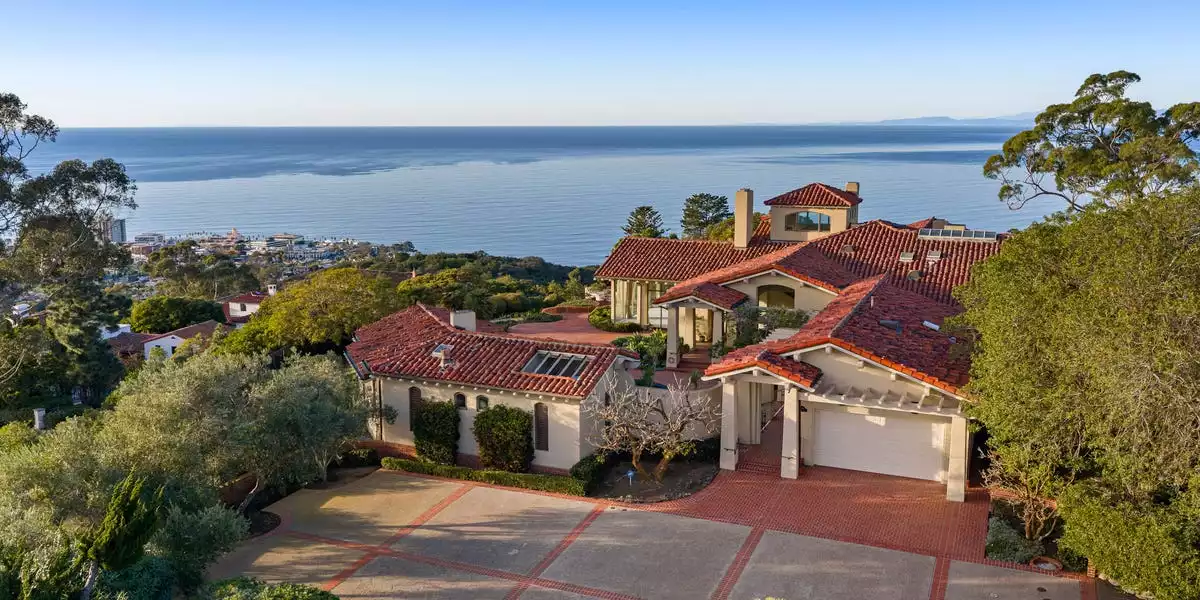
Perched atop the sun-drenched cliffs of La Jolla, the former home of Theodor Seuss Geisel—known to generations as Dr. Seuss—has entered the market at just under $10 million. Beyond its Spanish-Revival arches and 1.5 oceanfront acres, the property carries an aura that transcends square footage or panoramic views. Here, in a historically protected study, forty-two of the world’s most beloved children’s books took shape. Now, as the University of California, San Diego moves to divest this singular asset, the Geisel Estate becomes a case study in the evolving intersection of heritage, economics, and the creative economy.
Scarcity, Provenance, and the Price of Narrative
San Diego’s ultra-luxury real estate market is defined by its scarcity. With absorption rates below three months in the $5–10 million band, price resilience persists even as mortgage rates climb. Yet, the Geisel Estate’s appeal is not merely a function of ocean views or manicured lawns. The “Seuss provenance” introduces an intangible premium—a narrative equity that conventional pricing models struggle to quantify. Just as the Hamptons’ celebrity estates or the architect-branded homes of Palm Springs command a cultural uplift, so too does this property, its value buoyed by the stories written within its walls.
This phenomenon is not isolated. Across the country, universities are rethinking the role of legacy real estate in their portfolios. As endowment volatility and rising operational costs prompt a shift from land-banking to liquidity, the Geisel Estate’s listing mirrors similar moves at Harvard, Stanford, and the University of Chicago. Monetizing non-core assets is no longer a reluctant necessity but a strategic rotation—one that allows institutions to reinvest in research, digital infrastructure, and future-facing initiatives.
Story-Driven Assets and the Experiential Economy
For today’s luxury buyers, narrative has become a currency as valuable as location. Properties with storied pasts confer social capital, transforming ownership into a form of cultural stewardship. The Geisel Estate is emblematic of this trend—a space where “narrative equity” is as much an asset as the land itself.
This dovetails with broader shifts in hospitality and entertainment. As the industry pivots toward immersive, story-driven experiences, physical sites tied to iconic creators become launchpads for cross-media activations. Dr. Seuss Enterprises, for example, continues to license the brand to Netflix, Warner Bros. Discovery, and Random House. A savvy buyer might envision the estate as a venue for events, filming, or even virtual reality experiences, echoing the transformation of Ian Fleming’s GoldenEye into a boutique resort that extends the James Bond franchise. Here, the boundary between physical and intellectual property blurs, opening new revenue streams and deepening audience engagement.
Technology, Tokenization, and Heritage Preservation
The digital age offers non-obvious opportunities for heritage properties. High-fidelity digital twins can bring the Geisel Estate to a global audience, supporting virtual tourism and providing a preservation record as climate risk intensifies along the California coast. Tokenized fractional ownership—recently greenlit by the SEC—could democratize access, enabling enthusiasts to co-own a piece of literary history while generating ongoing revenue for UCSD. This mirrors the Aspen Digital model, where real estate is reimagined as a liquid, divisible asset.
Within the estate’s landmarked office, generative AI storytelling installations could remix Seuss content in real time, creating a living, IP-compliant exhibit that evolves with each visitor. Such innovations not only enhance engagement but also capture valuable data, feeding back into the broader creative economy.
Regulatory and macroeconomic forces add further complexity. Climate-risk discounting is now embedded in mortgage-backed securities ratings, pushing owners to model insurance and retrofitting costs with unprecedented rigor. Landmark protections limit structural changes, but California’s relaxed ADU rules may unlock incremental rental yield if approached with sensitivity. Tax strategies—such as philanthropic lease-backs or conservation easements—offer pathways to mitigate capital gains while preserving public access, a model favored by literary estates from New England to the West Coast.
Strategic Playbook for the Next Era of Heritage Assets
The sale of the Geisel Estate signals a broader shift in how we value and steward narrative-rich properties. Family offices and private equity funds are increasingly attuned to the defensive qualities of such assets, whose value often decouples from broader market cycles. Media studios, meanwhile, can leverage physical locations to bundle content launches, spreading marketing spend across both tangible and digital channels.
For universities, the divestiture of legacy real estate represents not just a financial maneuver but a blueprint for balance-sheet innovation—cycling heritage into liquidity that fuels the next wave of research and commercialization. Impact investors, too, are reframing preservation as a social and environmental good, tapping into sustainability-linked financing pools that reward the stewardship of cultural landmarks.
The Geisel Estate, then, is more than a high-value listing. It is a microcosm of the converging forces reshaping luxury real estate, intellectual property, and experiential design. Those able to blend heritage with technology stand poised to unlock multidimensional returns—financial, cultural, and strategic—from the stories that shape our collective imagination.

 By
By
 By
By
 By
By
 By
By
 By
By


 By
By







