

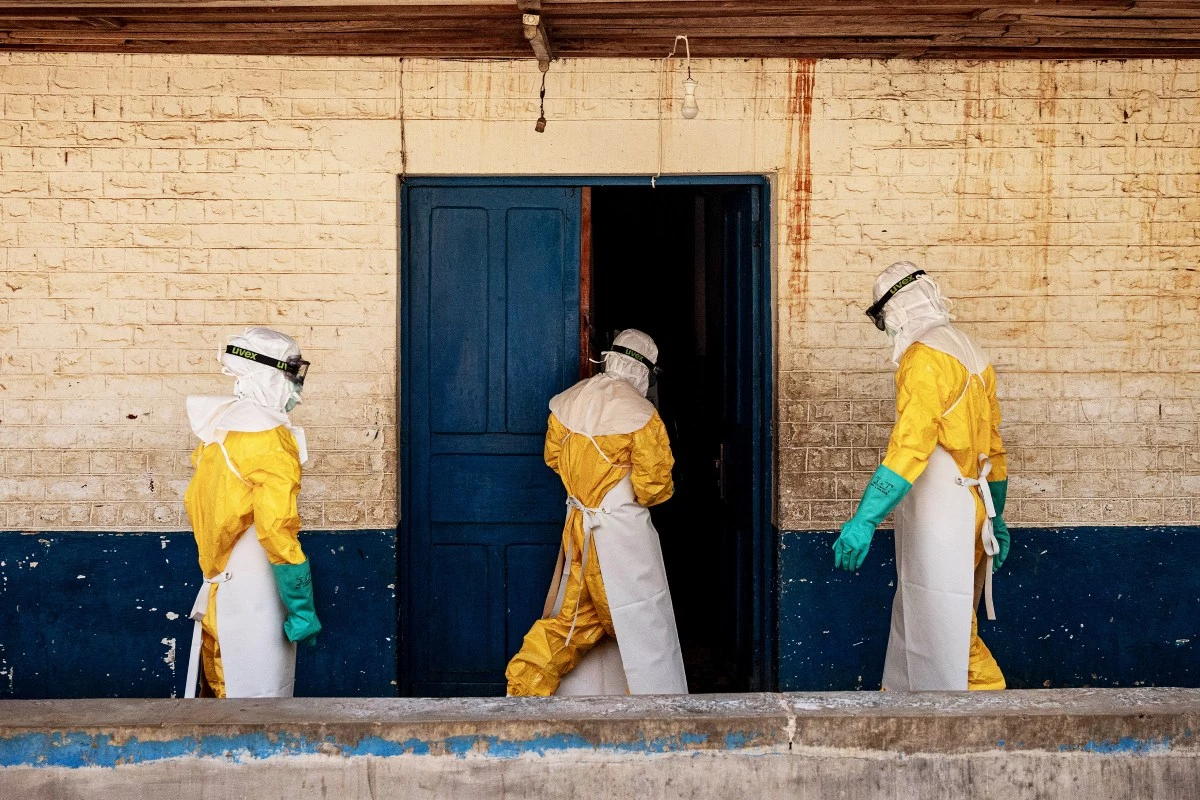

A fast-moving Ebola outbreak exposes the cost of delayed detection
The Democratic Republic of Congo (DRC) is grappling with its third-largest recorded Ebola outbreak, with more than 1,000 suspected cases and 233 confirmed deaths reported so far. Yet the most consequential figure may be the one that cannot be reliably counted. Emergency health specialist Simon Mardel cautions that true infections are likely substantially higher, pointing to “invisible” transmission chains—cases that never enter the formal health system until the virus has already moved on.
This is the defining operational challenge of Ebola containment: time. The gap between symptom onset, clinical recognition, laboratory confirmation, and isolation can be long enough for the virus to propagate through families, caregivers, transport routes, and informal markets. In outbreak epidemiology, that lag is not a rounding error; it is the difference between a containable cluster and a regional emergency.
The strain is already evident in the mechanics of response. For every confirmed infection, thousands of close contacts may require tracing and monitoring, a labor-intensive process that depends on trained personnel, community trust, and reliable communications. When that system falls behind, the outbreak stops behaving like a sequence of isolated sparks and begins to resemble a sustained fire—harder to map, harder to predict, and far more expensive to extinguish.
The situation is further complicated by cross-border spread into Uganda, a development that shifts the narrative from a national public health crisis to a regional health security event. Once multiple jurisdictions are involved, coordination becomes as important as clinical capacity—especially when border controls, trade routes, and population movement begin to respond to fear as much as to policy.
—
Digital health tools meet real-world constraints in the DRC
The last decade has produced a wave of optimism about digital contact tracing, mobile reporting, and data-driven outbreak management. In theory, these tools can compress detection timelines, improve situational awareness, and allocate scarce resources more precisely. In practice, the DRC outbreak underscores how technology’s impact is bounded by infrastructure, adoption, and governance.
Several constraints are converging:
- Underreporting and delayed confirmation: If cases are detected late, digital systems merely document a past reality rather than shaping a future one. The value of analytics depends on timely inputs.
- Connectivity and device limitations: Low smartphone penetration, inconsistent power, and limited network coverage reduce the feasibility of app-centric approaches in many affected areas.
- Privacy and trust barriers: Communities facing conflict, displacement, or political mistrust may resist surveillance tools—especially if data ownership and safeguards are unclear.
- Interoperability gaps: Outbreak response often involves NGOs, UN agencies, and national ministries operating parallel systems. Without shared standards, data becomes fragmented and less actionable.
At the same time, the outbreak highlights where technology can still be decisive if deployed appropriately. Hybrid surveillance models—combining community health workers, SMS-based reporting, point-of-care diagnostics, and lightweight analytics—tend to outperform “platform-first” solutions in low-resource environments. The goal is not maximal digitization, but minimum viable visibility: enough real-time signal to identify clusters early and interrupt transmission.
Medical countermeasures also illustrate the same theme. Effective vaccines such as rVSV-ZEBOV and Ad26.ZEBOV/MVA-BN-Filo, along with monoclonal antibody therapies, represent genuine scientific progress. Yet their impact is throttled by operational realities:
- Cold-chain requirements and last-mile delivery challenges
- Uneven distribution networks in insecure or remote regions
- Shortages of trained personnel to administer therapies and manage adverse events
- Limited laboratory capacity to confirm cases quickly and guide targeted vaccination
In outbreak response, biotechnology is only as powerful as the logistics system that carries it.
—
Health security becomes an economic and supply-chain story—especially for critical minerals
Ebola is often framed as a humanitarian emergency, but in the DRC it is also an economic stress test. The country’s fragile transport infrastructure—poor roads, limited warehousing, and insecurity along key corridors—does more than slow medical deliveries. It amplifies the cost of every intervention, lengthens response timelines, and increases the probability that the outbreak becomes protracted.
The macroeconomic implications are not abstract. The DRC is central to global supply chains for cobalt and copper, critical inputs for electric-vehicle batteries, grid storage, and renewable-energy systems. A prolonged health crisis can depress productivity through:
- Workforce disruption from illness, caregiving burdens, and fear-driven absenteeism
- Localized quarantines that impede movement of labor and goods
- Operational interruptions in artisanal and industrial mining zones
- Logistics delays that ripple into export schedules and commodity pricing
For global business, this is a reminder that pandemic risk is now a supply-chain risk, not just a public health line item. Boards that treat biosurveillance as separate from procurement, logistics, and geopolitical risk are increasingly out of step with reality—particularly in regions where critical minerals, infrastructure projects, and public health capacity intersect.
—
Regional spillover and “health diplomacy” raise the geopolitical stakes
With confirmed cases in Uganda and concern about broader regional exposure, the outbreak is moving into a domain where public health, border policy, and strategic influence overlap. Cross-border transmission can trigger:
- Border closures and trade friction
- Population displacement and pressure on urban health systems
- Reallocation of humanitarian and security assets
- Political strain as governments balance public reassurance with containment measures
This is also where great-power engagement becomes more visible. The United States, the European Union, and China each have incentives to provide assistance—both for legitimate global health reasons and as a form of soft power in a country central to strategic minerals and infrastructure development. Health aid can build goodwill, shape standards, and open channels of influence, especially when delivered through durable capacity-building rather than short-term crisis optics.
The most constructive path forward may lie in public-private partnerships (PPPs) that treat outbreak response as a systems challenge:
- Telecommunications firms enabling secure, low-bandwidth reporting
- Logistics providers supporting cold-chain resilience and route optimization
- Biotech and diagnostics companies deploying portable testing and training
- Mining and industrial operators integrating worksite surveillance and community support to reduce transmission risk around economic hubs
The DRC outbreak is a stark demonstration that preparedness is not a slogan—it is an operating model. Where funding cuts erode field teams and expertise, outbreaks expand into the gaps. Where surveillance is distributed and logistics are resilient, even high-threat pathogens can be contained before they become regional shocks. The next phase will be defined less by what science can do, and more by whether institutions—public, private, and multilateral—can execute at the speed the virus demands.

 By
By
 By
By

 By
By
 By
By

 By
By








