
The Unseen Calculus of Executive Health: When Transparency Meets the Algorithmic Age
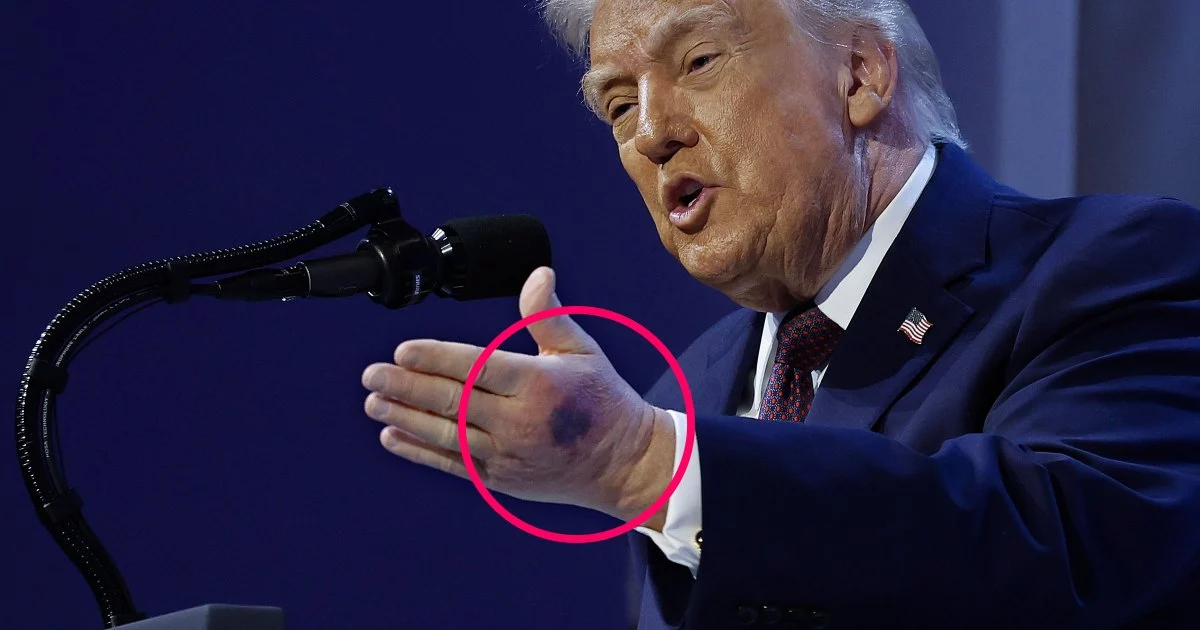
The recent emergence of photographs showing distinct bruising on both of President Donald Trump’s hands during the World Economic Forum has reignited a perennial debate: how much should the public—and, by extension, the markets—know about the health of those at the helm of the world’s largest economy? While the official narrative attributes these marks to “vigorous handshaking,” a chorus of medical experts, parsing high-resolution images, suggests a more complex etiology: repeated intravenous access, chronic venous insufficiency, and the possibility of high-potency anticoagulant use. The administration’s sharp rebuke of such external diagnoses only deepens the intrigue, especially as observers note additional, subtler signs—irregular speech, a shuffling gait, and reported cognitive lapses—hinting at neurological decline.
These developments, though ostensibly medical, are not confined to the realm of personal health. They reverberate across the intricate latticework of capital markets, regulatory frameworks, and the very machinery of American governance. In this new era, where every public appearance is a potential data point, the boundaries between privacy, policy, and predictive analytics are blurring at a pace that challenges both ethical norms and strategic planning.
The Marketplace of Images: How Digital Surveillance Redefines Leadership Scrutiny
The spectacle of executive health has always been a matter of public fascination and private speculation. What is novel today is the velocity and granularity of information capture. High-definition photography, crowd-sourced social media feeds, and AI-driven image analysis have transformed the media landscape into a de facto health-monitoring apparatus, often outpacing official disclosures. Enterprises operating at the intersection of medical devices, remote diagnostics, and computer vision are now eyeing a burgeoning, if ethically fraught, market: AI-enabled “public-health intelligence” that can flag physiological anomalies in leaders before the official story breaks.
This technological leap is not without its regulatory shadows. The administration’s resistance to outside medical commentary exposes a vacuum in legal frameworks governing tele-diagnosis of public figures. As the appetite for real-time, AI-powered health signals grows—particularly among hedge funds and risk managers—legislators are likely to grapple with questions of professional liability, data privacy, and the permissible scope of algorithmic scrutiny. The result may be a new class of statutory requirements, echoing the annual executive medical reports now mandated for corporate leaders in parts of Europe.
Capital, Policy, and the Price of Opacity
For capital markets, executive health is not a matter of idle curiosity but a quantifiable risk. Historically, uncertainty around leadership fitness commands a premium: in the run-up to the 2024 election, persistent opacity could widen U.S. sovereign CDS spreads by 5–10 basis points, with ripple effects across global portfolios. Multinational CFOs are already stress-testing models against scenarios of delayed fiscal execution or abrupt succession—scenarios with particular resonance for sectors reliant on defense contracts, energy deregulation, or trade negotiations that hinge on White House continuity.
The specter of cognitive decline carries its own economic signature. Even mild executive impairment correlates with a measurable uptick in executive-order reversals and irregular appointment cycles, inflating regulatory friction costs for heavily regulated industries by 4–6 percent. For technology firms navigating antitrust scrutiny or AI regulatory frameworks, this means pricing in negotiation delays and the possibility of doctrinal shifts as decision-making authority migrates, informally, to secondary advisors.
Strategic Imperatives in a Data-Hungry Era
The convergence of health transparency and digital surveillance is spawning a new set of strategic imperatives for decision-makers:
- Cross-Functional Vigilance: Institutions are forming internal task forces to monitor executive-health news flows, integrating insights from government affairs, risk, and communications.
- Legal Foresight: With the regulatory landscape in flux, proactive engagement with legal counsel is essential to navigate the permissible use of publicly sourced health data.
- Diversified Engagement: Savvy organizations are cultivating deeper relationships with career agency officials, hedging against bottlenecks if top-tier appointees become incapacitated or distracted.
- AI and Health Analytics: For technology and life-science firms, the moment is ripe to invest in AI-powered diagnostic imaging and remote monitoring—anticipating a surge in demand for leadership-health analytics as public expectations for transparency mount.
As the gap widens between opaque executive-health disclosures and the relentless appetite of a data-driven, algorithmically empowered marketplace, the stakes extend far beyond the visible bruises of a single leader. The contest between privacy, transparency, and predictive power will not only shape the stability of American governance but also define the next frontier in digital health, risk underwriting, and the broader quest for information integrity. In this evolving landscape, the ability to navigate both the seen and the unseen may prove to be the most valuable asset of all.

 By
By
 By
By
 By
By
 By
By
 By
By


 By
By