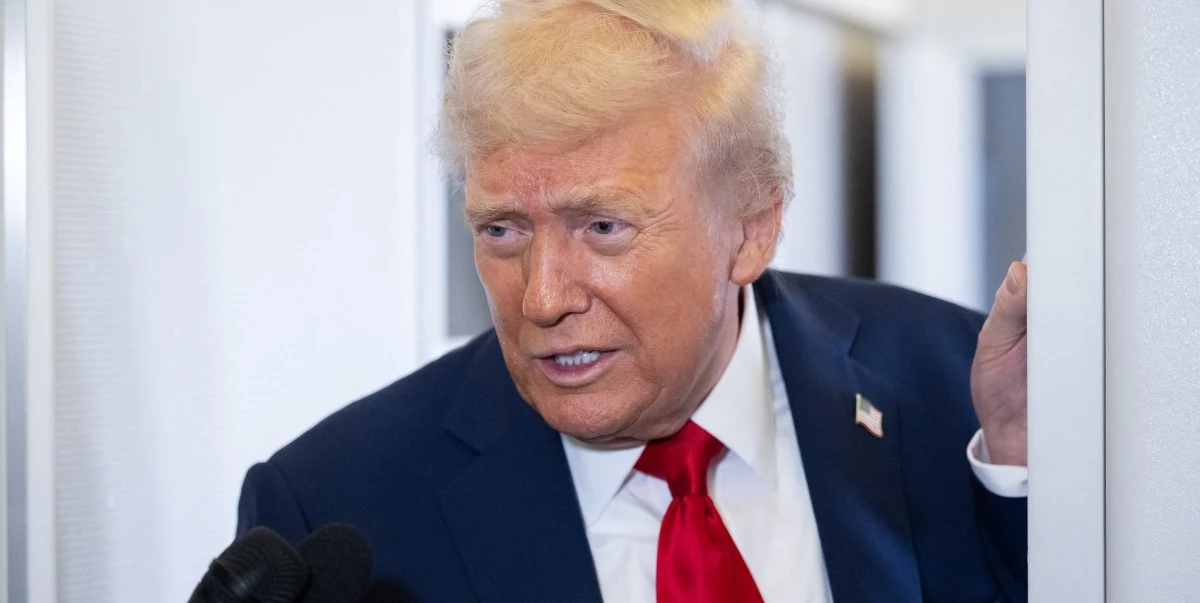

The Trump Vaccination Paradox: Private Choices, Public Signals, and the New Business Healthscape
The quiet revelation that former President Donald Trump has received both a COVID-19 booster and a seasonal flu shot—despite the anti-vaccine undertones of his administration and the ongoing skepticism propagated by current health officials—serves as a prism through which to view the evolving interplay of leadership, institutional capacity, and business risk in America’s public-health landscape. This episode, at once mundane and seismic, exposes the widening gulf between political performance and personal prudence, and signals a new era in which the burden of health security is shifting inexorably toward the private sector.
When Private Actions Contradict Public Narratives
Trump’s decision to privately receive vaccinations, while his administration’s public narrative and that of current HHS Secretary Robert F. Kennedy Jr. continue to cast doubt on vaccine efficacy, is emblematic of a broader phenomenon: the leadership signal paradox. Senior figures, acutely aware of real risks, often make personal decisions that belie their public stances. For business leaders, this is more than a curiosity—it is a cue. When the most visible proponents of skepticism quietly hedge their bets with science, the message is clear: risk management trumps rhetoric.
This paradox is not lost on executives and boards, who increasingly recognize that the true risk landscape is shaped not by what is said at press conferences, but by the private actions of those with the best information. Expect a proliferation of similar “quiet compliance” among high-profile figures whose public personas must appease ideological bases, even as their private decisions reflect a sober assessment of scientific consensus.
Institutional Retrenchment and the Rise of Corporate Health Sovereignty
The recent downsizing of the Centers for Disease Control and Prevention—marked by 1,300 layoffs and the designation of hundreds of positions as “non-essential”—signals a profound shift in the locus of public-health responsibility. As federal disease-surveillance and response capabilities erode, the onus falls increasingly on states, employers, and global firms to self-insure against the next outbreak.
For corporations, especially those in sectors with high exposure to health disruptions—manufacturing, transportation, hospitality—this means absorbing costs once shouldered by the federal government:
- Expanded internal disease surveillance: Integrating public data with proprietary health and insurance feeds.
- Rapid-response infrastructure: Pre-negotiating contracts for mobile clinics and at-home testing to compress response times.
- Heightened insurance premiums: Actuarial models now price in diminished federal response, driving up costs and tightening underwriting standards.
In this environment, the ability to anticipate and absorb health-security shocks becomes not just a compliance issue, but a core competitive differentiator.
Trust, Technology, and the Information Arms Race
While vaccine research—particularly mRNA-based multivalent boosters—continues to advance, the real battleground has shifted to the digital sphere. Disinformation, algorithmically amplified and increasingly sophisticated, threatens to outpace the efforts of epidemiologists and fact-checkers. Trust architectures—content moderation, health-credential verification, AI-driven rumor detection—are now as critical as the underlying science.
Firms with the capacity to embed verifiable, science-based information into high-friction social channels stand to capture disproportionate value. This is fertile ground for technology providers, including those at the forefront of AI-driven epidemiological monitoring. Yet, as public institutions like the CDC retreat, the ethical stakes rise: private-sector control over health data and analytics introduces new questions around stewardship and bias.
Strategic Imperatives in a Volatile Health Policy Landscape
The macroeconomic ripples of this new reality are already visible:
- Labor productivity suffers as under-vaccinated workforces drive up absenteeism and strain supply chains.
- Insurance pricing reflects the shrinking safety net of federal outbreak response.
- Biotech investment is increasingly drawn to next-generation prophylactics and therapeutics, with private capital seeking returns unmoored from public logistics.
Forward-looking organizations are responding by:
- Building redundant, multi-source health dashboards
- Securing rapid-response vendor relationships
- Prioritizing science-based communication to sustain stakeholder trust
- Tracking startups in immunology, logistics, and trust-tech for M&A opportunities
Moreover, the intersection of ESG and talent acquisition is sharpening: high-skill candidates scrutinize employer health policies as part of due diligence, rewarding pro-science workplaces with their loyalty and expertise.
As the paradox of public rhetoric and private risk management becomes ever more pronounced, the most resilient firms are reframing health diligence not as a regulatory burden, but as a source of enduring strategic advantage. In an age where institutional safety nets are fraying, the capacity to navigate uncertainty with agility and credibility is fast becoming the hallmark of corporate leadership.

 By
By
 By
By
 By
By
 By
By
 By
By