


Baltic Tensions: Russia’s Maritime Gray Zone and the New Frontiers of Hybrid Warfare
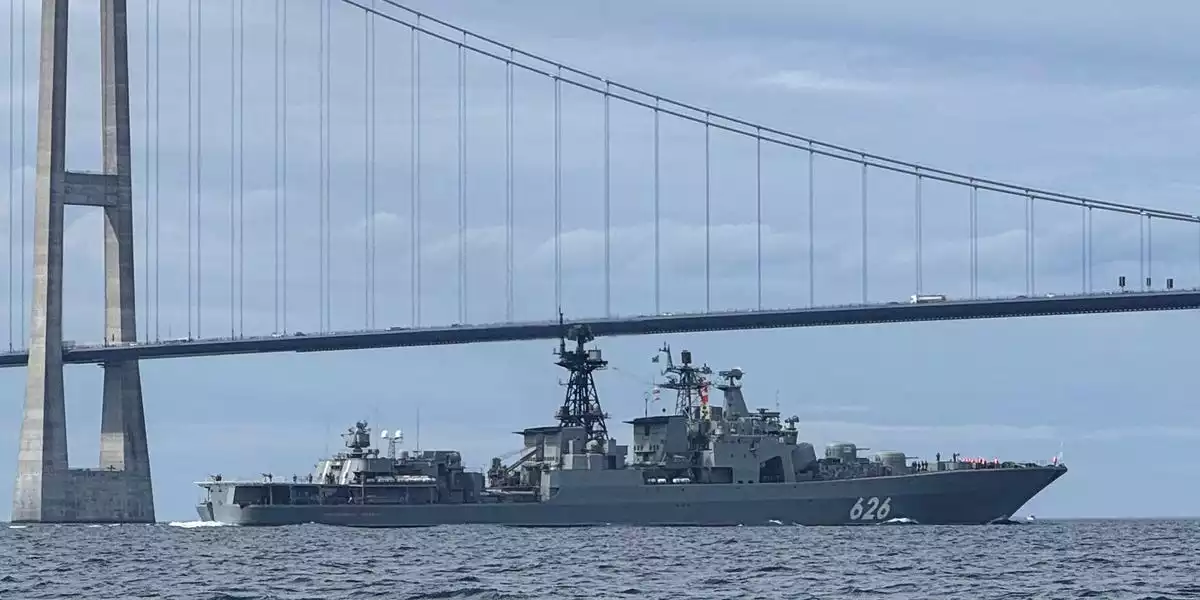
The Baltic Sea, once a relatively placid maritime corridor, now thrums with the undercurrents of a new kind of confrontation. Russian naval units, emboldened by a doctrine that prizes ambiguity, have repeatedly engaged in collision-course maneuvers, territorial incursions, and electronic harassment against Danish vessels and helicopters. The Danish Defence Intelligence Service (DDIS) interprets these acts not as isolated provocations, but as the vanguard of a sophisticated “hybrid warfare” campaign—one that fuses maritime intimidation with cyber-intrusions and airspace violations, all carefully calibrated to remain just below the threshold of open conflict.
The Calculus of Ambiguity: Russia’s Gray Zone Playbook
Moscow’s strategy is as much about perception as it is about force. By operating in the ambiguous territory between peace and war, Russia exploits the very architecture of NATO’s collective defense. The alliance’s Article 5—its mutual defense clause—is difficult to invoke in response to actions that are aggressive, yet plausibly deniable. This calculated ambiguity serves several purposes:
- Stress-testing NATO Unity: Each incursion probes political fault lines, forcing allies to debate proportional responses and, in the process, exposing the seams in transatlantic cohesion.
- Harvesting Intelligence: Close-in maneuvers yield a trove of electronic signatures and communications protocols. These data points feed into Russia’s anti-access/area-denial (A2/AD) networks in Kaliningrad and the Arctic, sharpening its ability to counter NATO naval operations.
- Shielding Sanctions Evasion: Russian naval presence near Danish chokepoints complicates the enforcement of Western oil price caps. The so-called “shadow fleet” maintains up to 2 million barrels per day of black-market capacity, blunting the intended economic sting of sanctions.
- Domestic Signaling: For the Kremlin, overseas assertiveness is a narrative balm, shoring up perceptions of strength as it contends with battlefield attrition and economic stagnation at home.
Technology and the New Battlespace: Electronic Warfare, ISR, and Cyber Spillover
The Baltic is not just a theater for ships and submarines; it is a crucible for technological contestation. Reports of GPS anomalies—hallmarks of Russian GNSS spoofing—have become routine near Danish vessels, echoing similar tactics seen in the Black Sea. These disruptions are not mere nuisances: they degrade maritime domain awareness, impede emergency response, and disrupt commercial shipping schedules.
In response, Denmark and its allies are accelerating the deployment of advanced technologies:
- Space-Based AIS and AI Analytics: The hostile signal environment has catalyzed investment in space-based Automatic Identification System (AIS) analytics and AI-driven pattern recognition. These tools are now indispensable for tracking both conventional and “shadow” maritime activity.
- Multi-Sensor Fusion and LEO Constellations: The procurement of unmanned surface vessels and low-earth orbit (LEO) satellite constellations is underway, fusing disparate data streams into a coherent operational picture.
- Cyber Defense in the Maritime Domain: Medium-level cyber attacks, often leveraging compromised commercial IoT devices, threaten not just defense infrastructure but also critical maritime operational technology (OT) systems—energy grids, wind farms, and container terminals. The risk of lateral movement across these networks is acute, demanding robust segmentation and zero-trust architectures.
Economic and Geopolitical Reverberations: From Insurance Markets to Alliance Dynamics
The economic ripples of Russia’s hybrid campaign are already visible. Baltic hull-war-risk insurance premiums have surged by up to 20 percent since early Q2, a cost that ultimately filters through to consumers via higher freight rates and, potentially, north-European inflation. The region’s role as a crucible for renewable energy—hosting a quarter of the EU’s offshore wind capacity under construction—adds another layer of vulnerability. Russian proximity elevates the risk of sabotage to subsea power cables and HVDC interconnectors, threatening both Europe’s decarbonization timeline and the investment calculus underpinning the green transition.
Commodity markets, too, are in flux. Each successful run by Russia’s “shadow fleet” undermines G7 price caps, marginally suppressing Brent crude benchmarks while tightening tanker availability for compliant shippers. The resulting volatility in global freight indices underscores the interconnectedness of maritime security and macroeconomic stability.
On the geopolitical front, the accession of Finland to NATO—and Sweden’s imminent membership—compresses Russia’s strategic depth in the Baltic, incentivizing a spike in hybrid activity before new alliance force posture plans are finalized. Smaller allies such as Denmark now find themselves at the forefront of deterrence signaling, a reality that is prompting calls for an updated NATO cost-allocation formula and deeper EU-NATO industrial base interlock.
Strategic Horizons: Proactive Defense and Corporate Adaptation
The trajectory of escalation is uncertain, but several vectors are clear:
- Short-Term: Expect deniable sabotage attempts against Baltic subsea infrastructure and a rise in GPS spoofing incidents.
- Mid-Term: The deployment of Russian unmanned surface or subsurface platforms for intelligence, surveillance, and disruption is likely.
- Wildcard: A coordinated cyber-physical operation, timed with peak winter energy demand, could serve as a stress test for Western crisis management.
For decision-makers, the imperative is to pivot from reactive posture to proactive strategy. Investments in AI-enabled maritime domain awareness, cyber-resilient operational technology, and dual-use greenfield opportunities—such as integrating passive sonar arrays into offshore wind infrastructure—are no longer optional. Corporate actors should diversify logistics routes, reassess insurance coverage, and join regional intelligence-sharing networks to mitigate risk.
The Baltic’s new normal is one of persistent ambiguity and technological contestation. By mapping Russia’s gray-zone tactics to tangible economic and strategic vectors, Western policymakers and industry leaders can fortify supply chains, accelerate innovation, and reinforce alliance cohesion—ensuring that deterrence holds, even as the boundaries of conflict continue to blur.

 By
By
 By
By
 By
By
 By
By

 By
By
 By
By








