

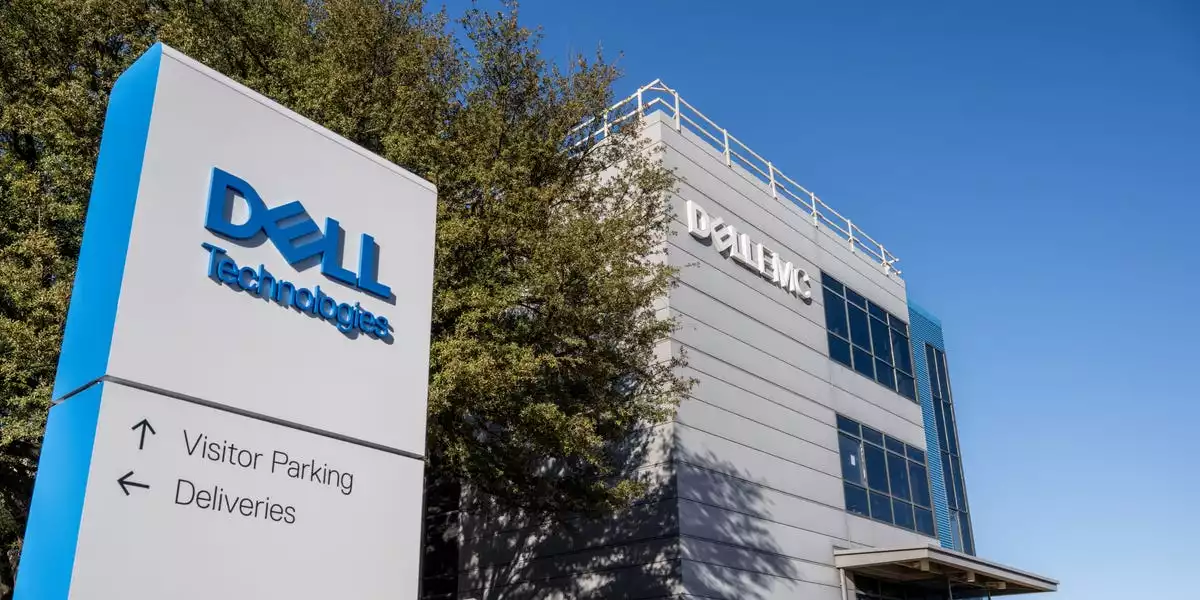

Dell’s Five-Day Office Mandate: A Calculated Reversal in the Hybrid Work Era
In a move that reverberates across the corporate landscape, Dell Technologies has drawn a sharp line in the sand, mandating a full five-day, eight-hour in-office schedule for its North American commercial-sales teams. Gone are the days of loosely enforced hybrid arrangements, replaced by a badge-swipe regime and a strict accounting of hours—no more informal flexibility for school drop-offs or midday appointments. The message, delivered with unmistakable clarity by VP Jackie Miller, signals not just a policy change but a philosophical pivot, one that echoes the recent retrenchments at JPMorgan, Amazon, and other industry titans seeking to reclaim the office as the nucleus of enterprise culture and productivity.
The Calculus Behind Dell’s Office-First Strategy
Dell’s decision is not a mere reflexive return to pre-pandemic norms; it is a response to a confluence of operational, economic, and cultural pressures unique to the post-remote era.
Operational Complexity and Deal Velocity
- The commercial-sales process at Dell is a high-stakes choreography, involving overlay engineers, financing specialists, and a constellation of channel partners. Management contends that physical co-location accelerates this dance, collapsing deal cycles through spontaneous coordination and real-time problem-solving.
Attrition and Cultural Cohesion
- Attrition rates at Dell have crept above the hardware-sector median, a worrisome trend for a company navigating multiple restructuring cycles. The office, in this context, becomes both a hedge against “quiet quitting” and a crucible for reinvigorating a culture diluted by years of distributed work.
Real Estate and Financial Stewardship
- With billions sunk into its Round Rock campus, Dell faces mounting pressure to justify the carrying costs of underutilized real estate. In an environment where commercial property valuations are fragile, recommitting to physical presence serves as a bulwark against impairment charges and lease write-offs.
Security, Compliance, and Customer Trust
- Serving federal, state, and regulated-industry clients—who collectively account for nearly a third of North American revenue—Dell must often restrict sensitive data to on-premises secure rooms. The office, in these cases, is not just a preference but a compliance imperative.
Human Capital Friction and Economic Undercurrents
Behind the policy shift lies a delicate balancing act, fraught with risks and trade-offs that extend well beyond the walls of Dell’s campuses.
Talent Retention in a Tight Labor Market
- With unemployment in tech-adjacent sales hovering near historic lows, the imposition of daily commutes risks pushing mid-career talent toward venture-backed SaaS firms that continue to champion remote work. Each uptick in voluntary turnover could inflate Dell’s selling expenses by tens of millions—an expensive side effect in a margin-sensitive business.
Wage Dynamics and Cost Containment
- Some firms have begun to position return-to-office (RTO) mandates as a substitute for compensation growth, a subtle recalibration in an era of elevated capital costs. Dell’s hardline stance may presage flatter merit budgets, trading flexibility for financial discipline.
Diversity, Equity, and the Caregiver Dilemma
- The policy’s impact is not evenly distributed. Econometric data suggests that women, particularly those with caregiving responsibilities, are disproportionately penalized by long commutes and inflexible hours. For a company that has long touted the value of diverse perspectives in consultative selling, this could undermine both brand and business outcomes.
Strategic Signals and the Unfolding Industry Experiment
Dell’s mandate is more than an internal directive—it is a public wager on the enduring value of physical proximity in an age of AI-enabled collaboration and distributed teams.
Hybrid Bifurcation and Employer Value Propositions
- The industry is splitting along cultural lines: cloud-native firms like Atlassian and GitLab remain remote-first, while legacy infrastructure providers double down on the office. This divergence is shaping the talent market, with digital natives gravitating toward flexibility and traditionalists emphasizing operational rigor.
Culture as Intellectual Property
- Implicit in Dell’s move is the belief that tacit knowledge—product heuristics, negotiation tactics, the subtle art of the cross-sell—is best transmitted face-to-face. Whether this advantage persists in an era of generative AI copilots and real-time knowledge capture remains an open question.
Competitive Channel Dynamics
- Notably, Dell’s direct competitors—HPE, Cisco, Lenovo—have yet to implement similarly stringent mandates. Channel partners may seize on this flexibility as a recruiting lever, subtly reshaping alliances and competitive positioning in the process.
Navigating the Next Cycle: Lessons for Leadership
The implications of Dell’s policy ripple far beyond its own workforce. For business leaders, the moment demands a nuanced approach:
- Segment roles by collaboration intensity and measure productivity gains before imposing blanket mandates.
- Leverage office days for high-impact activities—customer demos, deal labs—rather than default occupancy, to avoid in-person fatigue.
- Integrate AI collaboration tools to ensure knowledge flows freely, regardless of location, hedging against future disruptions.
- Monitor employee experience metrics—from onboarding speed to absenteeism—to surface unintended consequences and tie real-estate ROI to talent outcomes, not just occupancy rates.
- Scenario-plan for a barbell talent market, offering differentiated pathways for high performers and early-career talent alike.
As the return-to-office debate intensifies, Dell’s experiment will be closely watched—not just as a test of HR policy, but as a bellwether for the evolving social contract between employer and employee in the post-pandemic economy. The stakes are nothing less than the future geography of work itself.

 By
By
 By
By

 By
By
 By
By
 By
By

 By
By







