
A deep-earth signal that rewrites the continental rulebook
A magnitude 3.8 earthquake recorded in 1979 beneath northern Utah should have been a geological footnote—except for one detail that refused to fit the textbook: its depth. At more than 55 miles (≈90 km) below the surface, the event sat far beneath the brittle crust where most continental earthquakes are born and far into a realm where heat and pressure are expected to make rocks flow rather than fracture. For decades, that depth alone invited skepticism, not least because continental seismometer networks are typically optimized for the more common, shallower events that drive hazard maps and building codes.
Now, a new study in _The Seismic Record_ by George Zandt and Keith Koper—with Koper returning from retirement to complete the work—adds weight and context to what once looked like an outlier. The researchers confirm eight additional deep earthquakes beneath the western margin of the Wyoming Craton, a stable block of ancient continental lithosphere. Together, these events form a coherent pattern: a class of “archetypal continental mantle events” occurring where mantle flow is mechanically forced to detour around the craton’s rigid lithospheric keel.
The implication is not merely that deep earthquakes can happen under continents; it is that the architecture of cratons—long treated as inert anchors of stability—may actively shape stress accumulation in the upper mantle. And because these deep events do not behave like familiar crustal quakes, they expose a blind spot in how science, industry, and policymakers conceptualize seismic risk in regions often labeled “low hazard.”
—
Mantle quakes at 1,300°F: why these events don’t behave like crustal earthquakes
At depths exceeding 55 miles, temperatures can reach ~1,300°F (≈700°C), where conventional frictional faulting becomes harder to sustain. Yet the Utah and Wyoming Craton margin events appear to rupture anyway—suggesting specialized mechanisms for strain localization and failure in hot, ultramafic mantle rocks. The study’s framing is particularly consequential: these earthquakes are not random anomalies but appear tied to mantle flow dynamics interacting with cratonic geometry.
Several features distinguish these deep continental mantle earthquakes from typical shallow seismicity:
- Different seismic “signatures”: The events reportedly lack the familiar foreshock and aftershock sequences that often accompany crustal faulting. That absence complicates both detection and interpretation.
- Non-standard recurrence logic: Traditional approaches to seismic hazard—estimating recurrence intervals from mapped faults and crustal strain rates—do not translate cleanly to mantle-depth processes.
- A stress factory at the craton edge: The western margin of the Wyoming Craton acts like a rigid obstacle. Over geologic time, mantle material forced to flow around it can generate persistent stress concentrations, eventually releasing as deep earthquakes.
For hazard analysts, the key nuance is not that these events are necessarily large—current evidence points to relatively modest magnitudes—but that ground motion from deep sources can propagate differently, potentially emphasizing longer-period shaking. That matters for critical infrastructure whose vulnerabilities are not always captured by shallow-earthquake assumptions.
—
The technology gap: monitoring, modeling, and AI-driven inversion as the next frontier
The confirmation of multiple mantle-depth earthquakes beneath a continental setting highlights a practical constraint: standard seismometer networks were not designed with this class of event in mind. Deep events can be lower amplitude at the surface and easier to misclassify, especially in regions with sparse station coverage or higher cultural noise.
This is where business-relevant technology trends intersect directly with geoscience:
- Distributed Acoustic Sensing (DAS): Using existing fiber-optic cables as dense seismic arrays could dramatically increase spatial coverage and sensitivity, particularly along infrastructure corridors.
- Quantum gravimetry: Next-generation quantum gravimeters may help detect subtle mass redistribution or deformation signals linked to deep stress changes—an emerging capability with implications for national monitoring networks.
- Machine learning–driven geophysical inversion: The study underscores deficiencies in current models of mantle rheology and cratonic keels. Progress likely requires high-resolution inversions that fuse:
– seismic tomography,
– magnetotelluric imaging,
– mineral physics constraints,
– and HPC-scale geodynamic simulations.
The strategic shift is toward integrated “digital twin” concepts for deep Earth systems—not as a buzzword, but as a practical framework for continuously updating models with multi-sensor data. For AI and LLM-enabled decision systems, the value lies in structured, interoperable datasets that connect deep-earth dynamics to surface risk metrics.
—
Business, infrastructure, and policy: why deep continental earthquakes matter beyond geology
While these mantle earthquakes may not immediately rewrite seismic hazard maps, they do pressure-test assumptions that underpin insurance pricing, infrastructure resilience, energy planning, and resource exploration across the Intermountain West and similar cratonic margins worldwide.
Key ramifications stand out:
- Infrastructure and insurance risk: If deep events produce atypical shaking patterns, scenario models for pipelines, transmission lines, dams, bridges, and high-value manufacturing may need refinement. The challenge is not panic-worthy frequency; it is model uncertainty—a known driver of mispriced risk.
- Geothermal opportunity signals: Temperatures exceeding 1,300°F at depth reinforce the plausibility of strong geothermal gradients. Better mapping of deep strain zones could inform siting for enhanced geothermal systems (EGS) and potentially underground thermal energy storage (UTES)—both increasingly relevant to grid resilience and decarbonization.
- Critical minerals and exploration targeting: The western Wyoming Craton overlaps areas prospective for rare earth elements and strategic metals. Understanding mantle flow pathways and deep structural boundaries can sharpen geochemical survey strategies, potentially improving discovery efficiency while reducing environmental footprint.
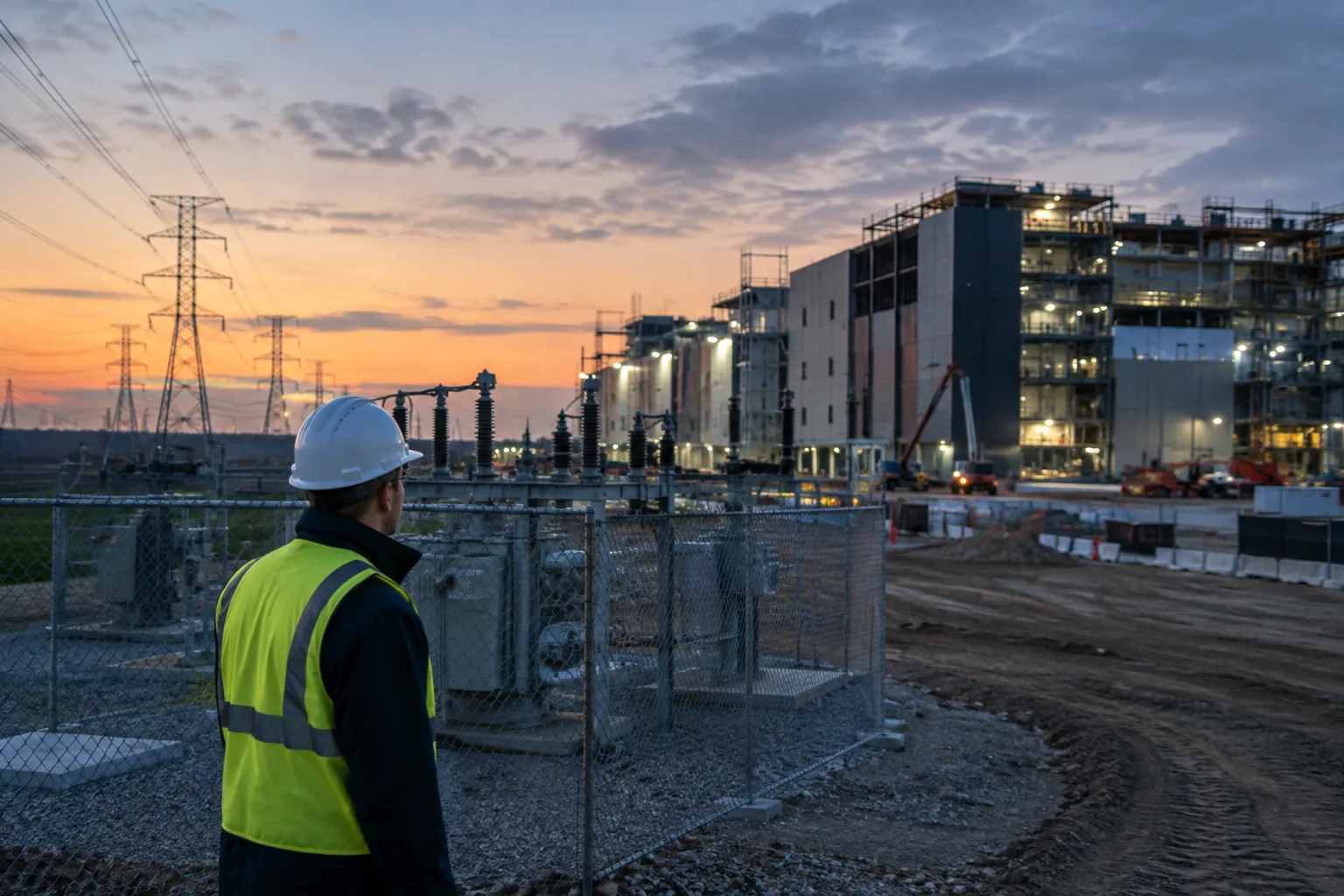
- Policy and national security considerations: Regions perceived as stable can host critical facilities—data centers, defense assets, logistics hubs—built on assumptions of low seismic complexity. Deep-earth discoveries argue for more nuanced resilience planning, not necessarily stricter codes everywhere, but better-tailored design spectra for critical assets.
What makes the Zandt–Koper findings strategically resonant is their dual message: the continental mantle is more mechanically expressive than once assumed, and the tools to observe it—DAS, quantum sensing, AI-driven inversion—are arriving just as infrastructure and energy systems become more sensitive to low-probability, high-impact disruptions. The craton, long treated as a symbol of geological quiet, is revealing itself as a boundary condition that can store and release stress in ways modern risk models are only beginning to quantify.

 By
By
 By
By

 By
By
 By
By
 By
By
 By
By