

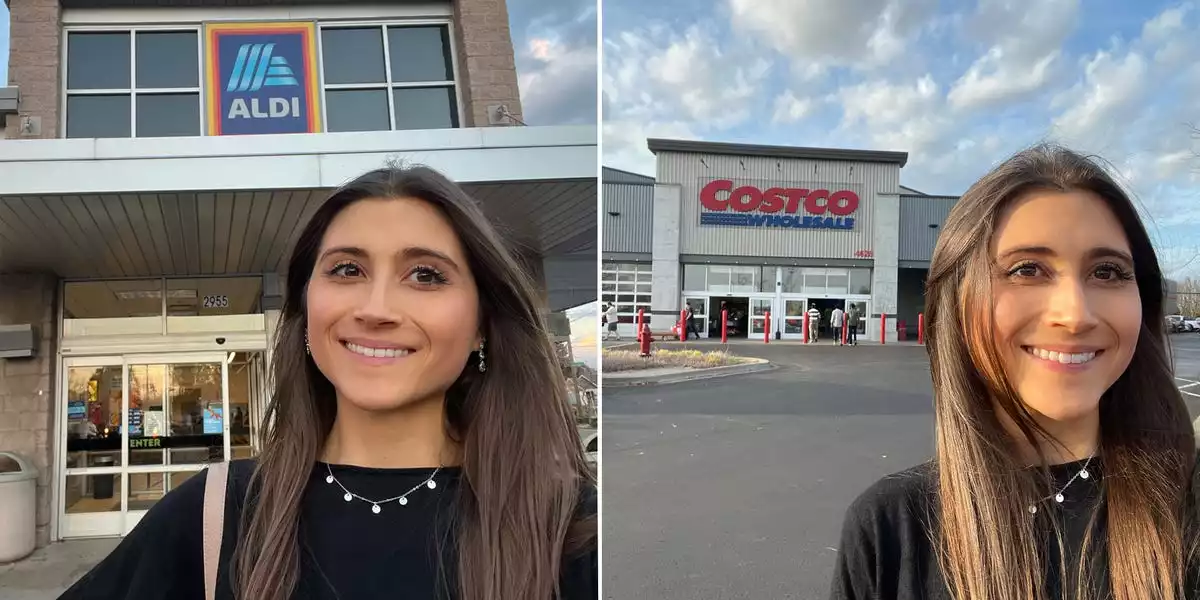

The Shifting Geometry of Grocery Value: How Household Dynamics Are Redrawing the Retail Map
The American grocery aisle, once a predictable battleground of price wars and bulk bargains, is now a crucible for deeper economic and demographic change. A recent consumer-level comparison between Costco and Aldi, two titans with diametrically opposed models, reveals more than a contest of price tags—it exposes the evolving calculus of value in an age where household size, consumption patterns, and inflation anxieties are rewriting the rules of retail engagement.
Bulk Bargains, Small Households: The New Math of Grocery Economics
Costco’s legendary bulk deals have long been the gold standard for value-conscious families. Yet, the arithmetic of savings is shifting. For the growing legion of smaller households—single adults now comprise 28% of U.S. homes, according to Census data—the warehouse club’s supersized packages often translate into higher effective costs. The culprit? Not just the $65 annual membership fee, but the silent bleed of spoilage and cash tied up in excess inventory. A two-person household, faced with a 10-pound bag of chicken thighs or a loaf of bread the size of a cinder block, may find that theoretical savings dissolve into the “food-waste tax”—that 32% of groceries the USDA estimates end up in the trash.
Aldi, with its minimalist stores and nimble private-label assortment, has quietly seized the initiative. In a standard market basket, the discounter undercuts Costco on meats, breads, and canned goods, while ceding ground on dairy and select produce. But the real innovation is in right-sizing: smaller packs, no membership fees, and a shopping experience calibrated for the new American household. In an era of persistent food inflation, consumers are no longer dazzled by unit cost alone—they are optimizing at the SKU level, weighing the economic trade-off between bulk purchasing and waste, and demanding transparency that social media and digital price-comparison tools now deliver in real time.
Technology, Waste, and the Battle for the Modern Basket
The next front in grocery competition will be fought not just on price, but on precision. Both Aldi and Costco have built empires on private-label dominance—Aldi with an astonishing 90% of SKUs, Costco at around 30%. But as artificial intelligence and advanced analytics permeate retail, the battleground is shifting to micro-assortment: dynamic, store-level planograms that tailor pack sizes and product mixes to local household profiles. Imagine a store where the shelf layout in a downtown neighborhood of singles and couples is algorithmically distinct from that of a suburban family enclave.
Supply chain strategy further differentiates the players. Costco’s vertically integrated poultry operation delivers cost advantages, but at the expense of SKU diversity—leaving gaps for niche proteins and “conscious carnivore” trends that Aldi’s decentralized procurement can quickly exploit. Meanwhile, the digital layer remains unresolved: neither retailer has cracked the code on affordable last-mile delivery, a critical gap as smaller households increasingly prefer e-commerce and expect sub-$5 basket delivery fees. The first mover to integrate scalable, micro-fulfillment solutions could tilt the balance decisively.
Regulatory Winds, Competitive Tensions, and the Road Ahead
The competitive landscape is fragmenting. Walmart, with its hybrid model, straddles both big-basket and small-basket value, leveraging its vast store network for same-day fulfillment. Hard-discounters like Lidl and Save-A-Lot are embedding themselves in food deserts, capturing share among inflation-sensitive shoppers. Meanwhile, looming state-level anti-waste legislation, such as California’s SB1383, threatens to penalize retailers whose pack sizes exacerbate household waste, making early compliance not just a regulatory necessity but a strategic differentiator.
For grocery executives, the path forward demands agility and foresight:
- Value Re-Segmentation: Large families will remain Costco’s core, but singles and couples are migrating to discounters and e-commerce. Loyalty programs and pack architecture must reflect this bifurcation.
- Pack-Size Innovation: Sustainable packaging—compostable films, resealable smart labels—offers both waste reduction and premium pricing opportunities.
- Dynamic Membership Models: Tiered or usage-based memberships could expand addressable markets without eroding perceived value.
- Data Monetization: Leveraging household-level consumption data to predict spoilage risk and guide purchasing can deepen loyalty and reduce churn.
- Strategic M&A: Expect heightened interest in regional discounters and AI-driven demand-forecasting startups as incumbents recalibrate for a post-bulk era.
The Costco-Aldi price comparison, while seemingly anecdotal, is a microcosm of a larger structural realignment. As demographic downscaling, inflationary vigilance, and intolerance for waste converge, the warehouse club model faces a reckoning. Retailers that harness technology to right-size value, minimize waste, and personalize the shopping experience will not only survive this transition—they will define the next era of grocery profitability.

 By
By
 By
By
 By
By
 By
By

 By
By
 By
By








