
The New Arena: Humanoid Robotics as the Next Great Technological Contest
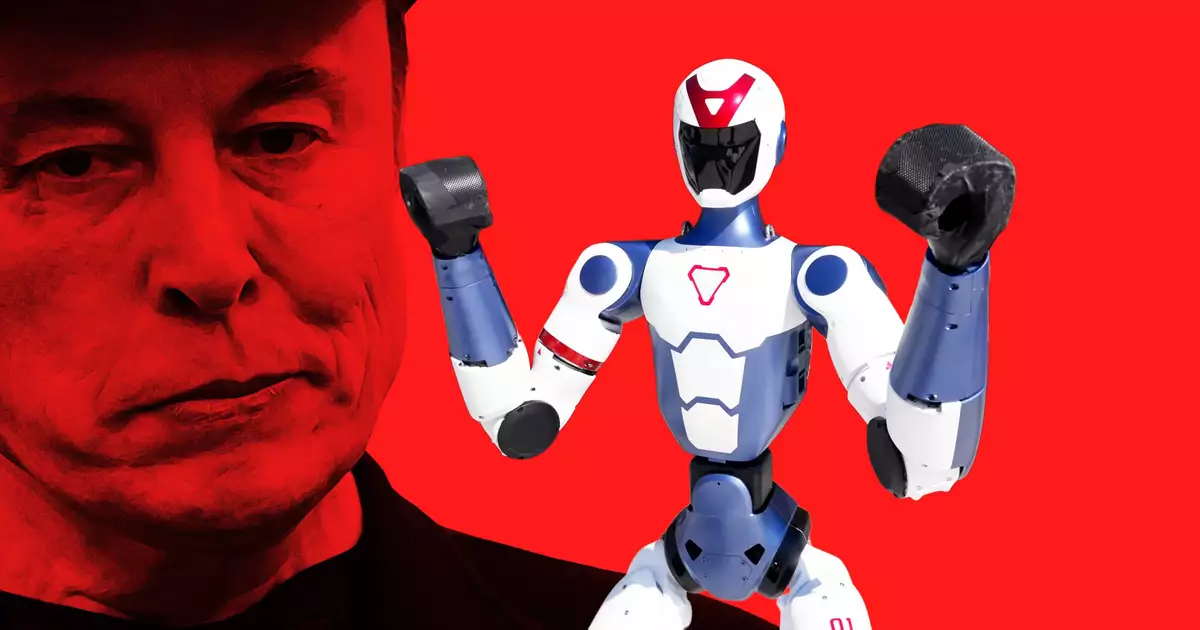
A quiet but profound shift is underway in the global robotics landscape, one that echoes the semiconductor arms race of previous decades. The emergence of affordable, agile humanoid robots—particularly from China’s burgeoning tech sector—has set the stage for a new era of competition between East and West. The recent unveiling of the Unitree R1, a 1.3-meter, 47-kilogram humanoid robot priced at an astonishing $6,000, crystallizes a moment where price, performance, and manufacturing scale are converging to disrupt not just industrial automation, but the very fabric of consumer electronics.
The Anatomy of Disruption: Cost, Software, and Manufacturing
At the heart of this transformation lies a dramatic inversion of the cost curve. Unitree’s R1, assembled from commodity servos, lithium-ion batteries, and edge AI chips such as the RK3588 and Qualcomm RB5, demonstrates that the bill of materials for humanoid robotics has plummeted. This is not a mere incremental advance; it is a tectonic shift. Where Western prototypes often command prices north of $100,000, Unitree’s offering is two orders of magnitude less, placing it within reach of early adopters and hobbyists, and foreshadowing mass-market adoption.
Tesla’s Optimus program, by contrast, illustrates the perils of overreach. While Elon Musk’s vision of dexterous, high-degree-of-freedom hands leans on Tesla’s proprietary motor and controller technology, the reality of manufacturing such intricate actuators at automotive scale remains elusive. The company’s clean-sheet approach, while ambitious, has delayed time-to-market and forced a reconsideration of design complexity—a reminder that, in robotics, elegance and manufacturability rarely coexist without friction.
Software, too, is bifurcating along cultural and strategic lines. Chinese vendors are pragmatically deploying lightweight vision transformers and speech models for “good-enough” interactivity, favoring robust, onboard inference over cloud dependency. Tesla, meanwhile, is attempting to graft its Autopilot AI stack onto humanoid form—a bold, but potentially over-engineered solution for the first generation of use cases.
Manufacturing modularity is another axis of divergence. Unitree’s ability to repurpose actuators and gearboxes from its successful quadruped robots confers immediate economies of scale, while Western players persist with bespoke architectures that, while technologically superior, risk being leapfrogged on cost and volume.
Economic Stakes and Geopolitical Undercurrents
The implications of sub-$10,000 humanoids are profound. At this price point, robots transition from industrial curiosities to discretionary consumer electronics, triggering the kind of upgrade cycles and ecosystem lock-ins familiar from the smartphone era. Accessory markets, content subscriptions, and service contracts are poised to follow, creating new revenue streams and competitive moats.
Western firms, still targeting enterprise pilots with units priced between $75,000 and $200,000, may find themselves outflanked as Chinese exports—once regulatory barriers are cleared—flood global markets. The risk of rapid commoditization looms large, especially as Chinese provincial governments double down on robotics clusters to offset slowing growth in real estate and smartphones. In contrast, U.S. robotics ventures remain tethered to venture capital, their fates increasingly sensitive to macroeconomic headwinds and interest rate fluctuations.
Strategically, humanoid robotics is fast becoming an embodied extension of national influence. Export controls on high-end AI accelerators have yet to reach the servo drives and lithium battery packs where China enjoys decisive lead times. As both Washington and Beijing grapple with aging populations and labor shortages, the first movers in humanoid deployment will not only shape regulatory frameworks but also set the tone for global standards in safety, data sharing, and human-robot interaction.
Navigating the New Competitive Terrain
For decision makers, the path forward is fraught with both peril and promise. The calculus now demands:
- Dual cost-curve modeling: Enterprises must weigh the premium, security-focused Western track against the affordable, volume-driven Chinese alternative, mindful of lock-in risks around batteries, APIs, and spares.
- Supply-chain hedging: Servo drives and high-density battery cells are the new strategic resources; dual-sourcing and joint ventures may become prerequisites for resilience.
- Standards vigilance: IEEE and ISO committees are emerging battlegrounds, with China pushing for interoperability standards that favor its component stack.
- Regulatory foresight: The prospect of CFIUS-style reviews in the U.S. and new “high-risk embodied AI” regulations in Europe could redraw the competitive map overnight.
- Scenario planning: From mass-market adoption in Asia to potential regulatory shocks, the range of outcomes is wide—and the stakes, existential.
The coming years will likely see a cascade of new entrants—perhaps Apple, Samsung, or Amazon—leveraging their device ecosystems to accelerate the platform wars. Meanwhile, the specter of a high-profile safety incident could trigger a regulatory reckoning, advantaging those with robust compliance architectures.
In this unfolding contest, the winners will not simply be those with the most advanced robots, but those who master the interplay of technology, economics, and geopolitics. For industry leaders and policymakers alike, the time to assemble cross-functional “embodied AI” teams is now. The future of humanoid robotics is not merely a question of engineering—it is a matter of strategic vision, operational agility, and, ultimately, global influence.

 By
By
 By
By


 By
By

 By
By
 By
By