

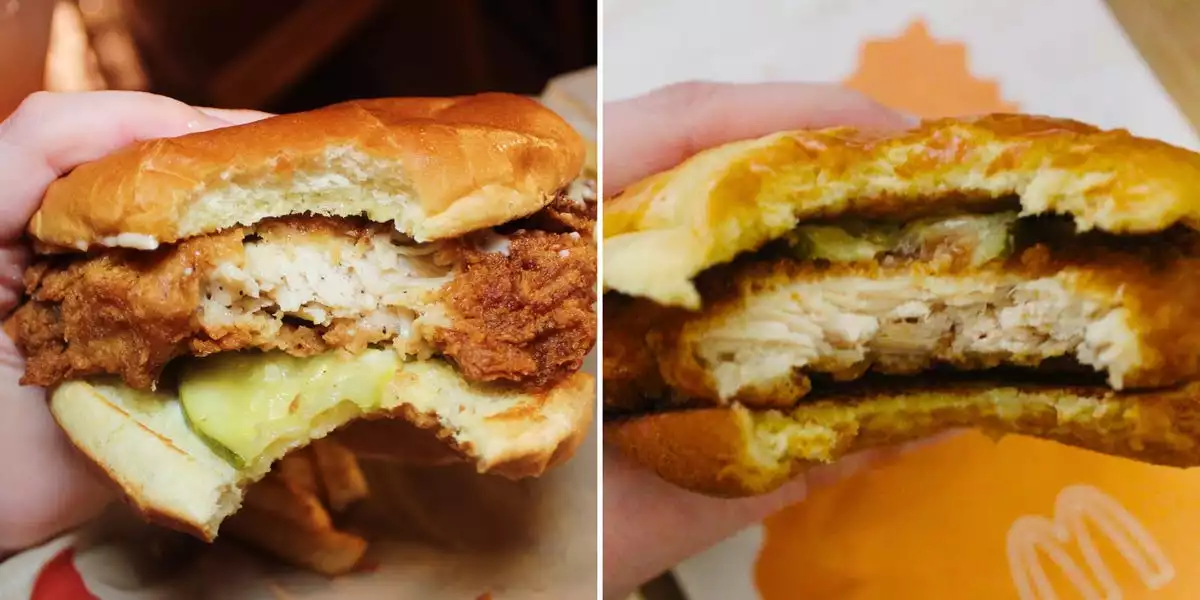

Chili’s Big Crispy relaunch signals a new phase in the chicken sandwich wars
Chili’s decision to relaunch its Big Crispy chicken sandwich—now offered in five flavor variations and anchored to a $10.99 “3-For-Me” value meal—is more than a menu refresh. It is a deliberate competitive strike at the center of the U.S. chicken-sandwich battlefield, where McDonald’s McCrispy has become a mainstream benchmark for quick-service chicken.
What makes this move strategically notable is not simply the product, but the value architecture wrapped around it: a bundle that includes the sandwich, fries, bottomless chips and salsa, and a drink. In effect, Chili’s is importing the logic of QSR combo economics into a casual-dining context—while keeping the experiential advantages of a sit-down brand.
The timing is equally pointed. As consumers increasingly voice frustration with shrinkflation—smaller portions, higher prices, and perceived quality erosion—Chili’s is positioning itself as the brand that will “give you more” in a category where “more” has become emotionally resonant. Independent taste tests and local comparisons cited in the material reinforce that narrative, suggesting Chili’s delivers a substantially larger filet (roughly +80% versus McDonald’s average) alongside stronger texture cues like crispness and crunch.
For SEO and market framing, the key takeaway is clear: Chili’s is challenging McDonald’s not on speed, but on satisfaction-per-dollar, using portion size, sensory quality, and bundling to reset consumer expectations.
Value perception, shrinkflation backlash, and the economics of “enough”
The most consequential element here is the reframing of value. Historically, fast-food competition often collapses into a simple equation: lowest price wins. Chili’s is pushing a different calculus—satiety and sensory payoff per dollar—which is particularly effective in an inflation-shaped consumer mindset.
Several forces converge:
- Inflation and input costs: Chicken, grains, cooking oil, and labor have all experienced cost pressure. Many operators respond through price increases or subtle portion reductions.
- Consumer psychology: Shrinkflation triggers a distinct kind of dissatisfaction because it feels covert. When customers believe they are paying more for less, the brand relationship shifts from transactional to adversarial.
- Price-quality inference: A larger filet, richer mayonnaise, and crispier breading act as quality signals that help consumers justify paying slightly more.
Chili’s bundle is especially potent because it competes against a common consumer comparison: the price of a single QSR sandwich. The material notes Chili’s is about $2 higher than the McCrispy alone, but the bundle adds sides and a drink—turning the comparison into a broader “meal value” argument rather than a single-item price fight.
This is a sophisticated play because it exploits a gap in how consumers evaluate purchases:
- QSR brands often win on convenience and habit
- Casual dining can win on abundance, customization, and perceived care
- Bundles convert those advantages into a simple, legible price point
If Chili’s can consistently deliver the promised portion and texture, it can convert one of the most damaging macro narratives in foodservice—shrinkflation—into a competitive wedge.
Operational and technology implications: scaling “bigger and crispier” is the hard part
Marketing can spark trial; operations determine whether trial becomes repeat behavior. The claim of an 80% larger filet is not a trivial promise at scale. It implies stronger supplier coordination, tighter specifications, and a willingness to manage food cost volatility without degrading the product.
To execute reliably, Chili’s likely leans on a modern restaurant technology stack and supply-chain discipline, including:
- Point-of-sale and menu analytics to identify which flavors drive repeat purchase and margin
- Test-and-learn rollouts to refine breading, cook times, and flavor profiles by region
- Kitchen execution systems (digital kitchen displays, standardized prep workflows) to protect consistency—especially for texture, where small deviations are immediately noticeable
- Supplier partnerships and contracting that can secure consistent poultry sizing and quality, even during commodity swings
This is where the competitive pressure on McDonald’s becomes more complex. QSR leaders are optimized for throughput and cost control, but a challenger can force them to defend on quality metrics—crispness, filet heft, ingredient richness—areas that can be expensive to improve without disrupting established operations and margins.
Meanwhile, casual dining has a different lever: it can absorb higher labor costs by offering a more “complete” experience, then use bundles to keep the price message simple. In a tight labor market, that becomes a strategic balancing act—service differentiation versus automation investment—that will shape how aggressively brands can compete on both value and consistency.
What to watch next: hybrid competition, omnichannel bundles, and the next value narrative
Chili’s Big Crispy strategy points to a broader industry shift: the boundaries between QSR, fast casual, and casual dining are blurring. Consumers increasingly shop by occasion and perceived value, not by restaurant category. If a sit-down chain can deliver QSR-like pricing logic with a more satisfying product, it can siphon traffic from traditional fast-food routines.
Several forward indicators will determine whether this becomes a durable disruption or a short-lived promotional spike:
- Repeat-rate performance: Do the five flavor variations drive sustained return visits, or merely one-time curiosity?
- Omnichannel execution: Can the 3-For-Me value proposition translate cleanly to delivery apps and digital ordering without eroding quality?
- Competitive response: Will McDonald’s defend with price promotions, product upgrades, or new bundle structures—and at what margin cost?
- Supply consistency: Can Chili’s maintain portion size and crunch across locations, dayparts, and staffing variability?
The deeper story is that “value” is no longer just about price. It is about trust—trust that the portion will feel fair, the quality will feel intentional, and the customer won’t leave thinking they paid more for less. In a market fatigued by inflation and skeptical of shrinking portions, Chili’s is betting that a bigger bite and a clearer bundle can do what advertising alone cannot: make value feel real again.

 By
By
 By
By
 By
By
 By
By
 By
By
 By
By

 By
By







