
A trade dispute morphs into an energy-and-materials stress test for North America
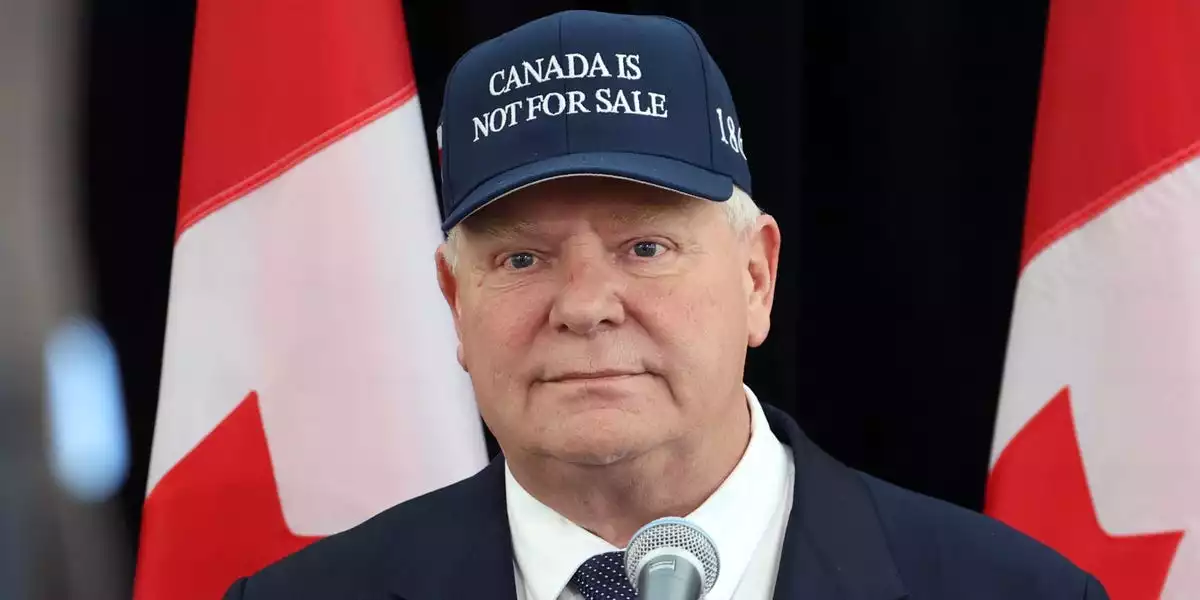
Ontario Premier Doug Ford’s warning that “everything’s on the table” marks a notable escalation in the U.S.–Canada trade dispute—not simply because of tariffs, but because it reframes the conflict around strategic commodities and infrastructure dependencies. The most arresting figure is not a tariff rate; it is the scale of cross-border reliance: Canada’s projected Can$3.3 billion in 2025 electricity exports to more than 20 U.S. states. When a political leader signals willingness to curtail that flow, the message to markets is clear: this is no longer a narrow skirmish over consumer goods like alcohol or hockey equipment. It is a test of how resilient North America’s integrated economic model remains under political strain.
President Trump’s dismissal of Ford’s posture as “bluster,” paired with a counter-threat of 50% tariffs on autos, parts, and steel effective January 1, 2027, underscores a familiar pattern: both sides are attempting to establish deterrence through maximalist signaling. Canada’s pledge of dollar-for-dollar retaliation beginning September 8 adds a near-term trigger point that businesses will treat as a planning deadline, not a rhetorical milestone.
What makes this episode unusually consequential is the breadth of leverage implied—electricity, oil, nickel, uranium, and potash—inputs that sit upstream of manufacturing, agriculture, and the energy transition. In a world where supply chains are already shaped by geopolitical risk premiums, the dispute is increasingly about who can credibly threaten disruption without harming themselves more than their counterpart.
Electricity exports, smart grids, and the quiet strategic value of control systems
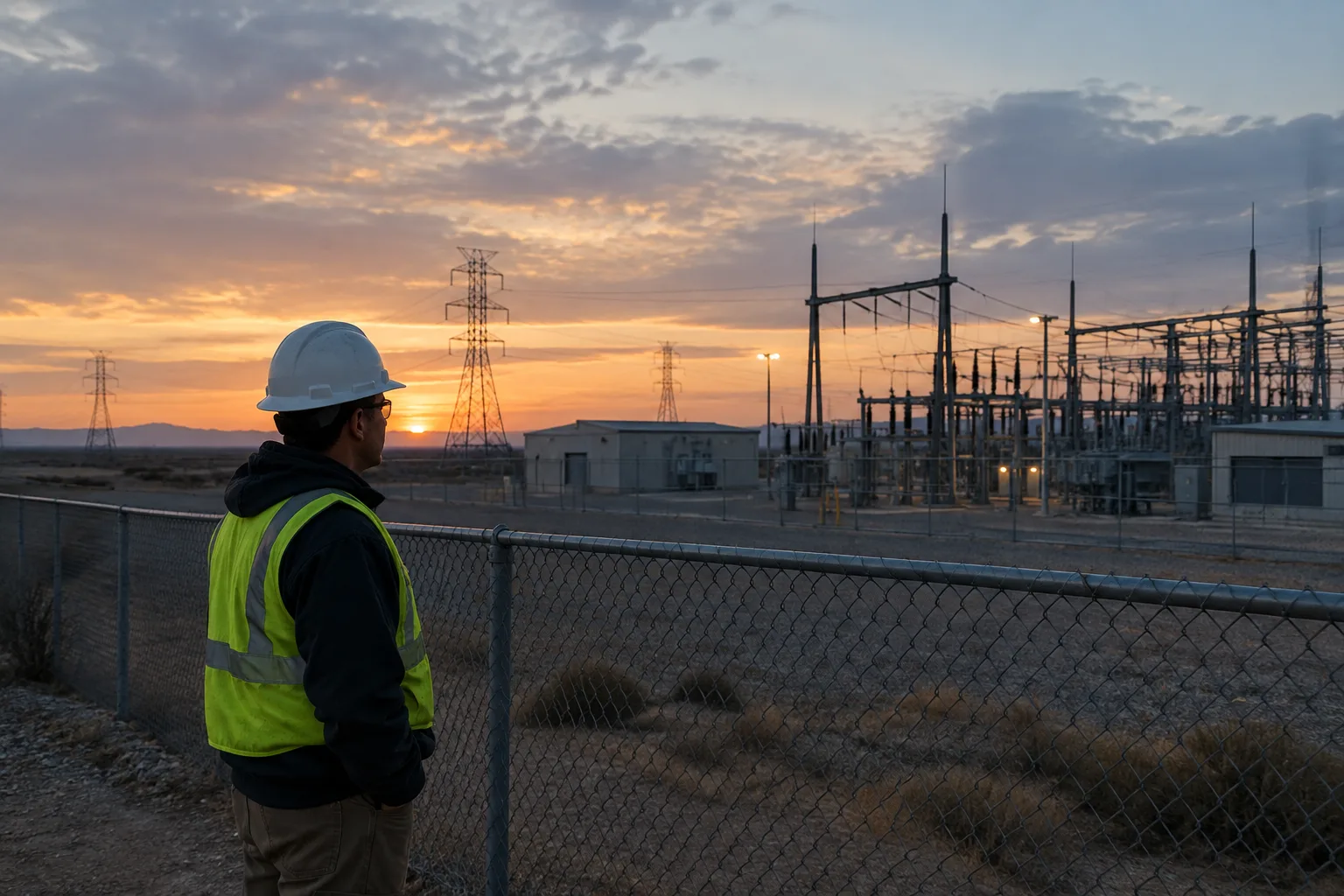
Cross-border power trade has long been treated as a technocratic domain—managed by utilities, regulators, and grid operators focused on reliability and cost. Ford’s comments pull that domain into the center of political bargaining. The interdependence is not abstract: U.S. states that import Canadian electricity often rely on it for peak-demand management, price stability, and decarbonization targets.
A serious curtailment scenario would ripple through operational planning in ways that go beyond higher spot prices. It would stress the systems that keep modern grids stable:
- Grid reliability and balancing: Reduced imports would force faster ramping of domestic generation and increase reliance on demand response, potentially tightening reserve margins during extreme weather events.
- Acceleration of domestic flexibility investments: Expect stronger momentum behind battery storage, pumped hydro, and microgrids, particularly in import-dependent regions.
- Digital infrastructure as a strategic node: Cross-border electricity trade depends on SCADA (Supervisory Control and Data Acquisition) and EMS (Energy Management Systems), along with real-time scheduling and telemetry. In a politicized environment, utilities may reassess cybersecurity postures, data governance, and regulatory “firewalls” that reduce perceived exposure to cross-border operational dependencies.
For technology and infrastructure investors, the signal is that grid modernization is no longer only a climate and reliability story; it is also becoming a national resilience and trade-risk story. That framing can unlock new capital, but it can also slow coordination if regulators begin treating interconnection as a vulnerability rather than an asset.
Critical minerals and potash: supply-chain leverage with industrial and agricultural consequences
If electricity is the most immediate pressure point, critical minerals and fertilizers are the most structurally important. Canada’s exports of nickel and uranium feed two pillars of industrial strategy: electrification and nuclear energy. Nickel remains central to many lithium-ion battery chemistries, while uranium underpins both conventional nuclear fleets and the emerging market for small modular reactors (SMRs).
Even the threat of export restrictions can alter corporate behavior. OEMs and utilities do not wait for policy to become law; they adjust procurement assumptions as soon as risk becomes plausible. Likely responses include:
- Diversified sourcing toward jurisdictions such as Australia or Kazakhstan, and greater interest in domestic mining projects despite permitting complexity.
- Recycling and circular supply chains for battery materials, which become more economically attractive when geopolitical volatility raises the implied cost of primary supply.
- Contract restructuring with more robust force majeure and political-risk clauses, raising the cost of capital for projects dependent on cross-border inputs.
Potash adds a different kind of sensitivity: it is not primarily a technology input, but it is foundational to food systems. With Canada controlling roughly 30% of global potash supply, any disruption—or even credible threat—can feed directly into fertilizer pricing, planting decisions, and grain-market volatility across the U.S. Midwest and Northern Plains. In practical terms, that means a trade dispute can migrate quickly from customs schedules to food inflation expectations, a channel policymakers ignore at their peril.
Autos, steel, and the USMCA question: integrated manufacturing meets tariff brinkmanship
Trump’s threatened 50% tariffs on autos, parts, and steel target the most integrated segment of the North American economy. Under the USMCA framework, automotive supply chains are built on just-in-time logistics, multi-border component flows, and finely tuned rules-of-origin compliance. A tariff shock of that magnitude would not simply raise prices; it would force a redesign of operating models.
Key implications for manufacturers and suppliers include:
- Inventory and logistics redesign: Just-in-time systems become fragile under tariff uncertainty, pushing firms toward higher buffer stocks and alternative routing—both costly.
- Near-sourcing and re-shoring pressure: Companies may revisit plant footprints, but relocation is slow, capital-intensive, and constrained by labor availability and permitting timelines.
- Materials substitution and localized capacity: Steel tariffs can cascade into specialized grades used in EV chassis and aerospace, encouraging substitution where feasible and investment in local capacity where not.
At the macro level, both countries risk importing inflation through higher input costs—complicating monetary policy for the Federal Reserve and the Bank of Canada. Meanwhile, the institutional backdrop matters: repeated tit-for-tat measures strain confidence in USMCA predictability and further erode faith in the WTO’s ability to arbitrate disputes at the speed modern supply chains require.
For business leaders, the most actionable takeaway is that this is no longer a conventional tariff cycle. It is a contest over energy flows, strategic minerals, and industrial chokepoints, where the most valuable asset may be optionality: diversified suppliers, flexible infrastructure, and policy engagement that anticipates escalation rather than reacts to it. The companies that treat North American integration as a strength—while engineering around its political fragility—will be best positioned to operate through the next phase of this economic standoff.

 By
By
 By
By
 By
By
 By
By


 By
By