

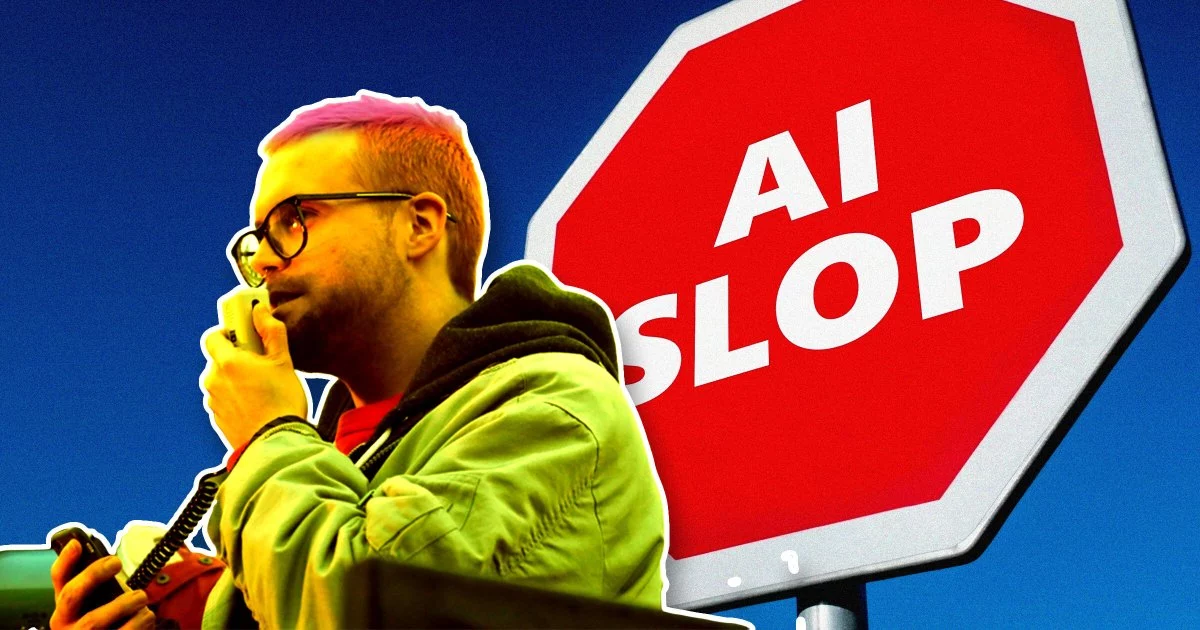

A notorious domain returns—this time as an SEO asset, not a political machine
The Cambridge Analytica name once signaled a specific kind of digital power: large-scale data extraction, behavioral targeting, and the political influence operations that culminated in the 2016 U.S. election scandal. Its collapse was meant to close a chapter. Yet the reappearance of CambridgeAnalytica.org—now presenting itself as “CA Privacy Watch”—illustrates how the internet rarely forgets, and how domain afterlives can be engineered into a business strategy.
Rather than a revived consultancy, the new site reportedly functions as a content-farm publication positioned around data privacy and artificial intelligence—topics that carry credibility, urgency, and high search demand. Investigations described in the source material suggest the operation leans on:
- Plagiarized and AI-generated articles, optimized for speed and volume rather than originality
- Fake bylines and questionable author identities, creating the appearance of editorial legitimacy
- Search-engine-driven domain strategy, leveraging the residual authority and notoriety of an expired domain
This is not merely a curiosity about a disgraced brand resurfacing. It is a case study in how reputation, search algorithms, and generative AI can be combined to manufacture visibility—often faster than platforms, regulators, or readers can respond.
Generative AI meets content mills: scale, ambiguity, and the verification gap
The alleged use of generative AI and plagiarism points to a structural shift in online publishing economics. Content farms have existed for decades, but AI systems reduce the marginal cost of producing “good-enough” text to near zero. The result is a new class of media operation: high-velocity publishing with low accountability, wrapped in the language of public interest.
Several technological undercurrents stand out:
- Automation of editorial output: Generative AI can produce coherent articles at scale, enabling rapid publication cycles without traditional newsroom staffing.
- Detection remains imperfect: AI-generated text can evade simplistic detection methods, and plagiarism can be masked through paraphrasing, translation loops, or synthetic rewriting.
- Provenance is still optional: Most web content lacks standardized, machine-readable signals indicating authorship verification, AI assistance, or source lineage.
The deeper issue is not whether AI can write; it is whether the information ecosystem can reliably differentiate original reporting from synthetic replication. When a site claims editorial rigor while allegedly recycling content, the harm is twofold: it pollutes search results and it erodes trust in legitimate privacy and AI journalism—fields where accuracy is already difficult for non-experts to assess.
The expired-domain playbook: monetizing memory and misdirection
The most strategically revealing element is the reuse of a lapsed, high-recognition domain. Acquiring an expired domain with historical backlinks and brand recall can provide immediate SEO lift—especially when the name is already embedded in public discourse, academic references, and media archives.
This tactic is increasingly attractive to digital marketers because it can:
- Bootstrap authority in search rankings faster than building a new domain from scratch
- Capture residual traffic from users searching for the original entity or related scandals
- Exploit ambiguity: readers may assume continuity, legitimacy, or institutional memory where none exists
The operator identified in the provided material—Vortexlab Digital Marketing—is described as repurposing multiple lapsed domains to drive search traffic. If accurate, this suggests an industrialized approach: domain acquisition, content generation, SEO tuning, and ad monetization—repeated across properties.
For businesses, the lesson is uncomfortably practical: a lapsed domain is not a dormant asset; it is an open invitation. Even controversial brands can be valuable precisely because they remain searchable. The reputational risk is not limited to consumer confusion; it can also create:
- Brand dilution, where third-party content reshapes public perception
- Compliance exposure, if users believe the content is affiliated with a regulated entity
- Search-engine penalties, if the domain becomes associated with spam or deceptive practices
Trust, regulation, and the next phase of information integrity
The reemergence of Cambridge Analytica’s domain as a purported privacy-and-AI outlet lands at a moment when governments are tightening rules around data use and algorithmic transparency—yet enforcement and technical standards lag behind the speed of gray-market publishing.
Key regulatory and governance pressures intersect here:
- Data privacy regimes such as GDPR and CCPA/CPRA increasingly emphasize transparency and user rights, but do not directly solve content provenance or domain resurrection tactics.
- The forthcoming EU AI Act and related frameworks push toward disclosure and accountability in AI systems, but the practical oversight of small, distributed content operations remains challenging.
- Platform policies and search ranking systems are being asked to do more “quality policing,” even as adversarial SEO evolves rapidly.
For executives and technology leaders, this episode reinforces a set of defensive and strategic imperatives:
- Domain governance as risk management
– Maintain renewal discipline for primary and variant domains
– Monitor domain resale markets and DNS changes with domain-intelligence tools
- Content authenticity as a competitive moat
– Implement plagiarism checks and AI-assisted content review across publishing workflows
– Publish AI-usage disclosures, author credentialing, and editorial standards in machine-readable formats where possible
- Industry alignment on provenance
– Support watermarking, cryptographic signing, and provenance metadata initiatives that can scale across publishers and platforms
The CambridgeAnalytica.org afterlife is a reminder that the modern information economy rewards what is discoverable, not necessarily what is true. In that environment, trust is no longer a brand attribute alone—it is an operational capability, built through verifiable provenance, resilient digital asset management, and the willingness to make authenticity legible to both humans and machines.

 By
By
 By
By

 By
By
 By
By
 By
By
 By
By
 By
By







