

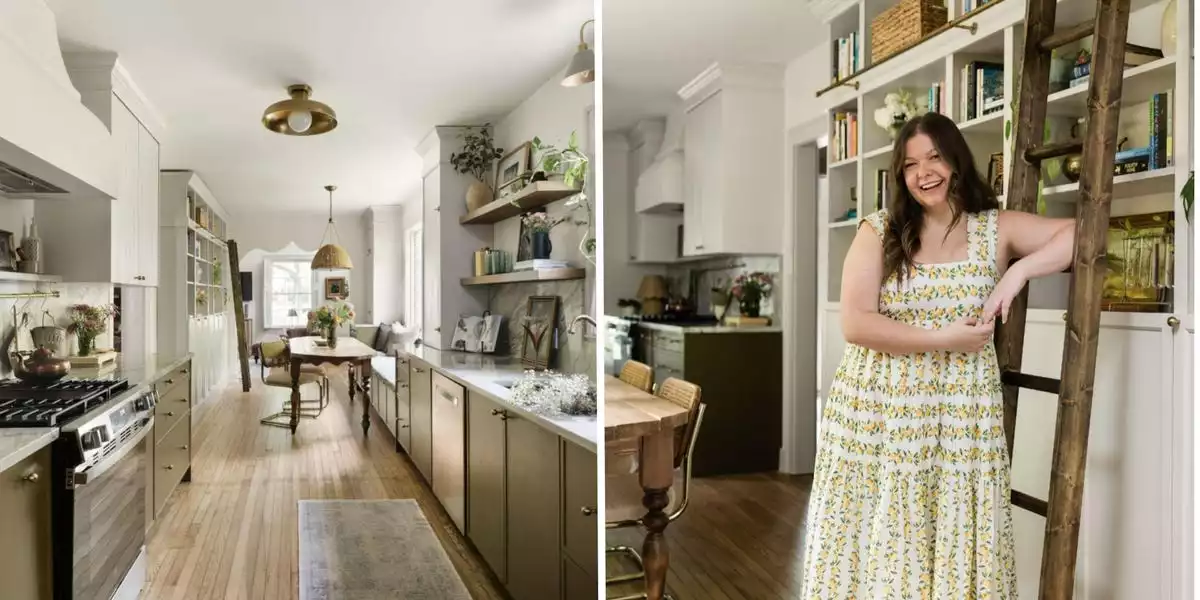

The Austin Cottage as a Microcosm: Adaptive Reuse and the New Logic of Home Renovation
In the heart of Austin, Texas, a modest 1930s cottage—once a relic of another era—has become a touchstone for a new wave of home renovation. Interior designer Ali Michel’s three-month, $80,000 transformation of this property is more than a design success; it’s a harbinger of a seismic shift in how Americans approach housing, investment, and sustainability. By weaving together mass-market Ikea cabinetry, semi-custom fronts, vintage salvage, and deft on-site carpentry, Michel has distilled a set of strategic signals that illuminate the future of residential real estate.
Modular Mass-Customization: The Rise of Platform Ecosystems
Michel’s project is emblematic of a burgeoning micro-ecosystem where mass-customization meets modularity. The pairing of Ikea’s commodity cabinetry with Semihandmade’s bespoke doors is not simply a stylistic flourish—it’s a sophisticated supply chain maneuver. Companies like Semihandmade, Reform, and Kokeena are evolving into what might be called “AWS layers” atop Ikea’s physical infrastructure, abstracting complexity for end users while leveraging the Swedish giant’s global logistics. This approach allows:
- Rapid differentiation: Homeowners achieve a custom look without the cost or lead time of traditional millwork.
- Supply-chain resilience: Flat-pack logistics shield projects from freight inflation, while regional makers—often equipped with CNC routers or 3-D printers—offer last-mile customization with minimal inventory risk.
- Elastic design-to-build workflows: Consumer-grade 3-D scanning apps and AI-assisted layout tools democratize the process, letting non-architects generate shop-ready plans and iterate in real time.
The result is a compression of the entire renovation cycle—from ideation to rental monetization—into a single, highly curated workflow. Social media, especially platforms like Instagram and TikTok, has become both a laboratory and a marketplace, where designers A/B-test finishes, crowdsource feedback, and drive demand through authentic, user-generated content.
The ADU Dividend and Circular Preservation: Economic and Environmental Imperatives
A cornerstone of Michel’s project is the conversion of a detached guesthouse into a rental-ready accessory dwelling unit (ADU). This move is more than a nod to Austin’s progressive housing policy; it’s a calculated response to macroeconomic and regulatory currents:
- ADU Legislation: As cities like Austin accelerate ADU approvals, small-scale units under 1,000 square feet are emerging as an attractive hedge against high mortgage rates and tight credit.
- Embodied Carbon Avoidance: By rehabilitating rather than demolishing, the project sidesteps an estimated 50–70 tons of embodied-carbon emissions—a metric increasingly scrutinized by lenders and insurers as ESG frameworks take hold.
- Policy Tailwinds: Local and federal incentives, from BTU-based rebates to energy-efficiency tax credits, are tilting the cost-benefit equation toward renovation of pre-1980 housing stock.
This adaptive reuse model fills a critical supply gap in overheated markets, sidestepping the regulatory and financial hurdles of new construction while supporting affordability and sustainability goals.
Business-Model Innovation: Where PropTech, FinTech, and Retail Converge
The competitive landscape is evolving rapidly. Home-improvement giants like Lowe’s and Home Depot are rolling out their own semi-custom lines to counter Ikea-centric ecosystems, integrating deeper API hooks for design software and in-app financing. Meanwhile, PropTech and FinTech startups—such as RenoFi and Plunk—are algorithmically underwriting renovation ROI, enabling small-scale investors to leverage ADU income streams with unprecedented precision.
Distributed micro-factories, powered by CNC technology and on-demand labor marketplaces, are reducing lead times and embodied carbon, localizing production while maintaining scale. For manufacturers and retailers, the imperative is clear:
- Embed white-label customization layers atop existing SKU catalogs, enabling software-driven personalization.
- Forge alliances with digital-first designers and influencers to accelerate feedback loops and drive pull-through sales.
For real estate investors and funds, underwriting for circular-economy and ADU potential is becoming table stakes, with adaptive reuse yielding faster payback and aligning with emerging ESG scoring models.
Toward a Renovation-Centric Housing Economy
The lessons of this Austin cottage extend far beyond its footprint. Michel’s project is a data point in a broader narrative: the emergence of a renovation-centric, platform-enabled housing economy that prizes speed, sustainability, and mass-custom individuality. For policymakers, standardizing ADU permitting and positioning adaptive reuse as a climate-action lever could unlock latent capacity and support affordability without resorting to greenfield sprawl.
As the boundaries between design, manufacturing, finance, and policy blur, the home is being reimagined—not as a static asset, but as a dynamic, monetizable platform. Those who recognize the early signals embedded in projects like Michel’s will be best positioned to shape the next chapter of residential innovation.

 By
By
 By
By
 By
By
 By
By
 By
By


 By
By







