

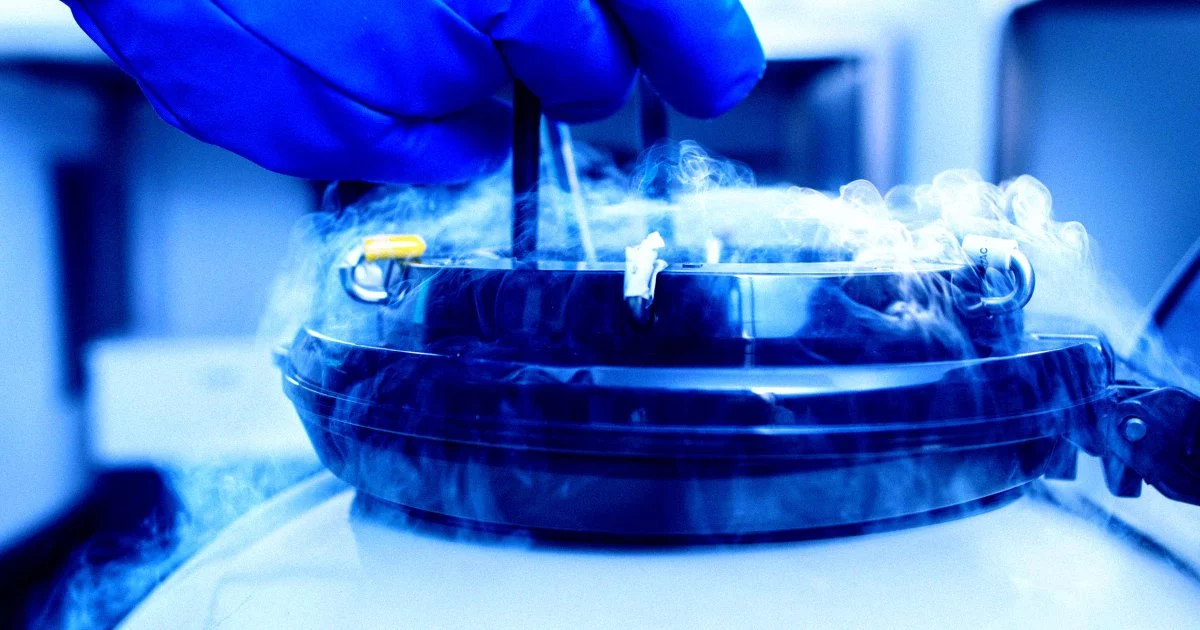

A step-change in cryobiology: preserving neural function, not just structure
The University of Erlangen–Nuremberg team’s report lands as more than a technical refinement in cold storage; it is a pointed demonstration that functional neural properties can survive vitrification—a glass-like freezing process designed to avoid the ice crystals that typically shred cell membranes and microstructures. In mouse brain slices cooled to roughly –320°F (liquid-nitrogen range) and held from minutes to seven days, researchers were able to thaw tissue with intact neuronal architecture and, critically, preserved synaptic performance.
The most consequential signal is the persistence of hippocampal long-term potentiation (LTP)—widely used as a cellular proxy for learning and memory mechanisms. LTP is not a static anatomical feature; it is an activity-dependent phenomenon that depends on exquisitely tuned receptor dynamics, ion gradients, and synaptic signaling cascades. Demonstrating that LTP remains operational after deep cryogenic storage suggests vitrification can protect not only “wiring,” but also the biochemical and electrophysiological readiness of neural circuits.
Early extension to human cortical tissue—even if preliminary—adds weight to the translational narrative. It does not imply near-term whole-brain preservation or clinical “brain banking” for reanimation scenarios, but it does indicate that the approach is not confined to a rodent-only corner case. For neuroscience and regenerative medicine, the implication is direct: reliable, function-preserving cryostorage could become a foundational capability, reshaping how labs, hospitals, and biobanks manage scarce, high-value neural samples.
—
Engineering the cold: why vitrification is converging with AI, microfluidics, and precision rewarming
Vitrification’s promise has always been paired with a stubborn engineering reality: it is not enough to cool quickly. The system must manage cryoprotectant chemistry, diffusion into tissue, and—often the hardest part—uniform rewarming to prevent cracking, toxicity, or devitrification (ice formation during thaw). The Erlangen–Nuremberg results underscore that these constraints can be navigated at the scale of brain slices, but scaling is where adjacent technologies become decisive.
Several enabling vectors are beginning to align:
- Cryoprotectant formulation as a computational problem
Next-generation mixtures must balance permeability, toxicity, viscosity, and glass-forming tendency. AI-driven modeling can accelerate screening by simulating diffusion kinetics and predicting thermal stress points, potentially reducing the trial-and-error burden that has historically slowed cryobiology.
- Thermal gradient control as a hardware challenge
The same obsession with stability that defines cryogenic domains—such as quantum computing—maps onto vitrification needs: temperature ramp rates, vibration control, and precise sensing. While the physics differ, the shared requirement is ultra-low-temperature reliability with minimal perturbation.
- Microfluidics and lab-on-a-chip as scale bridges
Microfluidic platforms can deliver controlled cryoprotectant exchange and enable rapid, uniform heat transfer. For larger tissues, the bottleneck is often not reaching low temperatures, but ensuring every region experiences the same thermal history—a domain where microfabricated channels and rapid-rewarming devices could become pivotal.
- Cold-chain logistics as an operational moat
Liquid-nitrogen handling, remote monitoring, and validated transport protocols echo the infrastructure built for mRNA vaccine distribution and high-sensitivity biomedical shipping. Organizations that already operate regulated cold chains may find themselves unusually well-positioned to extend into neural tissue services.
What makes this convergence notable is that it reframes vitrification from a niche academic craft into a systems engineering discipline—one that blends chemistry, device design, software control, and logistics. That shift is typically what precedes commercialization.
—
Market gravity: biopreservation’s next premium segment and the race to integrate the value chain
The broader biopreservation market—estimated around $1.5 billion and projected to grow at roughly 10–12% CAGR—has been propelled by cell and gene therapy, biobanking expansion, and the persistent mismatch between organ supply and demand. Against that backdrop, function-preserving neural vitrification introduces a potentially premium tier: neural tissue banking and high-fidelity research substrates.
Near-term monetization is likely to cluster around research and drug development rather than transplantation. If standardized, vitrified neural tissues could support:
- Disease modeling and target validation using consistent, banked samples
- Neurotoxicity and efficacy screening with reduced variability across experiments
- Personalized neuroscience workflows, especially as patient-derived organoids and ex vivo platforms mature
The business model opportunity is not limited to storage fees. The highest-margin plays often emerge when companies capture multiple links in the chain:
- Preservation + validated shipping + thaw/rewarm instrumentation as a bundled service
- Hospital- or lab-deployable cryo modules with automation and remote compliance logging
- Data layers (thermal profiles, formulation metadata, viability metrics) that become proprietary performance differentiators over time
Meanwhile, the organ shortage—often cited at over 110,000 patients on U.S. transplant waitlists—keeps investor attention fixed on any technology that could extend viable storage windows. Even if neural tissue is not the first transplant application, the engineering lessons from preserving LTP may translate into broader organ vitrification efforts, particularly where delicate microstructures and signaling pathways matter.
—
Governance, ethics, and competitive positioning as human tissue enters the frame
As vitrification moves from rodent slices toward human tissue standardization, the center of gravity shifts from “can it work?” to “how should it be used?” Regulators will expect evidence not only of structural integrity but of functional safety, including the absence of cryoprotectant-related toxicity and reproducible post-thaw performance. For companies, early engagement with health authorities and bioethics bodies is less a public-relations gesture than a strategic necessity—because the rules of evidence and consent will define time-to-market.
Two competitive dynamics stand out:
- Intellectual property intensity
Cryoprotectant recipes, perfusion methods, cooling curves, and rewarming protocols are all patentable surfaces. The winners may be those who secure broad, defensible claims while also building trade-secret know-how around process control.
- Consortium-driven translation
The capital intensity and interdisciplinary nature of vitrification favors partnerships: academic cryobiology labs, cryogenic equipment manufacturers, AI modeling firms, and clinical networks. The most credible path to scale is likely a collaborative development model that shares risk while accelerating standardization.
The Erlangen–Nuremberg work does not erase the distance to whole-organ preservation or viable mammalian cryosuspension. It does, however, tighten the argument that biological function can be paused and resumed more faithfully than previously demonstrated in neural tissue. For business and technology leaders, that is the inflection point: a shift from preserving biological material to preserving biological capability, with new markets—and new responsibilities—forming around the cold.


 By
By

 By
By
 By
By

 By
By
 By
By







