


The Quiet Revolution in the Beer Aisle: Athletic Brewing and the Rise of Mindful Moderation
In the dimly lit corridors of the American beverage industry, a quiet revolution is underway—one that eschews the bravado of high-proof spirits for a subtler, more deliberate intoxication: that of wellness, ritual, and performance. Athletic Brewing, founded in 2017 by Bill Shufelt and John Walker, has emerged as the unlikely standard-bearer of this movement, transforming the once-marginal category of non-alcoholic (N/A) beer into a locus of innovation, culture, and capital. Their ascent is not merely a story of clever branding or opportunistic timing; it is a case study in how thoughtful process, technological ingenuity, and a new cultural narrative can redraw the boundaries of an entire industry.
Wellness as a Catalyst: Subtraction as Innovation
The global wellness economy, now cresting above $5 trillion, has become an inexhaustible engine for consumer demand. Within this sprawling domain, “mindful drinking” is the fastest-growing subsegment, propelled by a generation that prizes self-optimization as much as social connection. Athletic Brewing’s insight was to recognize that innovation in beverages need not always come from additive function—nootropics, adaptogens, or exotic botanicals—but from the radical act of subtraction. By removing alcohol while preserving the full-bodied ritual of beer, Athletic delivers a product that offers tangible physiological benefits: improved sleep, faster fitness recovery, and a guiltless social experience.
This approach has resonated powerfully with a new class of consumers—those who seek the camaraderie of the taproom without the metabolic hangover. The company’s integration of its product into fitness routines, family gatherings, and screen-free rituals speaks to a broader redefinition of what it means to “drink socially.” Beer, in this context, becomes less about intoxication and more about presence—a subtle but profound shift.
Process as Intellectual Property: Brewing a Defensible Moat
At the heart of Athletic Brewing’s defensibility lies a commitment to process innovation. Traditional N/A beers have suffered from the blunt tools of dealcoholization, which often strip away flavor or inflate costs. Athletic’s decision to develop proprietary fermentation profiles—eschewing post-production alcohol removal—echoes the craft coffee movement’s pivot from commodity beans to micro-roasting. Here, flavor itself becomes intellectual property, a differentiator that is as much about chemistry as it is about culture.
This technological moat is reinforced by a disciplined operating model that blends craft-brewer authenticity with the process rigor of a hedge fund. Daily prioritization, data-driven troubleshooting, and a founder-led culture that valorizes incremental gains create a flywheel of continuous improvement. In a sector where quality is both the promise and the product, such operational discipline is not merely a back-office concern—it is a source of brand equity.
Macro Forces Redrawing the Competitive Map
The tectonic shifts underpinning Athletic Brewing’s rise are as much about societal change as they are about clever execution:
- Demographics: Gen Z’s alcohol consumption is 25% lower than Millennials’ at the same age, reflecting a generational pivot toward moderation.
- Regulatory Loopholes: N/A beer’s lower-tax, lower-age-restriction status enables e-commerce models and direct-to-consumer channels that traditional alcohol cannot exploit.
- Inflation Resilience: Premium wellness categories exhibit lower price elasticity, allowing brands like Athletic to defend margins even amidst commodity volatility.
- Sustainability: Reduced alcohol content translates to less energy-intensive production, aligning with retailer ESG mandates and consumer environmental consciousness.
These macro forces have not gone unnoticed by industry incumbents. The recent spate of acquisitions by giants like Anheuser-Busch/InBev and Heineken signals a recognition that N/A brands are not merely cannibalizing existing share—they are expanding the total addressable market by unlocking new consumption occasions.
The Cultural Operating Model: Wellness as Corporate IP
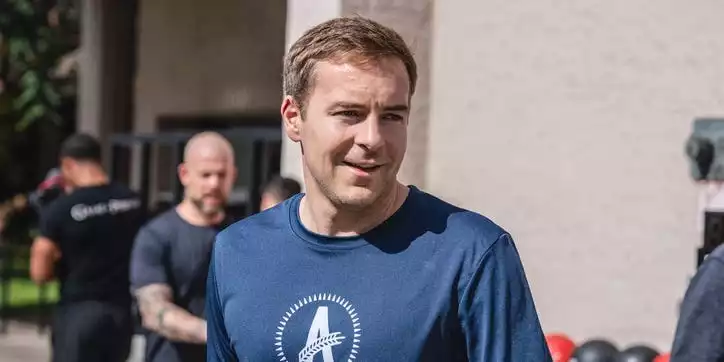
Perhaps most intriguing is the way Athletic Brewing has woven wellness into the fabric of its corporate identity. Shufelt’s personal routines—prioritizing family, screen-free mornings, and a relentless focus on “three things”—have become institutionalized, offering a blueprint for talent strategy in a tight labor market. Mission-centric cultures, once the domain of Silicon Valley startups, are now a competitive advantage in CPG, lowering hiring friction and accelerating speed-to-scale.
For industry leaders, the implications are clear:
- Shelf-space will be reallocated as grocers and on-premise operators expand N/A offerings.
- R&D will converge with functional beverage science, blurring category lines.
- Direct-to-consumer models will become more data-rich, enabling deeper customer engagement.
- M&A activity will intensify as strategics and private equity chase early-mover advantages.
- Supply chains will be reimagined for purity and flexibility, leveraging AI-driven process controls.
- Employer branding will increasingly hinge on authentic wellness integration.
Athletic Brewing’s disciplined, wellness-anchored model is not merely a niche play—it is a harbinger of how the beverage landscape is being rewired around moderation, functionality, and cultural resonance. In this new era, the battle for consumer loyalty will be fought not over ABV, but over the meaning of performance, balance, and belonging. Those who secure the right blend of technology, distribution, and cultural capital will define the next chapter of the global drinks story.

 By
By
 By
By
 By
By
 By
By
 By
By
 By
By

 By
By







