
A new premium baseline takes shape in the U.S. airline “suite wars”
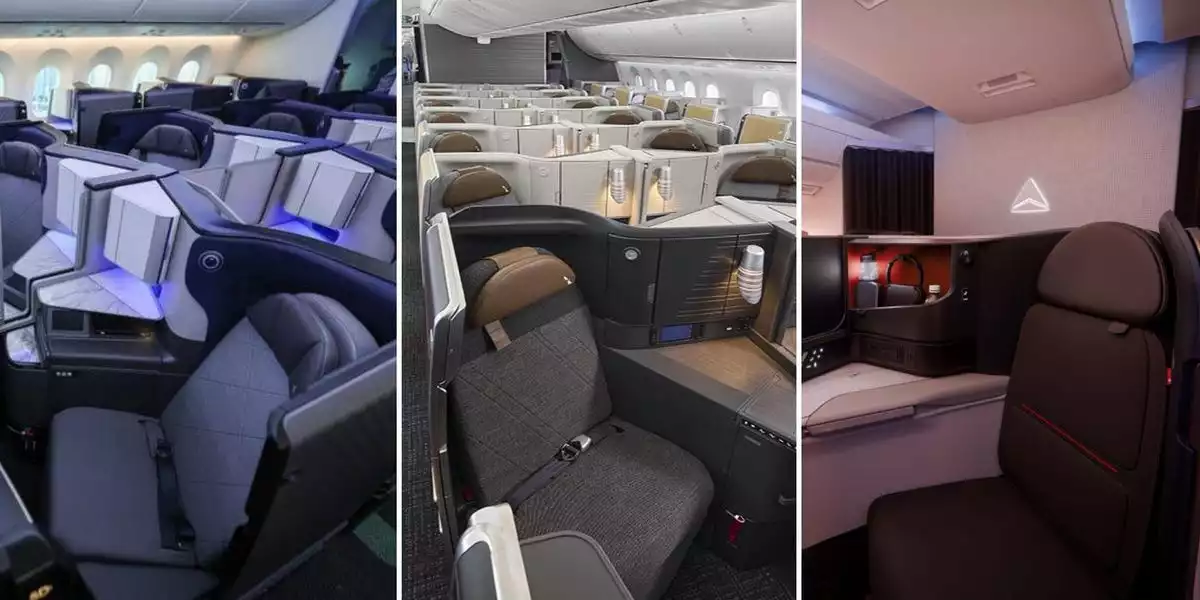
A quiet but consequential shift is underway in long-haul aviation: suite-style business class with sliding doors is moving from differentiator to expectation. American Airlines, Delta Air Lines, and United Airlines are now competing less on whether they offer a private pod and more on how convincingly they can package privacy, sleep quality, and digital capability into a product that justifies premium yields.
Delta effectively set the modern U.S. benchmark in 2017 with its first door-equipped suites and is now signaling a second act: an upgraded Airbus A350-1000 suite planned for entry into service in 2027, including an attention-grabbing 24-inch screen that would lead the category. United, after early certification friction around its “door-ready” Polaris concept, is moving into operational reality with its first long-haul door-equipped Boeing 787 flight to Singapore in April. American, meanwhile, is positioning its Boeing 787 Flagship Suite for June 2025, aiming to close the perceived product gap with a modernized hard product and a more contemporary cabin aesthetic.
The competitive context is not limited to the “Big Three.” JetBlue and Alaska have also embraced premium cabin upgrades on select international routes, reinforcing the broader market signal: on high-value long-haul flying, privacy and a true lie-flat experience are increasingly table stakes.
Where cabins converge—and where airlines still find room to compete
From a product architecture standpoint, the market is standardizing. Across carriers, the core elements are increasingly familiar:
- Sliding doors for privacy and perceived exclusivity
- Forward-facing pods designed for direct-aisle access
- Full-flat beds around 6.5 feet in length
- Power ports, wireless charging, and oversized screens as baseline tech expectations
This convergence is not accidental. Cost pressure, supplier consolidation, and certification complexity push airlines toward proven seat platforms from major interiors players (including Safran and Collins). The result is a narrowing gap in “hard product” fundamentals—especially as airlines seek scale efficiencies across fleets and minimize maintenance variability.
Yet differentiation hasn’t disappeared; it has migrated. Airlines are increasingly competing through service rituals and micro-experiences that shape passenger perception more than seat geometry:
- Self-serve snack bars that mimic boutique hotel cues
- Build-your-own sundae carts and other “signature” food-and-beverage moments
- Lighting schemes, décor palettes, and amenity kits designed to reinforce brand identity
In practice, these touches matter because premium travelers often buy the *feeling* of control and comfort as much as the physical seat. When roundtrip fares on routes like U.S. West Coast to London hover around $5,800, the emotional logic of the purchase—privacy, calm, status, reliability—becomes part of the value proposition.
The technology battleground: connectivity, certification, and the hidden complexity of doors
If suites are becoming the new normal, connectivity is emerging as the sharper competitive wedge. United’s plan to integrate Starlink on new 787s signals a pivot toward high-bandwidth, low-latency inflight internet—the kind that can support streaming, real-time collaboration, and potentially even stable video conferencing. That matters because premium travelers increasingly expect the cabin to function as an extension of the office and living room, not a disconnected interlude.
By contrast, American and Delta remain anchored to more traditional satellite connectivity models, which can be perfectly adequate for messaging and basic browsing but may face reputational pressure if passenger expectations shift decisively toward “ground-like” performance. The strategic implication is straightforward: the suite is the visible upgrade, but network performance may become the deciding factor for repeat choice—especially among tech-forward corporate accounts.
Behind the scenes, the suite boom also exposes the industry’s operational bottlenecks. Doors introduce certification and safety constraints that extend timelines and complicate retrofits. Regulators such as the FAA and EASA scrutinize moving partitions, evacuation paths, and access requirements. For airlines, that translates into:
- Longer development and approval cycles for new cabin products
- Significant aircraft downtime during retrofits—especially on aging widebodies
- Fleet deployment trade-offs, as not every aircraft can be upgraded quickly or economically
This is why travelers will continue to encounter a mixed reality: new suites on some aircraft, older doorless cabins on others. The practical takeaway for consumers—and a reputational risk for airlines—is that the brand promise may not match the aircraft assigned. In the premium segment, that mismatch can be costly.
The economics of luxury at 35,000 feet—and what it signals for the next cycle
The premium cabin arms race is ultimately a yield strategy. A top-tier business-class seat can generate multiples of economy revenue, and that revenue is more than ticket price: it supports loyalty program engagement, corporate contracting leverage, and ancillary monetization. Even as business travel recovers unevenly in a hybrid-work world, airlines are betting that the travelers who *do* fly will pay more for a clearly superior experience—and that premium leisure demand will continue to fill gaps.
There are, however, trade-offs that will intensify over time:
- Weight and fuel burn: heavier suites and added amenities marginally increase operating costs
- Carbon scrutiny: corporate buyers and regulators are increasingly attentive to lifecycle emissions
- Overcapacity risk: if macroeconomic headwinds weaken premium demand, airlines may need sharper pricing discipline or alternative uses (including VIP and charter applications)
Strategically, the suite race also reinforces alliance and network dynamics. A door-equipped flagship product on a marquee route doesn’t just elevate one airline; it raises expectations across an alliance ecosystem and pressures partners to keep pace—or risk losing high-value frequent flyers to competitors with a more consistent premium standard.
What’s emerging is a clearer picture of the next phase of competition: the seat is becoming standardized, the software layer is becoming decisive, and the brand is being rebuilt through small, repeatable moments—connectivity that works, privacy that feels real, and service design that turns a long-haul flight into something closer to a controlled personal environment than a shared mode of transport.

 By
By
 By
By
 By
By

 By
By

 By
By
 By
By