
The Cookie Wars: Experience, Technology, and the New Indulgence Economy
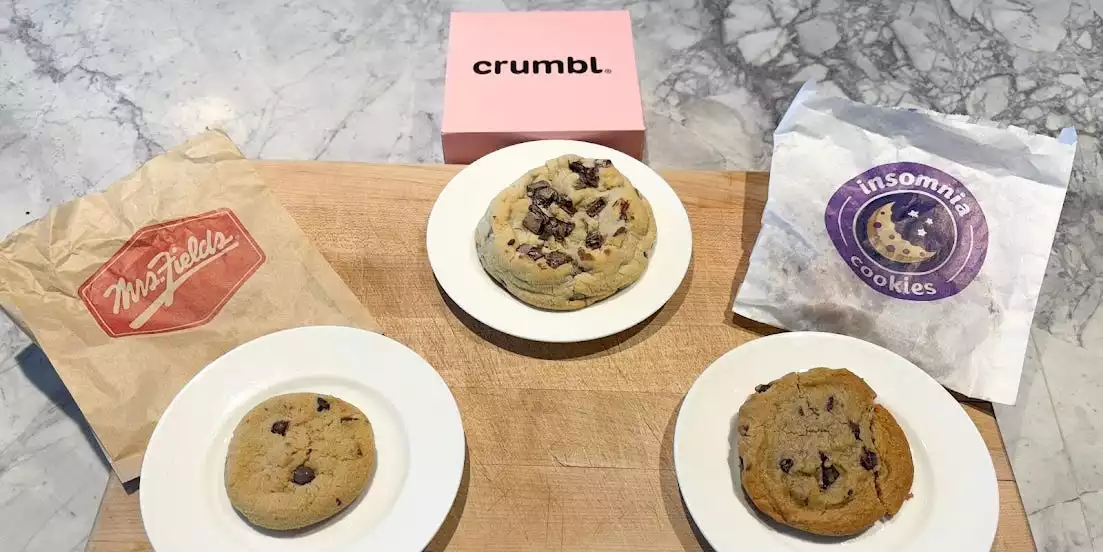
In a world where the humble chocolate-chip cookie becomes the battleground for billion-dollar strategies, a recent consumer taste test offers more than just crumbs of insight. Insomnia Cookies, with its late-night allure and textural finesse, emerged as the preferred bite over Crumbl’s maximalist creations and Mrs. Fields’ time-honored classic. Yet, beneath this simple ranking lies a complex narrative about how American consumers now define value, the technological arms race reshaping dessert retail, and the evolving psychology of indulgence.
Disrupting Nostalgia: The Fragmented Landscape of Sweet Convenience
The cookie segment—once the domain of mall kiosks and nostalgia-fueled brand loyalty—has fractured into a microcosm of the wider “indulgent convenience” economy. This $65 billion U.S. sector, growing at an impressive 7% CAGR, is no longer satisfied with tradition alone.
- Legacy brands like Mrs. Fields find themselves squeezed, as digitally native upstarts redefine what it means to deliver value. Price alone is no longer the differentiator; rather, it’s the experience—novelty, convenience, and even the theater of the product—that commands consumer attention.
- Crumbl has weaponized TikTok virality, transforming weekly flavor drops into social events and leveraging oversized cookies as Instagrammable status symbols. The result is a polarized but passionate following, where every SKU is a potential viral hit.
- Insomnia Cookies has quietly built a moat around hyper-convenience. Its 30-minute late-night delivery, powered by a logistics network modeled on ghost-kitchen principles, makes it the go-to for nocturnal cravings. The taste test’s outcome—Insomnia’s victory—underscores that, for today’s consumer, the right product delivered at the right moment trumps brand heritage.
Technology as the New Recipe: Digital, Data, and Dough
Beneath the surface, the cookie wars are being waged not just in ovens, but in code and algorithms.
- Digital Ordering and Micro-Fulfillment: Insomnia’s purpose-built digital stack enables algorithmic batching, high throughput, and minimal front-of-house overhead. This infrastructure is less about selling cookies and more about orchestrating seamless, scalable experiences.
- Data-Driven Product Development: Crumbl’s flavor pipeline is a masterclass in analytics. By turning SKU velocity data into social-media storytelling, the brand ensures each new drop is both a product and a narrative event.
- Ingredient and Process Innovation: Advances in enzymatic dough conditioners and precision baking sensors allow for the thick, gooey textures favored by Gen Z—without sacrificing food safety or shelf life. Rapid-chill tunnels, meanwhile, offer legacy players like Mrs. Fields a technological lifeline, potentially solving long-standing quality issues and enabling new product formats.
Economic Realities and Strategic Imperatives
The taste test’s findings are a cipher for deeper economic truths. Price elasticity in the cookie market reveals a willingness to pay for “small luxuries,” but only if the experience delivers. The $2–$5 price spread between brands is less about cost and more about perceived return on indulgence.
- Margin Dynamics: While ingredient costs for a 6-oz Crumbl cookie and a 2-oz Mrs. Fields cookie yield similar margin percentages, the absolute dollar profit per unit strongly favors the premium, theater-driven SKU.
- Brand Moats: Intellectual property—recipes and trademarks—is now table stakes. The real defensible assets are delivery SLAs, mobile UX, and data-driven product pipelines. Insomnia’s logistics create switching costs; Crumbl’s content flywheel generates FOMO; Mrs. Fields, still anchored to mall footfall, must urgently evolve.
- Taste Segmentation: Gen Z’s preference for gooey, hyper-sweet profiles aligns with broader trends in sensory intensity, from spicy snacks to sour candies. Boomers and Gen X, meanwhile, remain loyal to crispier, balanced cookies—a demographic Mrs. Fields could reclaim with targeted innovation.
The Road Ahead: Automation, M&A, and the Next Frontier in Indulgence
Looking forward, the cookie wars are poised to intensify along several vectors:
- Consolidation and Coopetition: Private equity eyes the arbitrage between legacy distribution and insurgent digital loyalty. Strategic alliances—such as technology swaps or commissary sharing between old and new players—are increasingly plausible.
- Automation and ESG: Rising labor costs, exemplified by California’s AB 1228, are accelerating investment in robotic baking lines and automated portioning. Brands able to defend margins through technology, rather than price hikes, will win consumer loyalty.
- Functional Indulgence: The next battleground is “permissible indulgence”—high-protein, low-sugar cookies that appeal to wellness-oriented millennials without sacrificing decadence. Early movers here can capture crossover spend and redefine what it means to treat oneself.
The simple act of choosing a cookie, it turns out, is anything but simple. It’s a referendum on experience, technology, and the evolving calculus of value in the digital age. As the likes of Insomnia, Crumbl, and Mrs. Fields jockey for position, the winners will be those who understand that dessert is no longer just a product—it’s a platform for engagement, innovation, and, above all, delight.

 By
By
 By
By
 By
By
 By
By
 By
By
 By
By