


A Flashpoint for Mobile Power: The Belkin Recall and the Unseen Risks of Energy Density
When a trusted name in consumer electronics like Belkin initiates a voluntary recall of nearly 86,000 lithium-ion powered accessories, the reverberations extend far beyond the immediate inconvenience to consumers. This recall—prompted by a handful of overheating incidents, including a U.S. fire and minor injuries—serves as a case study in the mounting tension between our insatiable demand for portable power and the unforgiving physics of high-density energy storage.
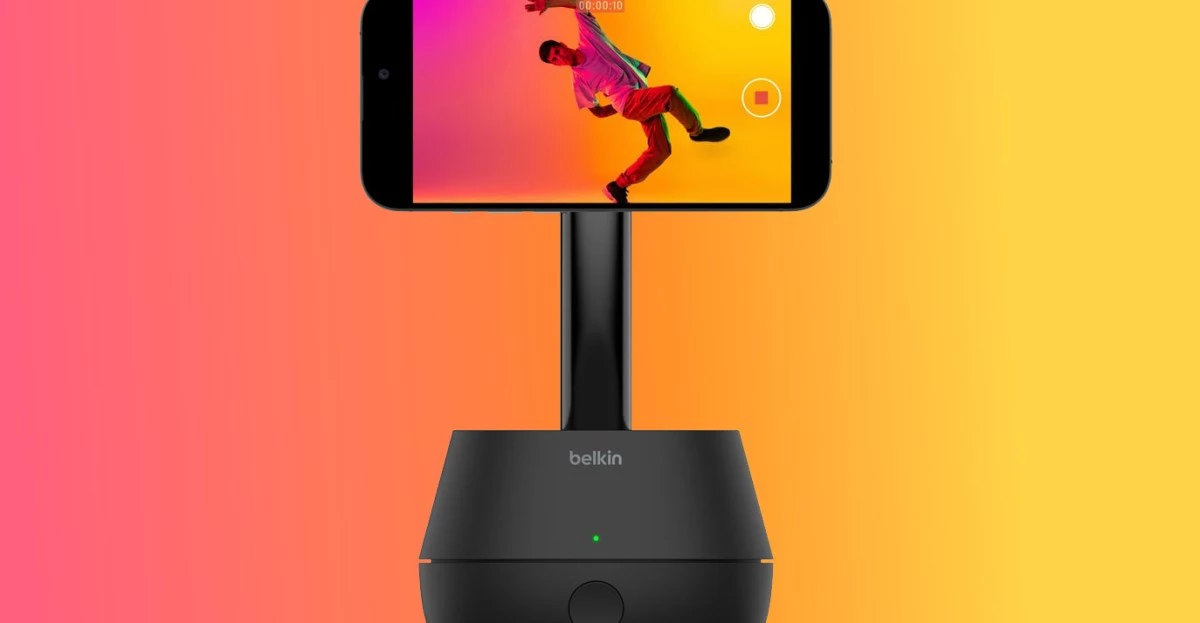
At the heart of the matter are two 20,000 mAh BoostCharge USB-C PD Power Banks and the Auto-Tracking Stand Pro, all engineered to deliver rapid, reliable power in pocketable form factors. Yet as these devices push the boundaries of what’s possible—30-watt USB-C Power Delivery, integrated pan-tilt motors, and motion-tracking hardware—the margin for error narrows. A single subpar weld or a microscopic separator flaw can tip the balance from convenience to catastrophe, catalyzing thermal runaway in a matter of seconds.
The Hidden Complexities of Battery Supply Chains
The Belkin episode exposes a persistent vulnerability in the consumer electronics supply chain: the opacity of cell sourcing and traceability. Most accessory brands, even those adjacent to the Apple ecosystem, rely on a diffuse network of ODMs and EMS partners, who in turn source “commodity” 18650 or pouch cells from a patchwork of tier-two and tier-three suppliers. Quality assurance, more often than not, is a matter of paperwork—ISO 9001 certificates—rather than granular, cell-level telemetry.
This lack of transparency is not merely a technical oversight; it’s a structural blind spot. Without digital “battery passports” that log provenance and test results, manufacturers are left to navigate a labyrinth of potential defects with only the faintest trail of breadcrumbs. The EU’s forthcoming Battery Regulation, with its digital twin requirements, signals a future where such opacity is no longer tenable. For now, however, the industry remains in a precarious limbo, one overheating report away from the next recall.
Safety Engineering in the Age of Rapid-Charge Expectations
The integration of Apple’s DockKit into Belkin’s Auto-Tracking Stand Pro is emblematic of a broader trend: the migration of advanced, power-hungry features into everyday accessories. As motion-tracking hardware and pan-tilt motors become commonplace, the variability of power draw rises, testing the limits of conventional Battery Management Systems (BMS). Static bench tests are no longer sufficient; dynamic, real-world scenarios must be simulated and stress-tested, with onboard intelligence capable of predicting and preempting thermal anomalies.
This design-for-safety imperative is not just a technical challenge—it’s a strategic differentiator. Brands that can demonstrate robust, predictive safety engineering will find themselves at an advantage, particularly as regulatory scrutiny intensifies. The U.S. Consumer Product Safety Commission’s swift intervention in the Belkin case is part of a global pattern: regulators in the EU and UK are lowering their tolerance for “near-miss” incidents, signaling a future of more granular reporting and possibly even mandatory kill-switch firmware for high-capacity battery packs.
Economic Ripples and Strategic Realignments
The direct cost of Belkin’s recall—estimated at $8–$10 million in refunds and credits—may seem manageable for a company of its scale. But the indirect costs are harder to quantify: retailer charge-backs, reverse-logistics fees, and the more insidious erosion of brand equity. For firms operating in the shadow of Apple, the reputational stakes are even higher; consumers expect Cupertino-level quality assurance, and any deviation is met with disproportionate backlash.
Retailers, too, are recalibrating. Big-box partners like Best Buy and Walmart are tightening their vendor scorecards, shortening purchase order cycles, and increasing the frequency of random lot testing. Insurance underwriters, sensing the rising tide of risk, are adjusting premiums for brands lacking a robust certification history.
Yet within this turbulence lies opportunity. Competitors such as Anker and Samsung’s Eco-Brand, as well as emerging players in solid-state battery technology, are poised to capitalize by marketing safer chemistries—lithium-iron-phosphate, silicon-dominant anodes—as premium differentiators. The accessory market, long commoditized, may be on the cusp of a new era where safety and sustainability command a premium.
Charting a Course Through Regulatory and Technological Uncertainty
For decision-makers, the lessons are clear and urgent:
- Integrate cross-functional safety gates into product development, with battery engineering, firmware, and compliance sign-off before engineering validation.
- Demand cell-level analytics and digital passports from suppliers, and dual-source across chemistries and geographies to hedge against systemic risks.
- Prepare for stricter retailer and platform requirements, including third-party lab reports and accelerated aging tests to uncover latent defects.
- Leverage transparency and responsible disposal as assets in ESG narratives, quantifying recovered materials for Scope 3 emissions and circular-economy metrics.
- Monitor the maturation of next-generation chemistries—solid-state, sodium-ion—for early adoption in accessory-class applications.
The Belkin recall is more than a product-specific setback; it is a harbinger of the complex, high-stakes trade-offs shaping the future of mobile hardware. Those who respond with systemic upgrades—in design, supply chain, and compliance—will be best positioned to navigate the tightening regulatory landscape and the ever-rising expectations of a power-hungry world.

 By
By
 By
By

 By
By
 By
By

 By
By
 By
By







