

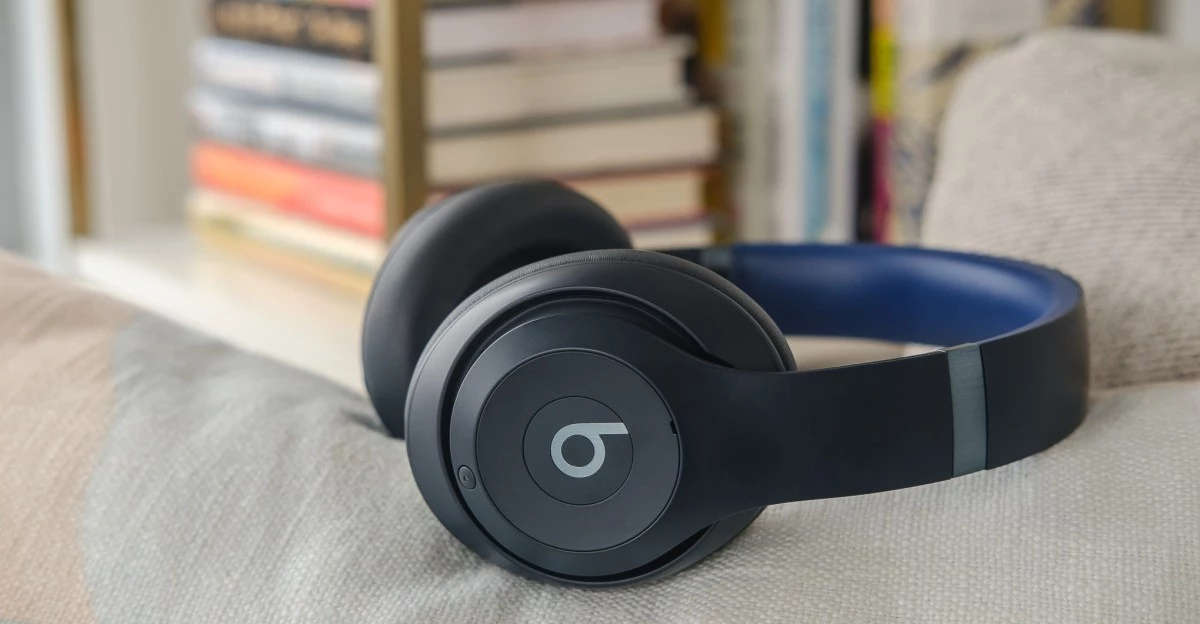

Apple’s two-track headphone strategy: premium lock-in versus mass-market reach
Apple’s latest moves in premium audio underscore a familiar, increasingly deliberate pattern: tight ecosystem integration at the high end, and broad compatibility through Beats where volume and channel reach matter most. The reported AirPods Max 2, powered by Apple’s in-house H2 chip, signals continued commitment to vertical integration—silicon, firmware, and user experience tuned as a single system. That approach tends to yield measurable gains in active noise cancellation (ANC), spatial audio processing, latency control, and power efficiency, but it also reinforces Apple’s “walled garden” posture through iOS/macOS-first (or iOS/macOS-only) feature completeness.
By contrast, the Beats Studio Pro—currently discounted to roughly $170 from $350—reads like Apple’s pragmatic counterweight: a product designed to travel well across platforms, retail channels, and user segments that may never fully commit to Apple hardware. In strategic terms, Apple is effectively running a portfolio play:
- AirPods Max 2 as the high-margin, high-control flagship that strengthens ecosystem gravity
- Beats Studio Pro as the platform-agnostic growth lever, capturing Android users and price-sensitive buyers without diluting the AirPods brand promise
This bifurcation matters because the premium headphone market is no longer won on sound alone. It is increasingly decided by ecosystem convenience, device switching, tracking networks, and the subtle friction—or lack of it—across daily workflows.
Beats Studio Pro’s cross-platform feature stack reshapes the value equation
What makes the Beats Studio Pro notable is not that it competes head-to-head with the very best from Sony or Bose on absolute fidelity; it’s that it bundles a rare mix of cross-platform conveniences at a price that undercuts much of the category. The Studio Pro’s feature posture is unusually “bi-lingual” in a market where many products still pick sides.
Key cross-ecosystem capabilities stand out for both consumers and industry watchers:
- Platform-agnostic pairing across iOS and Android, reducing switching friction
- Dual tracking support via Apple Find My and Google Find Hub, a meaningful differentiator for mixed-device households and enterprise BYOD environments
- Spatial features that split intelligently by platform: head-tracking spatial audio for Apple users, while Android users get seamless multi-device audio switching
That last point is strategically revealing. Apple is effectively allowing Beats to become a compatibility bridge—a way to participate in Android’s scale without conceding the AirPods line’s role as an iPhone “halo” product. For retailers, this also makes the Studio Pro a compelling upsell: it fits more baskets, more often, with fewer returns driven by compatibility misunderstandings.
On the acoustics side, the Studio Pro’s 40 mm custom drivers reportedly aim for a more balanced signature than legacy “bass-forward Beats,” suggesting a continued repositioning toward mainstream audiophile expectations. The product’s transparency mode is described as best-in-class—an increasingly important metric as consumers use headphones not only for travel, but for hybrid work, commuting, and situational awareness in urban environments.
USB‑C lossless audio highlights both regulatory gravity and technical trade-offs
The Studio Pro’s USB‑C lossless audio at 24-bit/48 kHz is more than a spec-sheet flourish. It reflects an industry pivot toward standardized, higher-bandwidth ports, shaped by both consumer demand and regulatory direction—most notably the EU’s USB‑C mandate. For Apple, which has historically used connectors and accessories as ecosystem reinforcement, USB‑C adoption in Beats can be read as a hedge: comply early in a sub-brand, learn quickly, and reduce future SKU complexity.
Yet the most telling detail is the compromise: ANC and transparency are disabled when streaming lossless over USB‑C. That limitation exposes a broader engineering tension in modern headphones:
- Lossless wired audio prioritizes signal purity and bandwidth
- ANC/transparency rely on real-time DSP pipelines, microphones, and power budgets that can conflict with certain wired modes and internal routing architectures
This is not merely a product quirk—it’s a market signal. The next wave of differentiation may come from next-generation audio SoCs and low-power DSP designs that can deliver simultaneous high-fidelity wired playback and full environmental processing without forcing users to choose. For chipmakers and OEMs, that gap is an open invitation: solve the “lossless + ANC” concurrency problem elegantly, and you earn both premium pricing power and platform licensing leverage.
Competitive positioning: pricing pressure, lifecycle signals, and what comes next
Against category leaders like Sony’s WH-1000XM6 (and XM5) and Bose QuietComfort Ultra, the Beats Studio Pro is positioned less as a technical champion and more as a value disruptor—especially at sub-$200 pricing. The commentary that it “lags in pure audio fidelity” is important, but so is the reality that many buyers increasingly optimize for total experience: device switching, tracking, comfort, call quality, and reliability across laptops and phones.
The steep discount also carries strategic subtext. Aggressive pricing often functions as lifecycle management—clearing inventory ahead of a refresh, stimulating channel momentum, and pressuring competitors’ margins in the mid-tier. In a market approaching feature parity on ANC and spatial audio, promotions become a competitive weapon, and they can force incumbents to respond with:
- “Lite” variants that protect flagship pricing
- Bundled services or extended warranties to defend perceived value
- Faster refresh cycles to keep feature narratives fresh
For business and technology leaders, the deeper takeaway is that Apple is refining a playbook where AirPods Max 2 represents controlled premiumization, while Beats Studio Pro represents strategic interoperability—a product that can thrive in mixed ecosystems and still serve Apple’s broader objectives. As hardware features mature and commoditize, the winners will be those who treat headphones not as standalone devices, but as nodes in a larger network of platform identity, regulatory compliance, silicon advantage, and service-driven differentiation.

 By
By
 By
By
 By
By


 By
By
 By
By
 By
By







