


A park-side incident that tests Austin’s autonomous vehicle social license
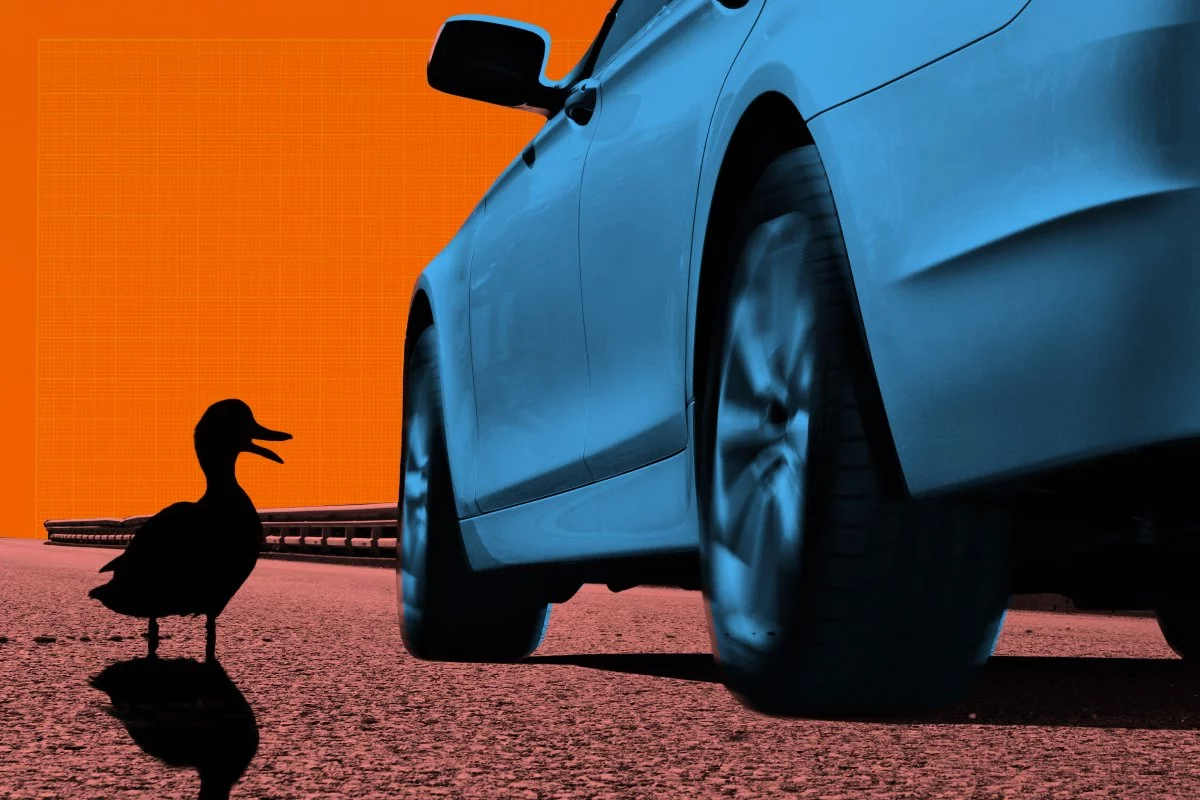
Avride, an Austin-based autonomous vehicle (AV) startup, is facing heightened scrutiny after a reported fatal collision involving a mother duck in Mueller Lake Park—an episode that, according to a neighborhood resident, included the vehicle allegedly proceeding without stopping and running a stop sign shortly beforehand. The account also raises a familiar flashpoint in AV deployment: the role and attentiveness of the in-car “safety driver,” described as having hands off the wheel at the time.
Avride says it has initiated an internal investigation, temporarily rerouted vehicles away from the park, and points to event data logs indicating compliant intersection stops. That tension—between eyewitness narrative and machine telemetry—sits at the heart of modern autonomous mobility governance. In a city increasingly positioned as a U.S. proving ground for AV operations, with prominent activity from Waymo and growing expectations around Tesla autonomy ambitions, even a single highly visible incident can reshape public confidence faster than quarterly performance metrics ever could.
The broader context matters. Public skepticism has been primed by prior, widely circulated cases—such as a Waymo robotaxi striking and killing a cat in San Francisco—creating a perception that autonomous systems may handle “standard” urban driving well while still failing in emotionally resonant, ethically charged edge cases involving vulnerable road users, including animals.
—
Why “edge cases” are becoming the main event in AV safety debates
The AV industry has long framed safety progress through aggregate statistics: miles driven, disengagement rates, and collision frequency. Yet the incidents that most influence regulatory and community sentiment are often rare, high-salience events—the situations that expose the limits of perception, prediction, and policy.
Key technical and operational fault lines are now increasingly visible:
- Sensor fusion versus low-contrast reality: LiDAR, radar, and camera-based perception stacks can perform impressively in structured urban conditions. But environments like park-adjacent roads—where foliage, shadows, and irregular movement patterns are common—can degrade classification confidence. A duck near vegetation is not just a small object; it is a moving, biologically unpredictable actor that may not resemble training data distributions.
- Object detection is not the same as ethical response: Even when an AV detects an obstacle, the decision layer must weigh braking profiles, passenger comfort, rear-end collision risk, and legal right-of-way. The public, however, often evaluates these moments through a simpler lens: *did the vehicle behave with care?*
- The “safety driver” paradox: Human-in-the-loop models are intended to bridge the gap between autonomy and accountability. But reports of hands-off behavior—whether accurate or not—underscore a structural discomfort: if the system is “good enough” to lull the human into passivity, the safety driver becomes a symbolic safeguard rather than a reliable control mechanism. That is not merely a training issue; it is a human factors design problem.
This is why the dispute between telemetry logs and eyewitness testimony is so consequential. Logs can show compliance with stop requirements at intersections, but they may not fully resolve questions about situational awareness, near-miss behavior, or what the system “believed” it saw in the seconds before impact. For communities, the demand is increasingly for explainability, not just assurance.
—
Business, brand, and capital markets: the hidden cost of a single viral moment
For emerging AV companies, reputational risk is not an abstract concern—it is a balance-sheet variable. The commercial impact of localized backlash can cascade through multiple channels:
- Municipal friction and constrained geofencing: Cities can slow or narrow deployments through permitting pressure, operational restrictions, or informal political resistance—especially when incidents occur in shared public spaces like parks.
- Insurance and liability repricing: As the industry shifts from driver-centric to algorithm- and OEM-centric liability, insurers and reinsurers will increasingly price risk based on system performance, incident patterns, and the quality of post-incident transparency. Even unadjudicated events can influence premiums if they signal elevated uncertainty.
- Customer acquisition and partnership drag: Public discomfort can raise the cost of adoption—whether that’s riders avoiding robotaxis, neighborhoods opposing routes, or commercial partners hesitating to attach their brand to an AV pilot.
- Investor diligence evolving toward “social-license risk”: Venture and strategic investors are integrating ESG-style considerations into mobility bets. A pattern of unresolved safety questions—especially those involving vulnerable road users—can depress valuations, complicate future rounds, or trigger governance conditions tied to incident thresholds and reporting rigor.
In this sense, the Mueller Lake Park incident is not only a safety story; it is a market signaling event about whether AV operators can earn durable permission to operate in dense, mixed-use environments where public tolerance is finite.
—
Regulation, transparency, and the next competitive moat in autonomous mobility
Austin’s comparatively permissive posture toward AV testing and deployment has helped attract innovation, but it also amplifies the stakes when something goes wrong. The U.S. regulatory landscape remains fragmented, with municipalities and states diverging on operational requirements, reporting obligations, and enforcement intensity. That fragmentation is becoming a strategic variable: AV companies must scale not only software, but also compliance architectures tailored to local expectations.
Several forward-looking priorities are emerging as potential industry standards—whether mandated by regulators or adopted to preserve public trust:
- Edge-case resilience as a product requirement: More targeted training and validation for low-contrast biological entities and atypical actors, supported by dedicated field trials in biodiverse or park-adjacent zones.
- Third-party safety assurance: Independent audits, standardized incident taxonomies, and certification-style approaches that reduce the credibility gap between company statements and public interpretation.
- Community-grade transparency: Real-time or periodic reporting dashboards that protect privacy while clarifying operational performance, incident handling, and route adjustments—paired with structured engagement with neighborhood associations and wildlife stakeholders.
- Insurance innovation aligned to system behavior: Usage-based and parametric models that incorporate near-miss metrics and verified system-failure triggers, not only collision outcomes.
The AV sector’s next phase will be defined less by whether vehicles can navigate city streets on a sunny day, and more by whether companies can demonstrate—credibly, repeatedly, and publicly—that autonomy can coexist with the messy, living complexity of real streetscapes. In Austin, where the future is already sharing lanes with the present, that proof will be demanded not in press releases, but in the everyday conduct of machines moving through communal space.

 By
By
 By
By
 By
By

 By
By
 By
By
 By
By
 By
By







