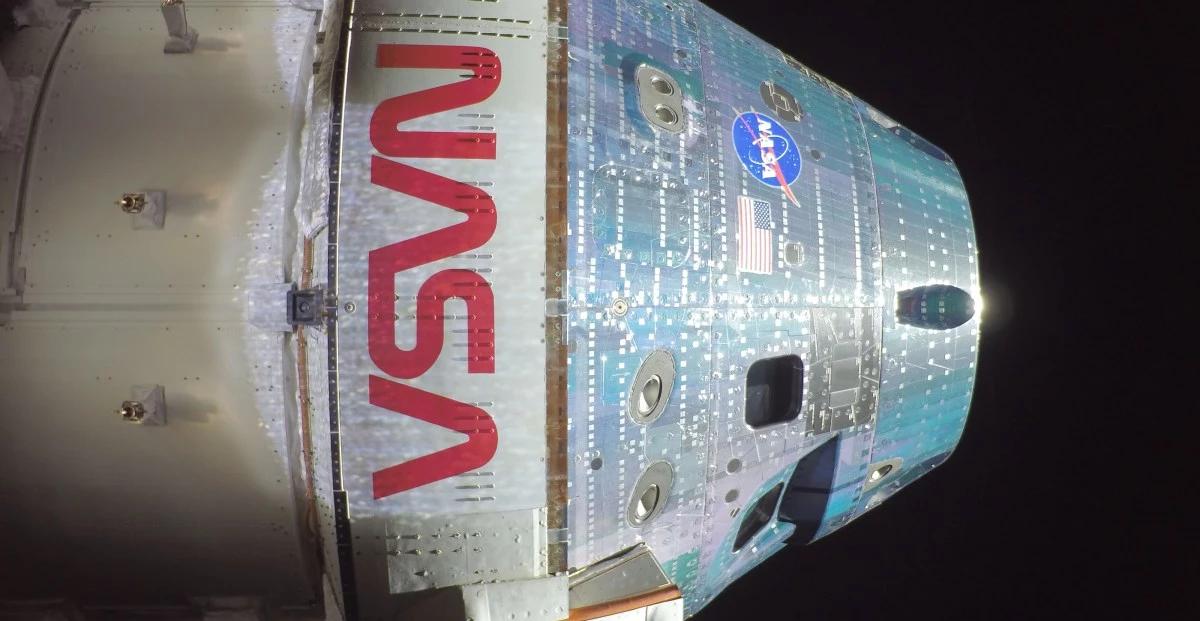

Artemis II as a credibility test for NASA’s next lunar decade
NASA’s Artemis program is no longer operating purely in the realm of aspiration; with Artemis II launching on April 2, 2026, the agency has moved into the more demanding phase where execution, reliability, and public legitimacy must align. The mission’s core profile—a ten-day circumlunar flight carrying four astronauts aboard the Orion capsule—is deliberately designed to be both technically meaningful and politically legible: a crewed return to deep space that demonstrates systems performance without yet taking on the full complexity of a lunar landing.
The details matter because they serve multiple audiences at once. Artemis II is expected to reach 252,756 miles from Earth, a distance that reinforces the program’s claim to be pushing beyond low Earth orbit in a way the public can grasp. The mission also includes a planned communications blackout behind the Moon, a reminder that deep-space operations are still governed by physics and geometry, not just software and bandwidth. That blackout is not merely a narrative beat; it is a functional stress test for mission planning, autonomy, and operational discipline—capabilities that will become non-negotiable as Artemis progresses toward sustained lunar activity.
Artemis II also functions as a bridge between the uncrewed Artemis I flight in 2022 and the more ambitious architecture ahead, including Artemis IV in 2028, which aims to land the first woman and first person of color on the lunar surface. In policy terms, the sequencing is strategic: build confidence through incremental milestones, then expand scope once the program’s technical and institutional footing is firmer.
Engineering strategy: evolutionary hardware, commercial modules, and the media layer
From a technology standpoint, Artemis is a study in managed risk. NASA’s reliance on the Space Launch System (SLS) and Orion—systems rooted in heritage hardware and design decisions from the 2010s—signals a preference for evolutionary refinement over revolutionary reinvention. That choice reduces unknowns in human-rating and safety certification, but it also introduces constraints that shape the program’s tempo and economics.
Key technological implications emerging from Artemis II and the broader Artemis roadmap include:
- Legacy leverage with structural trade-offs
– Heritage components can improve predictability and certification pathways.
– Constraints on payload mass and launch cadence can limit flexibility, especially as lunar ambitions expand from missions to infrastructure.
- Commercial integration as an “anchor-tenant” model
– NASA increasingly funds the critical path while encouraging private firms to build complementary capabilities—cargo transport, landers, surface systems, and supporting services.
– This model aims to create a cislunar services market rather than a single-agency supply chain, shifting NASA from sole operator to ecosystem catalyst.
- Broadcasting and communications as mission-critical infrastructure
– The emphasis on live digital broadcasts underscores that modern exploration is partly a media and data enterprise.
– Deep-space communications resilience—high bandwidth, redundancy, and operational continuity—becomes a competitive domain in its own right, with spillover potential into satellite networks and terrestrial connectivity.
Notably, Artemis II’s public-facing design—live coverage, milestone distances, and the dramatic “far side” blackout—also reflects a modern reality: exploration programs now compete for attention in an environment where legitimacy is reinforced by transparency, accessibility, and narrative coherence. That media layer is not superficial; it influences funding durability, partner confidence, and talent recruitment.
The business case: budgets, industrial base revival, and cislunar market formation
Artemis is often described as a return to the Moon, but economically it is better understood as an attempt to normalize lunar operations—to move from episodic missions to repeatable activity. That ambition collides with fiscal realities. Cost pressures and overruns associated with SLS and Orion have drawn scrutiny, forcing NASA to justify expenditures against other national priorities, from climate resilience to defense modernization.
Commercial partnerships, therefore, serve two functions simultaneously:
- Cost sharing and risk distribution: shifting portions of development and operations to private contractors and startups.
- Market stimulation: creating demand signals that can justify private investment in lunar logistics, robotics, and surface systems.
This is where supply-chain dynamics become strategically important. Artemis-driven demand can revive specialized manufacturing—cryogenic engines, deep-space navigation, radiation-hardened electronics, life-support subsystems—while also encouraging new entrants. Over time, the most consequential downstream opportunity may be in-situ resource utilization (ISRU): extracting and processing lunar resources such as water ice to produce propellant and life-support consumables. If that value chain becomes technically and economically viable, it could reshape the cost structure of deep-space missions and create first-mover advantages for companies positioned across mining, chemical processing, and autonomous operations.
A less discussed but increasingly relevant dimension is financial infrastructure. As lunar missions become more frequent, markets tend to follow with instruments to price risk. The maturation of space insurance, performance guarantees, and mission-linked financing could gradually turn lunar infrastructure into a more bankable asset category—provided reliability metrics improve and regulatory frameworks stabilize.
Geopolitics and governance: Artemis Accords as soft power with operational consequences
Artemis is also a governance project. Through the Artemis Accords, the United States and its partners are advancing a framework for norms around resource extraction, debris mitigation, interoperability, and operational transparency. In practice, these principles shape who can participate, under what rules, and with what expectations of behavior in contested or ambiguous environments.
The absence of Russia and China from the Accords is not a footnote; it is a signal that space exploration is increasingly intertwined with technological statecraft. Meanwhile, other spacefaring actors—Europe, Japan, India, the UAE, South Korea, and others—are building complementary lunar capabilities that may accelerate progress through coalition-based development. At the same time, China’s independent lunar trajectory raises the stakes for visibility and parity, reinforcing the Moon as a stage where engineering achievement and geopolitical alignment are mutually reinforcing.
Artemis II, then, is more than a crewed flyby. It is a validation event for a broader proposition: that the Moon can become a sustained domain of activity supported by a hybrid model of government leadership, commercial capability, and allied governance. If NASA can translate this mission’s momentum into repeatable performance—technically, fiscally, and diplomatically—the Artemis era will be remembered less as a return to past glory than as the opening bid for a durable cislunar economy and the operational groundwork for Mars.

 By
By
 By
By
 By
By
 By
By


 By
By