


A record-setting lunar arc that also stress-tests the communications stack
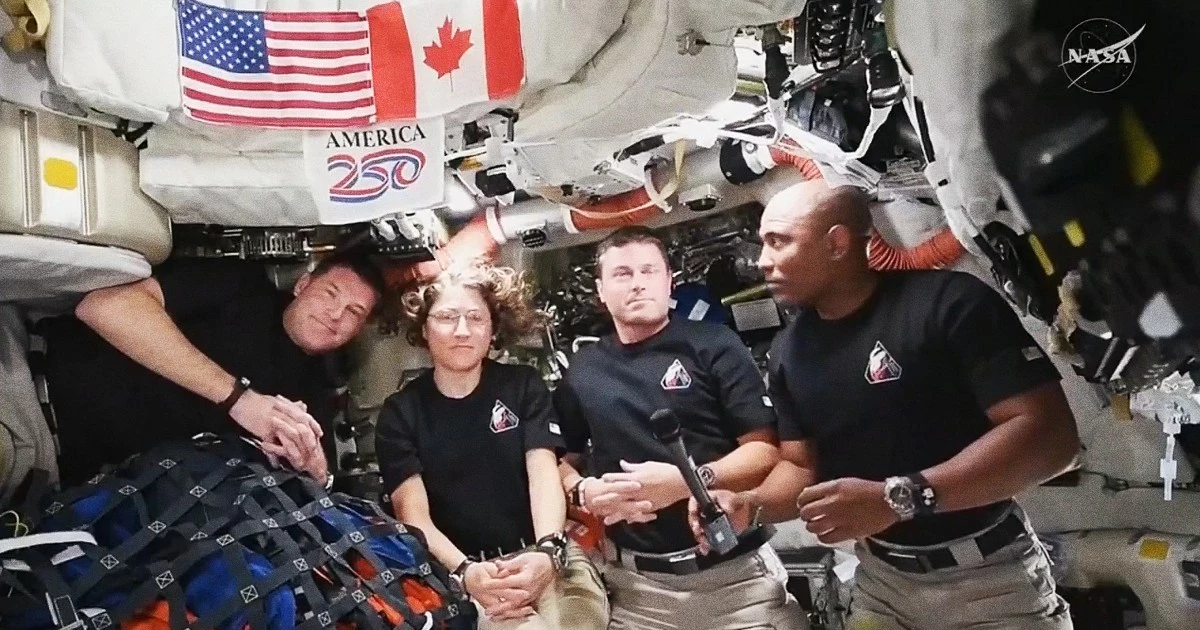
NASA’s Artemis II flight—carrying astronauts Reid Wiseman, Victor Glover, Christina Koch, and Canadian Space Agency astronaut Jeremy Hansen—has delivered a milestone with both symbolic and operational weight: a journey 248,655 miles from Earth, pushing human travel farther than any prior crewed mission. The headline achievement is straightforward—humans operating deep into cislunar space again—but the more instructive story is how the mission’s most routine-seeming moments illuminate the next set of constraints that will define lunar exploration.
The crew’s transit behind the Moon triggered a planned 40-minute communications blackout, a known and rehearsed feature of lunar far-side operations. Yet the event remains a powerful reminder that the Moon is not merely “close” in spaceflight terms; it is close enough to tempt real-time expectations, and far enough to punish them. Even after reacquiring signal, the reported multi-second delay underscores a persistent truth: as missions move beyond low Earth orbit, Earth-centric control loops break down, and operational success increasingly depends on what spacecraft and crews can do without immediate ground intervention.
That reality is not a footnote—it is the operating model for Artemis III and beyond, where surface timelines, hazard response, and system troubleshooting will often unfold under latency, intermittent links, or degraded bandwidth. Artemis II’s clean execution through blackout conditions is therefore less a spectacle than a validation of a design philosophy: autonomy is no longer an enhancement; it is mission-critical infrastructure.
Autonomy, optical links, and the push toward “always-on” cislunar connectivity
The communications profile of Artemis II highlights where investment is likely to concentrate across NASA, its contractors, and the broader space industrial base. A lunar blackout is physically unavoidable when a vehicle passes behind the Moon relative to Earth, but its operational impact can be reduced through architecture—particularly through relay networks and higher-capacity links.
Several technology vectors stand out:
- Inter-satellite relay and cislunar networking: Systems akin to a Lunar Gateway relay role (and other lunar-orbit relay concepts) can turn “blackout” into “handoff,” enabling more continuous telemetry and voice/video pathways. This is as much about operational tempo as safety: continuous data improves diagnostics, predictive maintenance, and mission planning.
- Optical (laser) communications: Optical links promise higher throughput than traditional RF, supporting richer telemetry, higher-resolution imagery, and more robust software updates. As lunar operations scale, bandwidth becomes a strategic asset—especially for surface missions generating large volumes of science and engineering data.
- AI-driven comms health monitoring and fault management: With latency and intermittent contact, spacecraft and onboard systems must detect anomalies, prioritize messages, and manage link budgets autonomously. Expect increased emphasis on onboard decision-support, including automated triage of alerts and adaptive routing of critical telemetry.
Just as important is the human-machine interface. When crews cannot rely on Mission Control for immediate guidance, cockpit software must reduce cognitive load and present actionable options. Artemis II’s performance during planned comms loss reinforces the direction of travel: more onboard authority, better decision aids, and tighter integration between vehicle health data and crew workflows.
When deep-space becomes live television: human factors, protocol, and reputational risk
Artemis II also surfaced a subtler dimension of modern exploration: deep-space missions now unfold in a continuous media environment, where public engagement, political signaling, and international partnership are not peripheral—they are part of the mission’s lived reality.
After communications were reestablished, former U.S. President Donald Trump called to congratulate the crew. The exchange reportedly included an attempt to pivot toward U.S.–Canada relations, followed by a prolonged, awkward pause. While the moment has been widely interpreted through a political lens, it also functions as a case study in the human factors of remote presence:
- Latency and turn-taking: Even small delays can disrupt conversational rhythm, increasing the likelihood of overlap, silence, or misinterpretation—especially in high-visibility calls.
- Crew protocol under uncertainty: Astronauts must balance courtesy, mission focus, and institutional neutrality, often with limited context and under public scrutiny.
- Psychological load in constrained environments: Microgravity operations already demand attention management; adding live, unscripted interactions can introduce stressors that training historically treated as secondary.
For NASA and its partners, the lesson is not about any single caller. It is about the maturation of “spaceflight as public platform.” Future crews—especially those representing multinational coalitions—will likely receive more structured preparation for telepresence etiquette, diplomatic engagement, and media contingencies, alongside the traditional technical simulations.
Artemis II as an economic and geopolitical accelerant for the lunar economy
The mission’s success strengthens the political and commercial case for sustained lunar investment. Artemis is not only a NASA program; it is a market-shaping mechanism that pulls forward demand for specialized manufacturing, advanced electronics, propulsion, and communications—while also creating predictable procurement cycles that private firms can plan around.
Key business and policy implications include:
- Budgetary momentum and contract expansion: A high-performing Artemis II can reinforce congressional confidence and stabilize multi-year planning, supporting a pipeline of contracts that may scale into tens of billions of dollars across launch services, habitats, robotics, and logistics.
- Industrial base strain and supply-chain strategy: Scaling lunar ambitions will intensify demand for radiation-hardened components, high-reliability avionics, advanced materials, and additive manufacturing inputs, pushing suppliers toward capacity expansion, vertical integration, or strategic stockpiling.
- Commercial spinoffs with terrestrial payoff: Optical communications, autonomous navigation, and resilient life-support technologies have clear analogs in remote connectivity, critical infrastructure monitoring, autonomous vehicles, and telemedicine, making Artemis a catalyst for cross-industry technology transfer.
Geopolitically, Artemis II reinforces U.S.-led coalition signaling at a time of intensifying lunar competition, particularly with China’s expanding lunar roadmap and renewed strategic interest in space governance. The inclusion of a Canadian astronaut is a tangible expression of alliance-based exploration, while the broader framework of the Artemis Accords positions norms around resource utilization, traffic management, and planetary protection as central to the next decade of cislunar activity.
Yet the communications storyline also points to a harder edge: reliance on spaceborne command-and-control links creates an expanded attack surface. As lunar operations become more networked, cybersecurity, anti-jam resilience, and authenticated command pathways will move from engineering requirements to strategic imperatives.
Artemis II ultimately reads as both achievement and preview: the Moon is close enough to keep politics, markets, and media tightly coupled to mission operations—and far enough that autonomy, resilient communications, and disciplined human protocol will determine who can operate there reliably when the stakes rise from a flyby to a sustained presence.

 By
By
 By
By
 By
By
 By
By

 By
By
 By
By







