


Improvised Defenses in a Hypermodern War: The Netting Revolution on Ukraine’s Front Lines
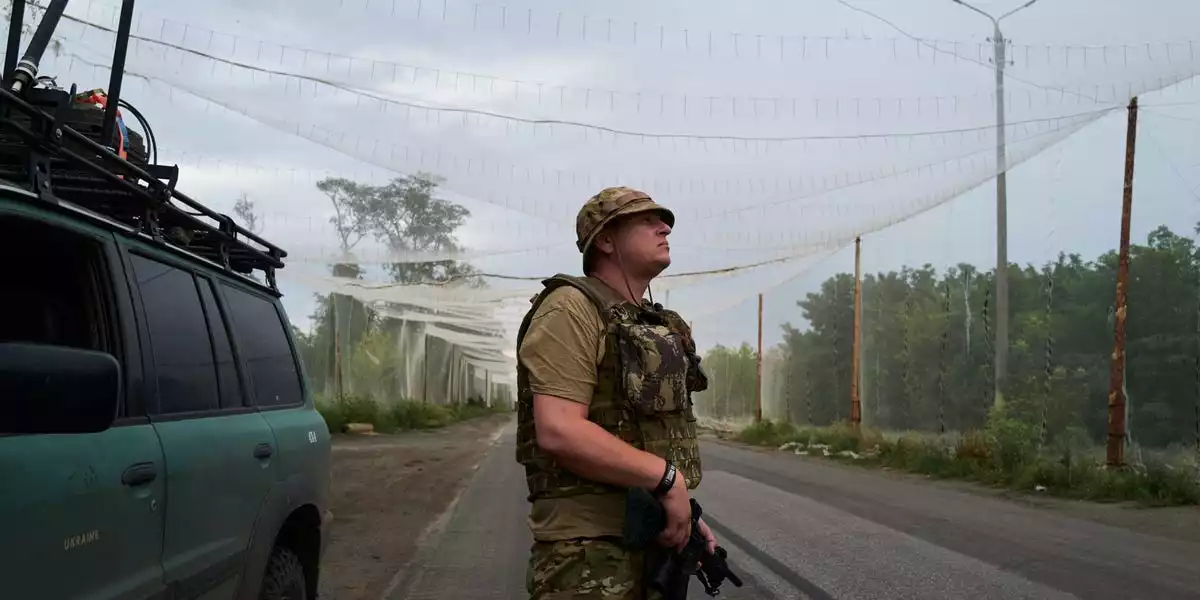
On the battered highways of eastern Ukraine, a new kind of fortification has emerged—not of steel and concrete, but of polymer netting, scaffolding, and the relentless ingenuity of embattled engineers. The sight is almost surreal: supply convoys threading through makeshift tunnels of mesh, a physical rebuke to the silent, circling threat of loitering munitions overhead. In this theater, where the pace of technological escalation outstrips even the most agile procurement cycles, the humble net has become a symbol of both the promise and the limits of rapid adaptation.
The Anatomy of Improvisation: Netting as Tactical Equalizer
The logic behind these anti-drone net tunnels is as elegant as it is urgent. By stretching nets between roadside poles, Ukrainian forces have constructed three-dimensional corridors that force incoming drones to collide with the barrier rather than their intended targets. The materials are almost prosaic—polymer mesh, repurposed scaffolding, telescopic masts—sourced from local supply chains more accustomed to fishing or construction than warfare. Yet the effect is measurable: a reduction in successful drone strikes on convoys, a temporary reprieve in a conflict defined by the constant whir of propellers and the sudden violence of precision-guided explosives.
But the contest is far from static. Russian operators, skilled in the art of adaptation, have already begun to exploit the inevitable gaps—striking vehicles as they exit the netted zones or deploying fiber-optic-guided drones that slip past electronic jamming. The result is a dynamic, iterative arms race in which each new layer of defense is met by an equally inventive countermeasure. The battlefield, in this sense, has become a laboratory—a proving ground for ideas that may soon migrate far beyond the Donbas.
The Economics of Adaptation: From Battlefield to Boardroom
The implications of this tactical improvisation ripple outward, reshaping the economics of defense and the contours of global supply chains. The cost asymmetry is stark: a $2,000 quadcopter can destroy a multi-million-dollar armored vehicle, but a net strung for pennies on the dollar can, for a moment, restore the balance. This logic has driven both sides to embrace “cope cages” and layered, low-cost defenses, echoing the software world’s embrace of defense-in-depth.
Behind the front lines, a new industrial ecosystem is taking shape. Wartime demand for high-tensile nets, telescopic poles, and portable detection sensors is straining niche suppliers, from sports equipment manufacturers to telecom hardware vendors. The feedback loop is tight: 3D printing, open-source CAD files, and real-time field reports have compressed the prototyping cycle from months to days. The war’s crucible is forging not just new tactics, but new markets—modular counter-UAS suites, AI-driven trackers, and ruggedized meshes destined for airports, seaports, and power grids.
For investors and strategists, the signal is clear. Capital is shifting from purely offensive drone platforms to holistic “drone denial” ecosystems. The future belongs to those who can integrate physical barricades, AI-powered detection, and directed-energy defenses into a seamless, rapidly upgradable whole.
Regulatory Frontiers and the Global Diffusion of Tactics
As net-tunnel blueprints circulate on open forums, the tactical innovations of Ukraine’s highways are poised to leap borders and contexts. Non-state actors, urban planners, and critical infrastructure managers are all watching closely. The prospect of counter-UAS corridors—akin to the blast walls that reshaped Baghdad—now looms over cities from Tel Aviv to Taipei.
This diffusion raises urgent regulatory questions. The blurred boundary between civilian and military drones demands a new consensus on low-altitude airspace management and export controls, particularly as fiber-optic guidance and AI navigation proliferate. The convergence of cyber and physical security—where jamming, hacking, and kinetic barriers must operate in concert—will require unprecedented collaboration across IT, OT, and physical infrastructure domains.
The Next Inflection Point: Toward Smart, Adaptive Defenses
The lesson of the netting initiative is not that low-tech solutions can indefinitely outpace high-tech threats, but that resilience now depends on modularity, rapid iteration, and the fusion of physical and digital layers. Defense ministries and corporate security chiefs are recalibrating portfolios, hedging investments across electronic warfare, kinetic interceptors, and passive barriers. Materials science—self-healing nets, shape-memory alloys—beckons as the next frontier, alongside autonomous redeployment systems that promise to keep pace with the adversary’s learning curve.
The coming inflection point will be marked by the integration of smart-net barriers with edge-AI sensors, triggering localized active defenses in real time. This convergence, already glimpsed in battlefield experiments, will define the next chapter in the global counter-drone market.
In this relentless duel of adaptation, the winners will be those who design for change—building defenses not as static fortresses, but as living systems, perpetually upgraded and reimagined. For governments, industry, and the emerging cohort of counter-UAS innovators, the imperative is clear: resilience is no longer a product, but a process. And in the age of drones, the only constant is the race itself.

 By
By
 By
By
 By
By
 By
By

 By
By
 By
By








