


Selective Memory: Anthropic’s Calculated Bet in the AI Arms Race
In the ever-accelerating contest to define the future of enterprise AI, Anthropic’s recent unveiling of an optional “memory” feature for Claude marks a pivotal inflection point. This is not simply a technical enhancement, but a nuanced recalibration of the relationship between usability, privacy, and platform power. Arriving in the same news cycle as OpenAI’s GPT-5 announcement, Claude’s selective memory signals that the new battlegrounds are not just context length or multimodal prowess, but the architecture of memory itself—how, when, and under whose control it is summoned.
The Architecture of Trust: Memory on Demand
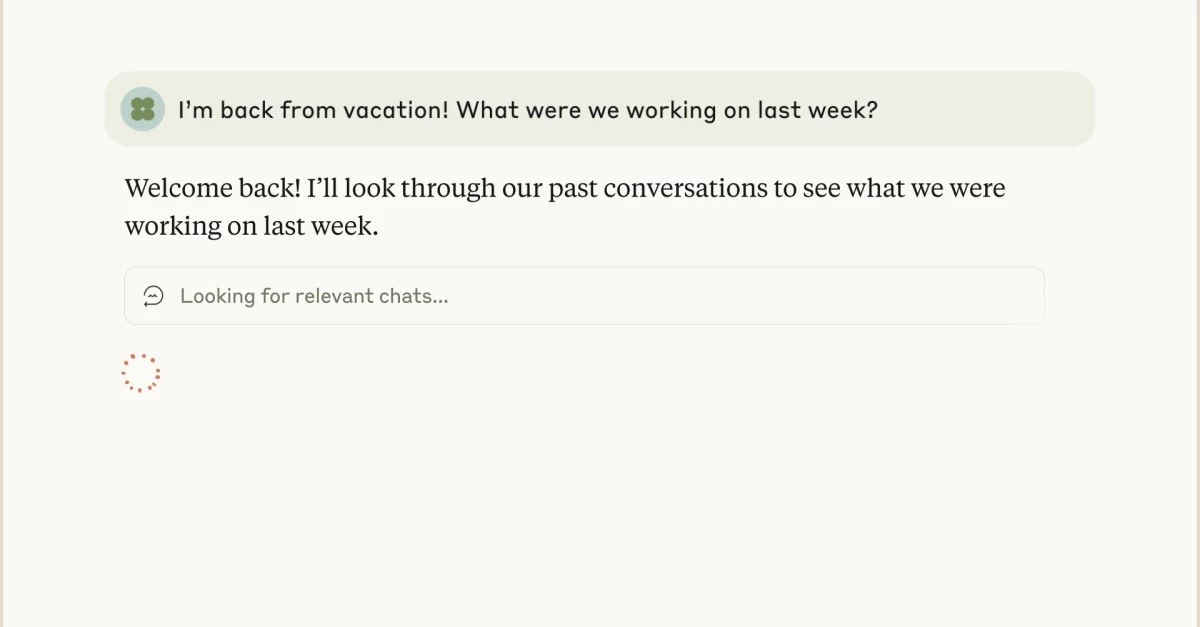
Anthropic’s approach to memory is neither a passive archive nor an omnipresent listener. Instead, it is a deliberate, user-invoked tool. This design choice is far from trivial. By requiring explicit prompts to retrieve prior conversations, Anthropic sidesteps the privacy pitfalls that have dogged always-on memory betas—most notably, inadvertent data exposure and the creeping unease of “over-personalization.” The result is an architecture that:
- Balances context with control: Users gain the power to summon historical insights without surrendering their data to constant surveillance.
- Extends context windows efficiently: Selective recall allows for long-horizon reasoning without the computational and latency burdens of ever-expanding token limits.
- Enables modular workspaces: Project-specific “spaces” hint at a future where enterprise knowledge is siloed and secure, paving the way for compliance certifications and granular permissioning.
For Chief Information Officers, this means lower governance hurdles and a smoother path to pilot deployments. For risk and compliance officers, the opt-in model provides a defensible position in the face of tightening global privacy regimes—particularly as the EU AI Act looms.
Economic Stakes and the Commoditization Dilemma
Anthropic’s memory release is not occurring in a vacuum. The company is reportedly seeking a valuation that could approach $170 billion, a figure that evokes the heady early days of cloud computing. Investors appear to be betting not on mere SaaS economics, but on the emergence of AI as a utility—one where memory and workflow integrations create high switching costs and durable platform lock-in.
Yet the landscape is shifting beneath their feet. Features like voice interaction, sprawling context windows, and now selective memory are rapidly becoming table stakes. Sustainable differentiation will likely hinge on:
- Data-network effects: The ability to leverage private corporate knowledge bases as proprietary moats.
- Compliance-ready architectures: Systems designed from inception to meet evolving regulatory and audit demands.
- Stickiness metrics: Memory reduces conversational friction, boosting user engagement and net-revenue retention—critical KPIs as vendors compete for enterprise mindshare.
Product and engineering leaders are now faced with a recalibrated build-vs-buy equation. As memory matures into an API primitive, the allure of in-house retrieval-augmented generation (RAG) pipelines may wane, especially for teams lacking sophisticated vector database infrastructure.
Strategic and Regulatory Crossroads
The implications of selective memory extend well beyond technical architecture. As conversational AI becomes embedded in the fabric of enterprise workflows, the provenance and portability of institutional memory rise to strategic prominence. CIOs must now weigh the risks of vendor concentration—will today’s memory features become tomorrow’s data lock-in?
Regulators, meanwhile, are sharpening their gaze. Persistent personal profiling is likely to be classified as “high-risk” under the EU AI Act, making Anthropic’s restraint a potential blueprint for industry compliance. The opt-in model not only mitigates immediate privacy concerns but also positions the company to adapt swiftly as legislative clarity emerges.
Mental-health use cases add another layer of complexity. As users increasingly turn to AI for quasi-therapeutic dialogue, the sector faces a “ChatGPT psychosis” moment. Enterprises must be vigilant: audit trails, escalation protocols, and transparent constitutional policies will become essential safeguards as duty-of-care standards evolve.
The Road Ahead: Memory as Platform, Not Feature
The selective memory paradigm is poised to reshape not just how AI assistants recall information, but how enterprises architect their digital workflows. Expect to see the rise of “memory-as-a-service,” with API-level monetization and integration into personal knowledge dashboards and project management tools. The convergence of conversational memory with structured enterprise knowledge graphs will create formidable information moats—barriers that latecomers may struggle to cross.
For stakeholders, the actionable path is clear:
- Assess data impact and regional compliance before enabling memory.
- Benchmark productivity gains to inform executive buy-in.
- Negotiate for data portability to future-proof against vendor lock-in.
- Prepare for evolving mental-health governance and customer support needs.
Anthropic’s move is more than a feature drop; it is a calculated act of strategic positioning. By threading the needle between privacy, regulatory foresight, and enterprise stickiness, the company is staking its claim in the unfolding contest to define the operating system of conversational work—a contest where memory, in all its selectivity, may prove the ultimate differentiator.

 By
By
 By
By
 By
By
 By
By
 By
By
 By
By

 By
By







