


The New Frontier of Portable Power: Anker’s 90 Wh Bank and the Shifting Landscape of Mobile Energy
A price drop is rarely just a number. When Anker slashes the cost of its 25,000 mAh / 90 Wh Laptop Power Bank to $87.99—a 27 percent reduction that matches its historic low—the move reverberates far beyond the holiday shopping season. This is not simply a stocking stuffer for the jet set; it is a signal flare marking the rapid evolution of mobile energy storage, the USB-C power-delivery ecosystem, and the recalibrated priorities of a workforce now untethered from traditional office constraints.
Battery Chemistry, Power Delivery, and the Anatomy of Compliance
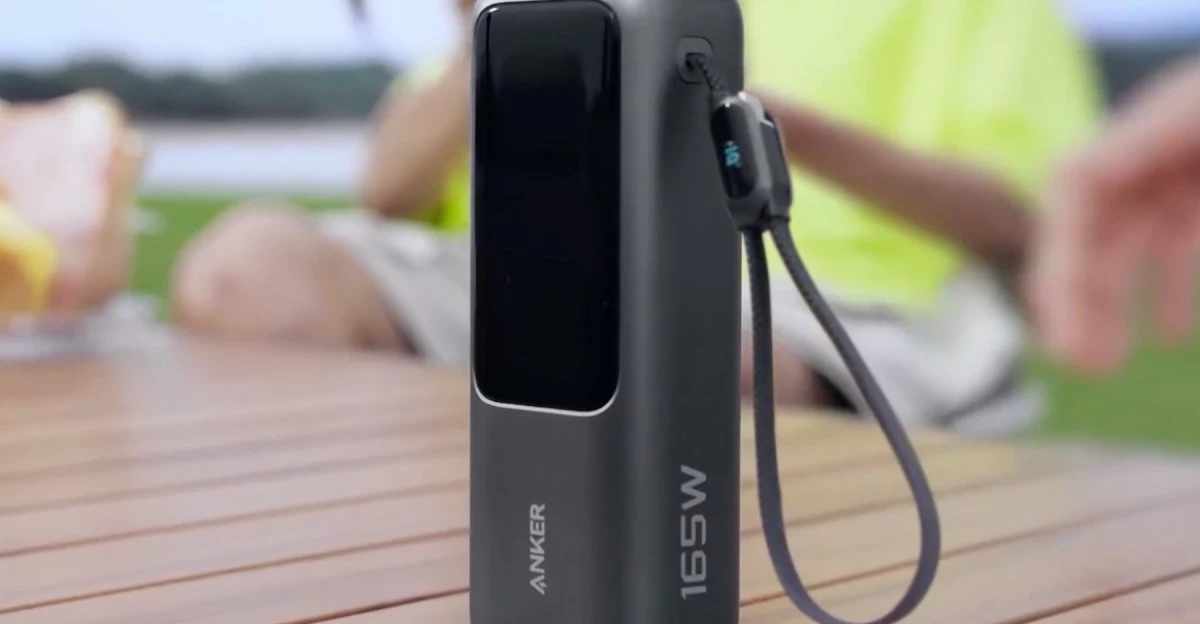
Anker’s latest offering is a masterclass in engineering to the edge of regulation. At 90 Wh, the power bank lands just shy of the TSA’s 100 Wh ceiling, maximizing capacity while ensuring universal air-travel approval. This is no accident. It reflects a broader trend: battery designers are leveraging incremental advances in lithium-ion chemistry—higher nickel content, smarter battery management systems—to squeeze more energy into ever-smaller, safer packages.
But the story doesn’t end with raw capacity. The unit’s dual USB-C ports, each rated above 100 W, align with the USB-C PD 3.1 (Extended Power Range) standard, which now supports the 140 W charging required by flagship laptops and workstation-grade tablets. This is critical as the EU’s 2024 common-charger mandate accelerates USB-C adoption, forcing legacy USB-A into its twilight years. Anker’s inclusion of both port types hedges against obsolescence, offering a bridge for mixed-device fleets navigating the transition.
The device’s LCD status panel and integrated retractable cable are more than conveniences—they are the vanguard of a new class of “semi-smart” peripherals. These features deliver real-time usage data, feeding into mobile OS telemetry and, increasingly, into enterprise device management platforms. The humble power bank is becoming an instrumented node in the broader digital ecosystem.
Market Dynamics: Timing, Margins, and the Hybrid Work Imperative
The timing of Anker’s price move is telling. Matching the low set in April, it hints at either a strategic clearing of inventory ahead of a likely Q1 refresh—perhaps with gallium nitride (GaN) integration or even higher capacities—or a hedge against cooling demand in a high-interest-rate environment. For channel partners and retailers, high-velocity accessories like power banks are a vital counterweight to slower-moving, higher-ticket hardware, especially as buy-now-pay-later (BNPL) financing reshapes consumer behavior.
Peripheral spending is becoming a key margin lever as PC replacement cycles lengthen—now stretching to nearly three and a half years for enterprises. Power banks, with gross margins hovering between 25 and 35 percent, are increasingly bundled with both direct-to-consumer and B2B laptop sales. In a world where hybrid knowledge workers average nearly three work locations per week, the portable, multi-device charger has shifted from “nice-to-have” to “risk-mitigation essential,” particularly for battery-sensitive professions.
Strategic Implications: From Enterprise Procurement to Regulatory Tensions
The implications for stakeholders are far-reaching:
- Hardware OEMs: For laptop makers without proprietary charging solutions, bundling third-party high-wattage banks can neutralize “charging anxiety,” smoothing the path to purchase.
- Enterprise IT and Procurement: Standardizing on TSA-compliant 90 Wh units streamlines travel policy compliance and reduces the logistical burden of spare AC adapters.
- Regulators and Airlines: As high-wattage laptops proliferate, the 100 Wh ceiling will come under scrutiny, potentially prompting regulatory review and advocacy from accessory manufacturers.
Meanwhile, the discounted power bank is a harbinger of next-generation trends. Suppliers are experimenting with modular, swappable cell cartridges that aggregate capacity while remaining below regulatory thresholds. GaN integration promises slimmer, cooler designs and higher sustained wattage—a likely focus for Anker and its peers in the coming year. And as device telemetry becomes richer, enterprises will increasingly seek API-driven analytics for fleet battery health and usage optimization.
The Convergence of Portability, Sustainability, and Resilience
The maturation of mobile power is not occurring in isolation. As ESG mandates tighten, companies are scrutinizing supplier end-of-life programs, with power banks poised for second-life deployment as stationary micro-UPS units. The rise of decentralized backup architectures—combining portable storage, residential solar, and bidirectional EVs—signals a future where the boundaries between consumer gadget and enterprise asset dissolve.
Anker’s price move, then, is more than a seasonal promotion. It is an inflection point in the evolution of mobile energy infrastructure, reflecting the convergence of smarter technology, regulatory acumen, and the relentless demands of a distributed, always-on workforce. For executives and strategists, the lesson is clear: the next phase of competition will be defined not just by capacity or price, but by intelligence, compliance, and adaptability at the very edge of the grid.

 By
By
 By
By

 By
By
 By
By
 By
By

 By
By







