
Surveillance-as-a-Service: The New Face of Smart Home Technology
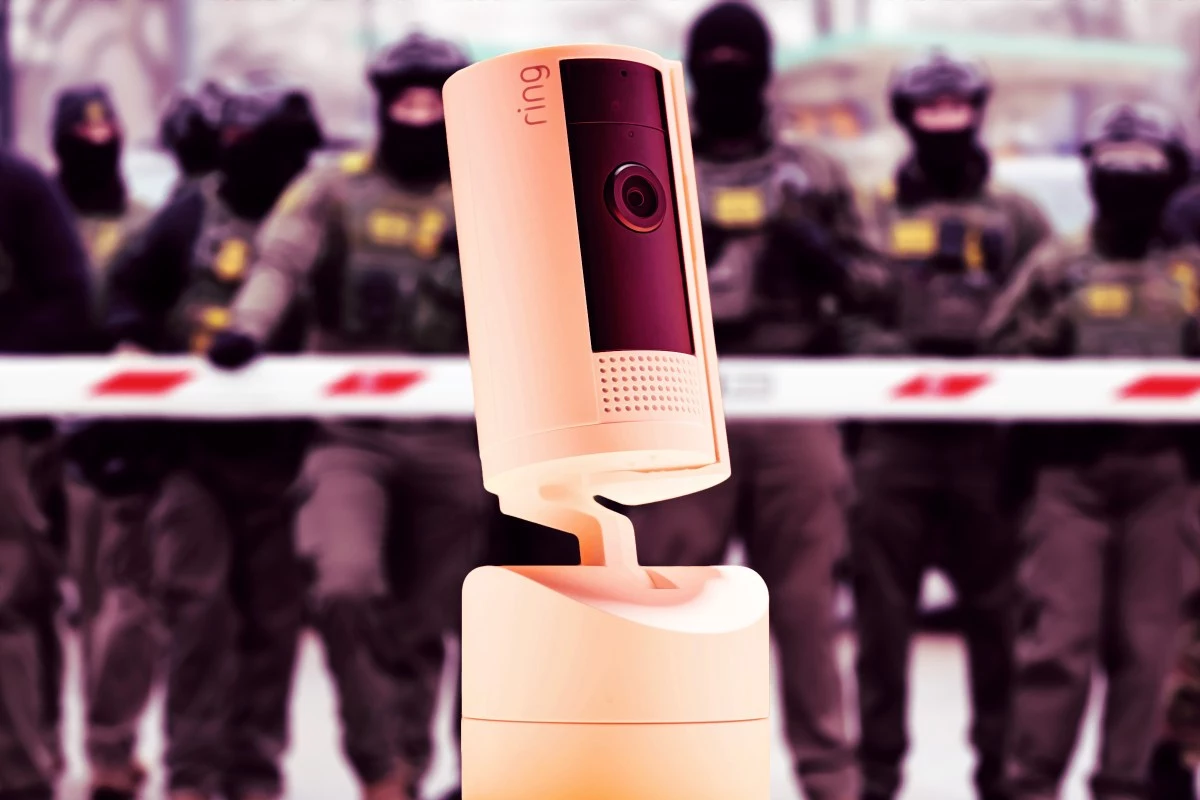
In a move that has sent tremors through both the technology industry and civil liberties circles, Amazon’s Ring division has announced a sweeping integration with Flock Safety’s AI-powered camera network. This partnership fuses Ring’s ubiquitous curbside doorbell feeds with Flock’s license-plate recognition and object-detection analytics, granting local and federal law enforcement—including U.S. Immigration and Customs Enforcement—real-time access to an unprecedented mesh of private surveillance data. The implications are profound, not only for privacy advocates but for the very architecture of the smart-home sector.
The Technical Alchemy: Federated Data, Amplified Risks
At its core, the integration is technologically elegant, requiring little more than API harmonization and identity-management alignment. Yet the network effect is transformative: disparate consumer IoT devices now coalesce into a federated sensor grid, query-able from a unified law-enforcement dashboard. Each new node—every doorbell, every curbside camera—augments Amazon’s already formidable computer vision training corpus, sharpening algorithms for face, gait, and behavioral analytics.
But this centralization is a double-edged sword. The aggregation of sensitive video streams into a single hyperscale vendor amplifies the risk profile. Ring’s historical lapses—unencrypted video, weak credentialing—are now magnified across a richer, more attractive dataset. The probability-weighted cost of a breach, both in financial and reputational terms, grows non-linearly. As this “security debt” accrues, regulatory scrutiny is all but inevitable.
Business Model Tensions: Monetizing Trust, Navigating Backlash
The economic calculus underpinning this shift is clear. Hardware margins in the smart-home sector have always been razor-thin; recurring revenue from video storage and, increasingly, B2G (business-to-government) data-sharing agreements now form the bedrock of profitability. The Flock integration tilts the customer base toward publicly funded contracts—lucrative, yes, but fraught with political and reputational risk.
Activist opposition is no longer confined to op-eds or legal filings. Digitally native demographics, galvanized by viral campaigns, are calling for mass de-installation and even destruction of Ring devices—a hardware analog to the #DeleteFacebook movement. This phenomenon threatens to upend the lifetime value assumptions that underpin IoT growth forecasts. Institutional investors, meanwhile, are recalibrating ESG risk models to account for privacy and civil liberties headwinds, with the specter of exclusion from key indexes looming large.
Insurance carriers are also taking note. The specter of class-action litigation around unlawful surveillance is prompting a reassessment of cyber-liability premiums, with potential knock-on effects for operating costs across the sector.
Regulatory Crossroads and the Battle for Consumer Trust
The regulatory landscape is shifting beneath the industry’s feet. State-level statutes like CCPA, CPRA, and BIPA are converging with federal proposals and the EU’s AI Act, creating a mosaic of compliance obligations that could crystallize overnight. A single adverse legal precedent—such as a finding that Ring-Flock integration constitutes “systemic” biometric processing—could trigger cross-jurisdictional enforcement.
Smart-home incumbents are already maneuvering to differentiate on privacy. Apple and Google tout edge processing, on-device encryption, and opt-in law enforcement requests as competitive moats. Amazon’s current trajectory, by contrast, risks ceding the mantle of “trusted home OS.” The international reverberations are equally significant: authoritarian regimes may seize on the U.S. model to justify more aggressive surveillance, placing multinational tech firms in the crosshairs of both local law and universal human rights norms.
The Road Ahead: Strategic Imperatives for the Smart-Home Sector
The Ring-Flock alliance crystallizes a pivotal moment for the smart-home and AI industries. To navigate this new terrain, sector leaders must:
- Establish policy firebreaks: Formalize warrants-only disclosure, third-party audits, and independent oversight to contain reputational contagion.
- Invest in privacy-first architecture: Prioritize end-to-end encryption, differential privacy, and edge inference to meet regulatory and consumer expectations.
- Scenario-plan for backlash: Incorporate technology-driven societal backlash into risk registers and mitigation budgets.
- Scrutinize partnerships: Apply rigorous due diligence to data-handling practices, especially when integrating with surveillance-centric entities.
- Communicate transparently: Craft clear, accessible messaging on data-sharing to preempt activist narratives and build durable trust.
The evolution from consumer convenience to state-aligned surveillance infrastructure is neither linear nor inevitable. Companies that fail to recalibrate toward privacy-centric design and proactive governance may find themselves not only outpaced by regulatory change but also outflanked by a new generation of privacy-first challengers. As the sector stands at this inflection point, the choices made today will reverberate across boardrooms, legislatures, and living rooms for years to come.

 By
By
 By
By
 By
By
 By
By

 By
By
 By
By
 By
By